The Research Catalogue (RC) is a non-commercial, collaboration and publishing platform for artistic research provided by the
Society for Artistic Research. The RC is free to use for artists and
researchers. It
serves also as a backbone for teaching purposes, student assessment, peer review workflows and research funding administration. It strives to be
an open space for experimentation and exchange.
recent activities <>
Creating Cultures of Care
(2026)
Debbie Straver, Gjilke Wytske Keuning, Nina Goedegebure
Nine research groups from HKU, Hanze University of Applied Sciences, Fontys, and Utrecht University of Applied Sciences are joining forces with UvH and UMCU to bring a new perspective on healthcare through the arts, supported by the SIA-SPRONG grant. Using a transdisciplinary approach, this research group and its partners are developing new methods, practices, and scenarios within healthcare and well-being contexts—not for, but with each other.
From local food systems to ceramic practice: building cross-sector networks through material research
(2026)
Zizi Mitrou
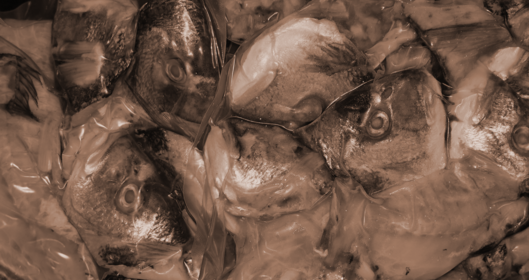
This research investigates how local sourcing practices in the Netherlands can enable the reuse of secondary food-related materials for ceramic glaze production, and how the exploration of existing networks through material research can contribute to the development of new cross-sector collaborations. Through a practice-based approach that bridges ceramic production, design research, and the restaurant industry, the study explores the potential of locally available “waste” materials, such as bones, shells, charcoals, and discarded glass, as viable resources for glaze making.
The research combines material experimentation with qualitative fieldwork, including interviews and informal discussions with chefs, ceramicists, suppliers, and material practitioners. By tracing the origins, processing, and transformation of these secondary resources, the study critically examines the environmental impact and opacity of conventional glaze supply chains, which often rely on imported raw materials and energy-intensive extraction and transportation processes.
Central to the research is the creation of a material archive that documents locally sourced secondary materials and their behavior in glaze recipes. This archive functions not only as a technical tool for ceramic experimentation, but also as a framework for understanding relationships between material flows, human practices, and local infrastructures. Drawing on the concept of “working in the minor key,” the research emphasizes learning through direct engagement, observation, and collaboration rather than predefined systems.
The findings suggest that material research can act as a catalyst for new circular practices and cross-sector networks between restaurants and ceramic industry, fostering shared responsibility, creative exchange, and reduced material consumption. By reframing waste as a site of value and knowledge, this study proposes an alternative, locally embedded approach to glaze production that integrates sustainability, and social engagement.
Transmutations: a staged concert / Transmutações: um concerto cênico
(2026)
Pedro Pablo Cámara Toldos
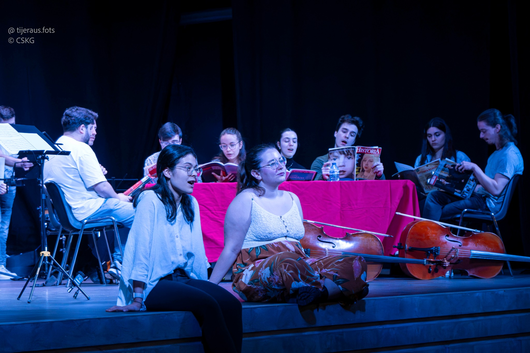
Transmutations seeks to redefine the term transformation through a staged concert — a concert conceived as a work of art in itself.
The traditional concert format and conventional performance practices are showing signs of stagnation, thus calling for the emergence of a voice adapted to this transformation.
The boundaries of music, especially within the classical realm, have gradually blurred in recent times. Increasingly, artists are exploring the concert as a form of expression that not only integrates other artistic disciplines but also embraces technological advancements. This approach challenges traditional aesthetic conventions and the notion of genre and musical style. The omnipresence of technology in contemporary society underlines the need for research that explores the many possibilities of the concert format.
This staged concert aims to redefine the concept of transformation by avoiding any stylistic boundaries. The works of Richard Strauss, John Cage, and Alexander Schubert are included not only for their artistic value but also for their contribution to the very notion of transformation.
recent publications <>
Non è il gelato ad essere consumato ma chi lo vende.
(2026)
Alessandra Debernardi
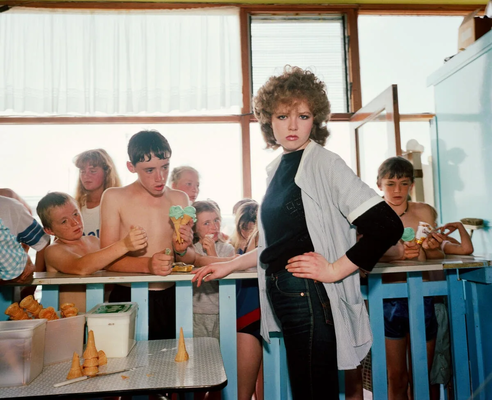
Questa esposizione fa parte di un progetto di ricerca artistica più ampio, articolato in diverse declinazioni.
Il focus presentato si concentra su un’indagine specifica della violenza attraverso il dispositivo dell’auto-conferenza, intesa come pratica performativa e riflessiva.
La ricerca prende avvio dalle conferenze autofinzionali di Sergio Blanco, in particolare dalla sua elaborazione della violenza come costruzione narrativa, e si sviluppa attraverso la rielaborazione di un’esperienza personale di violenza subita. In questo contesto, l’autofinzione diventa uno strumento metodologico capace di mettere in relazione l’esperienza vissuta, il discorso teorico e la rappresentazione.
L’auto-conferenza viene quindi intesa come una vera e propria metodologia di ricerca artistica: uno spazio in cui l’esperienza personale si intreccia con riferimenti teorici e visivi, generando una riflessione critica sulla rappresentazione della violenza e sulle possibilità del racconto di sé come pratica di conoscenza. L’elemento autobiografico, sempre in bilico tra attendibilità e finzione, diventa così il punto di partenza per una riflessione che supera l’io dell’autore e si apre a una dimensione collettiva, coinvolgendo lettori e spettatori.
Paths of Artistic Research
(2026)
Silvia Diveky, Monika Šimková
Interviews about where artistic research is heading
The work Paths of artistic research is a collection of interviews with artistic researchers - Andrea Buršová, assistant professor at the Nika Brettschneiderová Dramatic Acting Department, Faculty of Drama, JAMU, Jiří Honzírek, director, manager of the Feste Theatre and PhD student at the Theatre Faculty, JAMU, Barbora Klímová, head of the Studio of Environmental Design at the FFA BUT, Lenka Klodová, head of the Studio of Body Design at the FFA BUT, Lucia Repašská, researcher at the Cabinet for Theatre and Drama Research, Theatre Faculty, JAMU, Hana Slavíková, head of the Studio of Radio and Television Dramaturgy and Scriptwriting, Theatre Faculty, JAMU, Pavel Sterec, artist and former head of the Intermedia Studio at the FFA, BUT, and Lenka Veselová, researcher at the Department of Theory and History of Art at the FFA, BUT and PhD student at the FFA, BUT. These are artists who have been associated with art colleges in Brno, specifically with the Faculty of Fine Arts of the BUT and the Theatre Faculty of the JAMU. Through interviews with the artists, the reader will learn under what circumstances they began to engage in artistic research, how they perceive it, what meanings they attribute to it and the purpose it serves for them. The selected group of artists is very diverse and their creative and research strategies are different, as are the purposes for which they use artistic research. The work does not aim to provide an exhaustive overview of the methods used in artistic research, but it does aim to show that there are many approaches to artistic research and to present the paths that have brought particular artists to artistic research.
Berlin, lava fields, rebellion, street life
(2026)
Ilpo Jauhiainen
This essay examines the challenges of generative AI in composing ‘new’ music. The focus is on the commercial generative AI applications (i.e. AI music generators) due to their prominence in the mainstream cultural and technological discourse. The essay adopts a philosophical rather than a technological approach, situating the use of generative AI in music within a broader societal, cultural, and environmental context. If AI and music (understood as normative practices) are majoritarian, molar, and arborescent entities, then the approach taken here is Deleuzian: minoritarian, molecular, and rhizomatic. By engaging with their fault lines, disassembling and reassembling their structures, and connecting them to the wider world, the essay presents an alternative way of thinking about AI and music – and AI in music – and proposes one such possible application.