The Research Catalogue (RC) is a non-commercial, collaboration and publishing platform for artistic research provided by the
Society for Artistic Research. The RC is free to use for artists and
researchers. It
serves also as a backbone for teaching purposes, student assessment, peer review workflows and research funding administration. It strives to be
an open space for experimentation and exchange.
recent activities <>
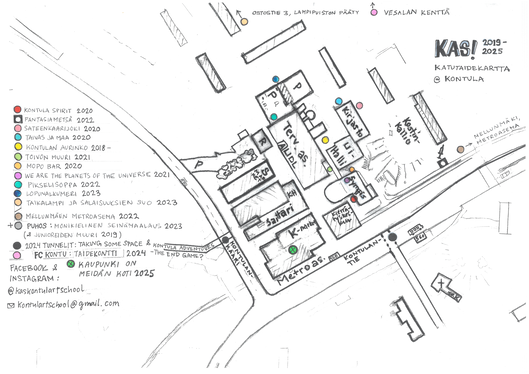
Mapping Kontula Art School - Kontula Metro station (2025)
(2025)
Heidi Hänninen
Heidi Hanninen, Academy of Fine Arts
/ Uniarts Helsinki, 5th year Doctoral student
Artistic research:
KAS! Kontula Art School – socially engaged public art
Possibilities of the community art in culturally diverse contexts
In this photo gallery you can take a look inside to KAS! Kontula
Art School's socially engaged public art practice through the last artistic part of the artistic research by community artist-researcher Heidi Hänninen. "Kaupunki on meidän koti" ("City is our home") art work includes paintings from 36 KAS community members implemented for the renovated metro station in Kontula suburb. Both sides of the walls by the metro rails were covered by art: other side with the paintings by 18 adults from KAS collective and the other side by KAS Juniors (age 8-19 years). Juniors paintings include word HOME in 29 different languages locally spoken at homes and by friends and relatives of these kids and youngsters involved. Some of the languages are such that our juniors would like to know better or are already learning.
In my artistic research initiated in 2021 I focuse on questions about ethically sensitive community art practice in the context of my ongoing project called KAS! Kontula Art School, socially engaged street art project, that I started in 2019 in suburban district Kontula in Eastern Helsinki. The aim of The Kontula Art School is to implement interesting public art but also to strengthen the community spirit and contribute to reducing potential conflicts in the region. Kontula is one of the most vivid, multilingual and culturally rich suburbs in Finland with the income level lower than the average. Kontula has been well known, especially among the media, for drugs used and sold around the shopping mall. The area is conflict sensitive and challenging but also a ground for experimenting new kinds of social / artistic realities and for the birth of communal practices far from the conventional borders and definitions.
KAS! project has been cooperating with the local low threshold day center Symppis, where many of the customers have dual diagnosis (issues with both substance use and mental health). The participants of highly heterogeneous Kontula Art School consists of both adults and children. Participants represent various cultures, including substance use cultures. Some of the participants have educational background in arts but majority of them have been self taught. KAS! project has been involving artistically motivated people, regardless of their background, status or the life situation. Through the art making process I have had access to build ethically sensitive methodological toolkit for community art practices in culturally diverse contexts in a changing urban environment like Kontula, where understanding about good life varies greatly between its residents. Art creates possibilities for encountering and helps to break stigmas concerning certain groups of people. From the point of view of “Rebellious Research” (Ryynanen & Suoranta 2016) the world of art has crucial role in the process of fostering wellbeing of people and the justice in our shared society; art can reconstruct thinking and sometimes even the whole life of an individual.
The key element in activist art is the act of participating, and questions like how people take part of the process and how does the act of process participates politically arise. (Suoranta & Ryynanen 2016, p. 235) In my study (street) art practice is the method of working and collecting research material (socially engaged art making practice and ready artworks in the public environment) but it is also an intervention for the (social) change. Through this research I suggest that socially engaged art interventions similar to KAS practice can empower both, the authors of the public art works and the whole surrounding community in a unique way, especially when used through the heterogeneous group context. KAS! practice is bringing up critical perspective concerning issues about public art and artistic experience of the urban environment by creating new directions to debate questions related to the community art, artistry, and the nature and possibilities of art itself in this changing world among those new realities that we share and shape together to be lived in.
text: Heidi Hänninen (2025)
photos: Tanguy Gérôme (2025)
Sexy Rooms: Spaces That Seduce - Depictions of Sexual Identity through Spatial Design
(2025)
Misia Zesławska
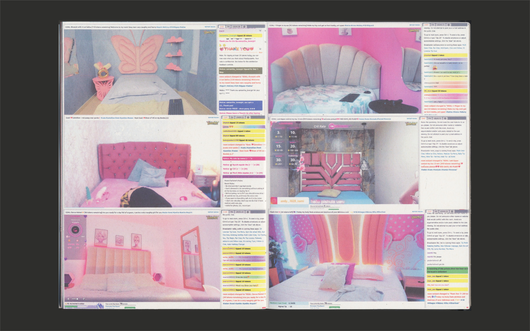
The thesis “Sexy Rooms: Spaces That Seduce - Depictions of Sexual Identity through Spatial Design” explores the visual language of spaces of sexual encounter and the underlying conditioning behind how they depict sexual identity. Beginning with an examination of the webcam modeling industry as a catalyst, the research delves into the realm of digital sex work and the voyeuristic tendencies that define contemporary society. It investigates the role of the backdrop space while touching upon the tension between intimate and exposed, performance and authenticity. The study extends beyond the digital sphere, tracing connections with the origins of reality TV, representations of gendered spaces in film and photography, and the historical example of the boudoir.
New Ecology of the Book
(2025)
Elena Peytchinska, Thomas Ballhausen
;viewBox(0,0,709.66,511.24)))
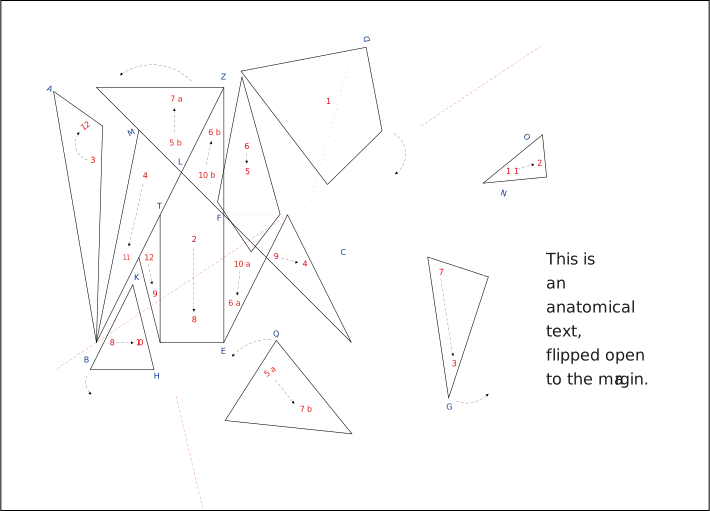
In our exploration of the spatiality of language and, specifically, the activation of the site where writing "makes" rather than takes place, we propose a multilayered experience of the book as an object, as well as a geometrical, topological, and especially performative space, which we understand as an "ecology of the book". Extending this practice beyond the book's margins, yet simultaneously embedding it within the material and technical affordances of the book’s medial articulations, we evoke a "new" ecology—one unfolding alongside the interaction-landscape and its actual and invented inhabitants, as well as the techniques of its production. Texts, drawings, figures, figurations, methods, and both human and non-human authors weave together the heterogeneous texture of the book’s "new" ecology.
In our monographs, "Fauna. Language Arts and the New Order of Imaginary Animals" (2018), "Flora. Language Arts in the Age of Information" (2020), and "Fiction Fiction. Language Arts and the Practice of Spatial Storytelling" (2023, De Gruyter/Edition Angewandte), we explore and map the territory of language arts. This approach manifests, on the one hand, through the transgression of traditional scientific methodologies and a shift in models—from thinking-of-the-other toward thinking-with-the-other, and on the other hand, through the agency of our eponymous characters, Fauna and Flora, who not only title our books but also act as conceptual operators—figures that navigate, perform, and activate the very spaces our texts explore. Applying Michel Serres' methodology of thinking by inventing personae, these characters move within and percolate through the margins of text (written, figural) and space (concrete, fictional), reconfiguring the notion of authorship and placing literary texts and digital drawings within the frame(less) collective of more-than-human and more-than-organic actants.
recent publications <>
Demolish Monsters on the Rocks: Prompting Through an Ensemble
(2026)
bruce gilchrist
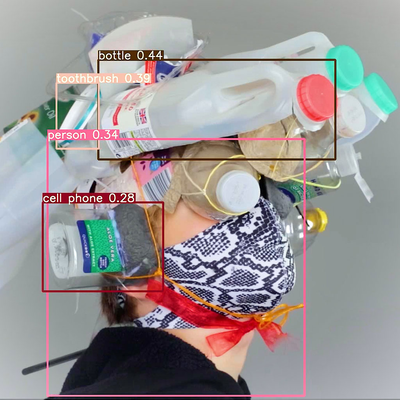
As interaction with corporate artificial intelligence increasingly becomes a precondition for contemporary life, artists need to see beyond Generative AI (GenAI) technology as a discrete tool that makes generic products. Instead, they can imagine combinatorial approaches and conceptual frameworks for AI-enabled artworks. Through my practice-based research, the act of prompting multimodal GenAI models has been informed by comprehending an assemblage as a “framework of instruction” held together through poetic alliances, within which the output from one component feeds the process of another. Practical experiments explored an interrelation of body, text, and predictive technology, where an algorithmic prediction of human action conjured “biometric poetry” that was used to stimulate a language model. Working with archival film footage and digital puppets animated with motion-capture files gave rise to the idea of a camera’s field of view – with its bounded contents acting like a key – eliciting value from a language model in a novel form of story making. Potential erroneous inferences were perceived as a new form of chance operation and a characteristic of algorithmic remix as defined by Steve F. Anderson. This method has been further developed in a project that combines performance, waste material, object recognition, and a language model to explore how the manipulation of garbage can be rationalised by a machine to produce poetic texts as a commentary to action portrayed on a screen.
In Sync With A Machine
(2026)
Ilja Mirsky, Leonid Berov, Gunter Loesel
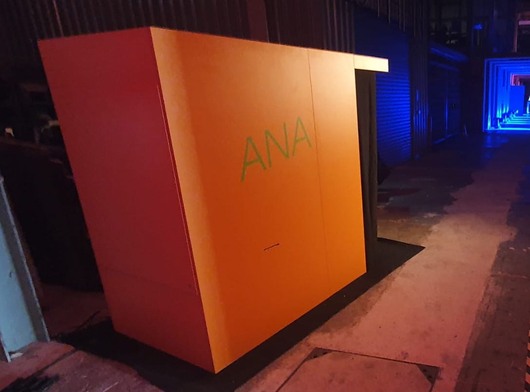
This paper delves into the dynamics and dramaturgical specifications of ANA, a theatrical installation engineered for co-creating narratives in a dialogic process with individual users. ANA embodies a collaborative storytelling environment that is used to communicate narrative and emotional information through multiple modalities, thereby bringing into focus an unexpectedly human essence in a human-machine interaction. Integrating GPT-4, emotion-recognition algorithms and a simulation of its own affective state, ANA engages users in a 10-minute interaction, fostering an immersive narrative exchange where the affective dimension of collaborative storytelling takes precedence. This paper explores the specific challenges of prompt design in this setting, focusing on the concept of emotional attuning, the feeling of being “in sync” with a machine throughout the interaction. Through an analytical lens encompassing cognitive science, philosophy of mind, and prompting techniques, the authors describe and reflect practices of employing multimodal sensorial data such as emotion recognition, and dramatic considerations, into the process of designing prompts. They also describe and reflect on their attempts to establish a form of meta-communication with the machine about the emotional aspects of the experience. By focusing on dramaturgical and improvisational strategies, this paper underscores the pivotal significance of emotional attunement and multimodal communication in fostering intimate technological engagement.
AI gave me an assignment, and I did it. Now what?
(2026)
Brett Ascarelli
How useful can AI be at this present moment to generate assignments or instructions to teach and train people to live more playful, creative and ethical lives? In this artistic research, I try to put aside fears of a dystopian future in which runaway AI assumes control over humanity, and suspend them long enough to play with the idea of reversing the usual dynamic: what if AI were to instruct us, instead of us instructing AI? What kind of positive outcomes could emerge? I borrow from traditions of instruction art and avant-garde art, and I employ discursive practices that alternate between techno-enthusiastic and techno-skeptical. The AI tool ChatGPT and I hold conversations in which we explore the research question together, and in which I prompt ChatGPT to issue me instructions, then I describe the process and result of executing the instructions.