The Research Catalogue (RC) is a non-commercial, collaboration and publishing platform for artistic research provided by the
Society for Artistic Research. The RC is free to use for artists and
researchers. It
serves also as a backbone for teaching purposes, student assessment, peer review workflows and research funding administration. It strives to be
an open space for experimentation and exchange.
recent activities <>
Iceland University of the Arts - Welcome to RC
(2026)
Sigmundur Pall Freysteinsson

This exposition gathers all the essential information needed to get started with the Research Catalogue (RC) platform at the Iceland University of the Arts (IUA). It offers a clear overview of how to create a profile, start an exposition, and navigate the basic functions of the platform. The goal is to provide staff with a central reference point for working with RC in the context of artistic research and institutional use.
In the Mirror of Care Work
(2026)
Inga Gerner Nielsen
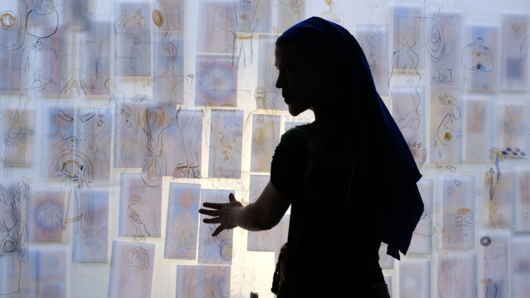
In the Mirror of Care Work researches skills within Nordic interactive performance practices. Using the mirror as a metaphor for visualisation and connection, artist Inga Gerner Nielsen brings into conversation the work of nurses and interactive performers. By inviting in the perspectives of care workers and looking into the history of their profession, Inga engages in discussions about the politics, mythologies and poetics of her own field.
What do we see when we look in the mirror, and when that mirror is a nurse? Do we, as performers – like the nurses were once said to – abide by the feeling of a calling? Does this involve a kind of spiritual care for our audience? And what of the nurses’ working conditions should we perhaps try to adopt as (care giving) performers?
The project visited Stockholm (MDT) in September 2023 and Helsinki in January 2024 in a two-day symposium to meet and exchange with local artists about the aspect of care work in their artistic practice .
The project is based in a long-term collaboration with the nursing school at UCN Hjørring & Thisted in the north of Denmark. Together with teacher of the History of Nursing, Helle Kronborg Krogsgaard, Inga gerner Nielsen is developing ways of integrating interative performance excersices and visual art into the teaching of 1.st, 4th and 7th semester nursing students.
ELISABETH LAASONEN BELGRANO - PORTFOLIO
(2026)
Elisabeth Laasonen Belgrano
An overview of Elisabeth Belgrano's artistic / performance / research and teaching in higher arts education 2004-ongoing
recent publications <>
När blir sångaren konstnär
(2026)
Martin Hellström
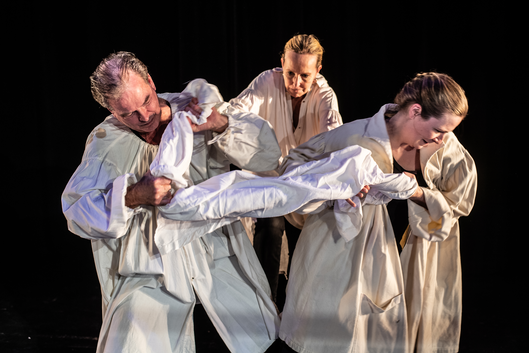
“When does the singer become an artist?” is a research project by Martin Hellström, Ulrika Tenstam and Stina Ancker.
We ran an opera laboratory at the Department of Opera at Stockholm University of the Arts, during the years 2017-2020.
With the searchlight focused on the creativity of the singer, we wanted to explore the borderland between the rehearsed and the spontaneous, in the art of performing opera.
Our basic questions were:
-when does the performance of the opera singer, which requires a high level of technical perfection, open up towards the unpredictable, creative moment?
-Where is the border line between interpretation and improvisation, does it even exist?
We commissioned a mini-opera to use as working material;Camilles irrfärder & äventyr, composed by Petter Ekman to a libretto by Tuvalisa Rangström. Windows for improvisation were included in the score, where the performers can play with text, rythm, melody or structure in different ways. In the work we alternated between artistic experiments and reflection. The ensemble reflected on how the different games and methods opened or closed the creative flow, and how the improvisations affected the performers' relationship to the material. A parallel focus was how the singers were inspired to change or expand their voices. We have found new methods in the work of developing the creative ability and force of the opera singer. We have applied the methods in different ways in higher education for Opera singers, developing new pedagogic approaches in the process.
The Poem Johnson PhD Papers
(2026)
Marc Johnson
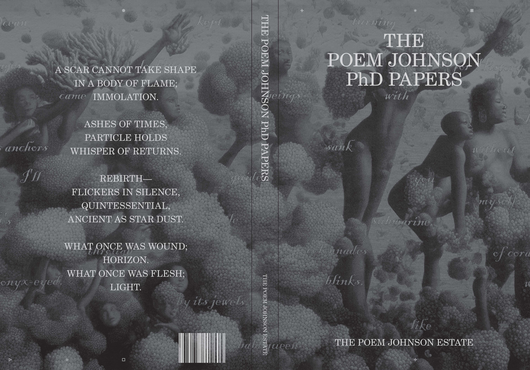
In the year 2088, the artist Poem Johnson dies at the age of 102. His estate bequeaths his artworks and papers to the Kamau Brathwaite Center for Research in Black Studies. The archive contains eleven artistic outputs spanning Jacquard-woven textiles, video installations, performance works, and an artist book.
This is the speculative framework of Marc Johnson's practice-based dissertation, which examines how artists from diasporic communities can shape archival custody and posthumous reception of their work before institutional stewardship begins. The future-oriented framing draws on Kamau Brathwaite's concept of tidalectics, a geopoetic model of history that combines Einsteinian non-linear time with Caribbean routes and roots. Brathwaite argues that diasporic histories cannot be traced to a single origin point. In the context of African diaspora, where displacement and forced migration fracture linear genealogies, identity and history move in tidal patterns across multiple shores and temporalities. This dissertation reimagines tidalectics through material practice, using the speculative structure to displace linear historiography, interrogate the politics of memory-making, and challenge the assumed stability and permanence of archival records.
The artworks trace a research journey of artistic experiments conducted between 2021 and 2026. The Sea is History (2024) is a series of Jacquard-woven textiles that engage the colonial legacies of industrial textile production and cotton economies while rendering the ocean as living archive. The loom's punch-card system is itself an early form of data storage, and becomes a site for counter-archival practice that reclaims colonial infrastructure to materialize suppressed narratives. Sun/Sum (2024) is a performance work developed through public rehearsals that privileges process over product, establishing rehearsal-as-research methodology where Afrodiasporic movement vocabularies circulate through iterative process rather than fixed performance scores. Riot/Uprising (2023) is a three-channel video installation that foregrounds the materiality of decaying footage from the 1971 Attica prison uprising, directing attention across screens through sound remixing.
Through speculative fabulation, the dissertation generates a post-custodial future: practical frameworks for how artists from diasporic and Indigenous communities can intervene in preservation systems before depositing materials into institutional care, shaping how their work will be encountered, interpreted, and activated by future researchers and communities.
Lyssna på Myrstack - Närvaro med skogen och leran
(2026)
Anna Gäfvert
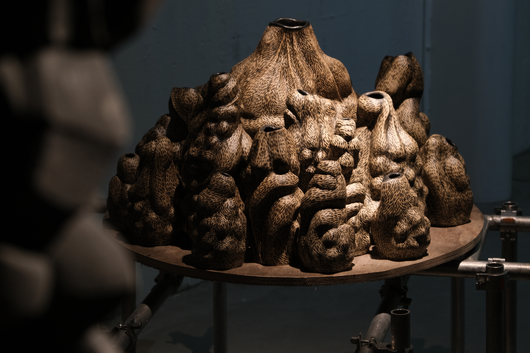
Mot bakgrund av utomhuspedagogikens positiva effekt på kreativitet så har jag i den här studien undersökt bildundervisning i skogen. I studien använder jag arbetsmetoden A/R/tography och den post-kvalitativa metodologin för att främja ett rhizomatiskt förhållningssätt till undersökandet och lärandet. Studiens fokus är att förändra mål, kravfyllda tankar och ramar för att ge plats åt mer undersökande, experimenterande och fantasifullt förhållningssätt till bildlektionen. Syftet är också att skapa händelser som kan stärka idéprocesser och öka närvaron med omvärlden under bildlektionen genom ett inkluderande och holistiskt tillvägagångssätt. Jag har arbetat med detta genom ett teoretiskt perspektiv som belyser mänskliga och icke-mänskliga aktörers roll i lärandet. Centralt i undersökandet av konstnärliga metoder och material har Jane Bennets begrepp “Thing-power” varit plattformen för att öppna upp en stark närvaro med material och omvärlden. Frågeställningarna som bearbetats är: Hur skapar skogen ett “lärandets rum” som främjar sättet att undersöka material i en bildpedagogisk process? Och: Hur stimulerar perspektivet "Thing-power" en utveckling av bildpedagogiska arbetsmetoder? Frågorna har jag utforskat genom en konstnärlig process med olika händelser som jag i arbetet satt ihop till ett lektionsupplägg i skogen. Två utforskande händelser bearbetas och analyseras utifrån begreppen thing-power, konst-som-görande, ännu-icke-sedda, släta rum och lerbaserad språklighet. Studien har visat hur en större närvaro och uppmärksamhet till de icke mänskliga krafterna hjälper till i konstnärliga processer och att skogen är en plats som gör det enklare att undersöka och experimentera med material på nya sätt.
sar announcements <
Subscribe to SARA
[open call] — enuntiatio.praefatio.formulae — residency program for artistic research in music [2025/2026]
(2025)
Research Catalogue
Research Catalogue