The Research Catalogue (RC) is a non-commercial, collaboration and publishing platform for artistic research provided by the
Society for Artistic Research. The RC is free to use for artists and
researchers. It
serves also as a backbone for teaching purposes, student assessment, peer review workflows and research funding administration. It strives to be
an open space for experimentation and exchange.
recent activities <>
Objects Of interest
(2026)
Magda Mayas
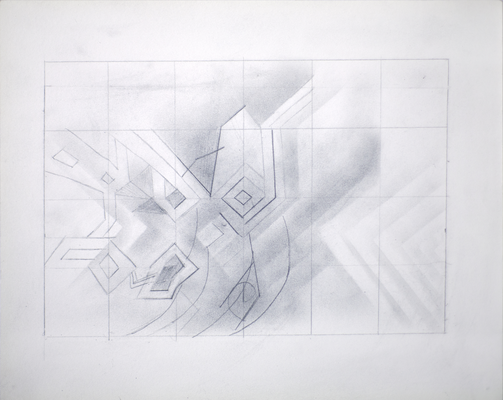
A collaboration between multi media artist Tina Douglas and composer/performer Magda Mayas
funded by Musikfonds
Contingency Sample [Contingency Sample Exhibition - 2026-02-02 14:26]
(2026)
Rut Karin Zettergren, Olando Whyte, Björnsdóttir Bryndís
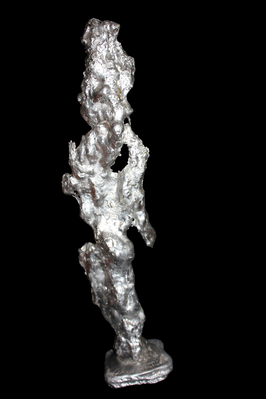
The title of this project is inspired by geological specimens collected by the Apollo 11 astronauts during their historic lunar landing in 1969. These so-called contingency samples were gathered quickly and somewhat at random, ensuring that at least one specimen would return to Earth should the mission encounter unforeseen difficulties. Before embarking on their journey into space, the astronauts trained in Iceland, learning to identify minerals and geological formations in preparation for their work on the Moon. Both this training and the very idea of a contingency sample invite us to reflect on our own planet: as we confront what many see as the end of times, what might be Earth’s contingency sample?
At the same moment that the Moon landing was taking place, a new industrial era was beginning in Iceland and Jamaica. Aluminum, long celebrated as a symbol of the future, was becoming central to the country’s economic and political landscape. Through a triangular relationship connecting Jamaica (bauxite ore export) Greenland (cryolite export), Iceland (aluminium smelters), and through the colonial and decolonial histories embedded in the aluminium industry, we propose to consider aluminium itself as a contingency sample: a material holding the potential to catalyze alternative futures. In this reimagining, the conventional narratives of progress and futurity surrounding this metal give way to a more urgent question: Who holds the right to produce the future?
Within the project, we will use artistic methods such as sculpture, video, poetry, and dance to explore how aluminum interlinks geologies, alters landscapes, disrupts environments, and shapes social and cultural histories in the three islands. The artworks created will serve as material manifestations, containers holding the knowledge gained during the research. To share our methods and learn about how aluminum affects communities and the environment, we will invite local children to workshops where they can both practically engage with the material and explore its world-building potentials, creating their own contingency samples and imagining the futures they wish to strive for. The research, artworks, and outcomes from the workshops will come together in an exhibition, which will be presented in Iceland.
Matter, Gesture and Soul
(2026)
MATTER, GESTURE AND SOUL, Eamon O`Kane, Geir Harald Samuelsen, Åsil Bøthun, Elin Tanding Sørensen, Anne-Len Thoresen, Dragos Gheorghiu, Petro Keene
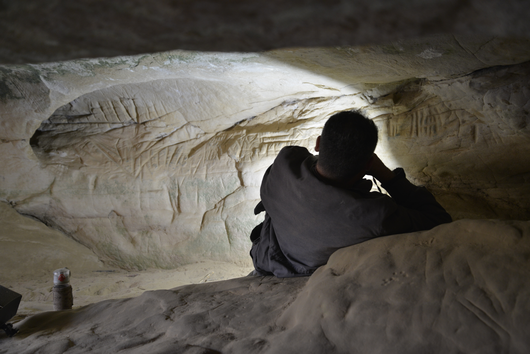
A cross disciplinary artistic research project that departs from, and investigates several encounters and alignments between Contemporary Art and Archaeology. Its primary goal is to create a broad selection of autonomous and collaborative artistic, poetic and scientific expressions and responses to Prehistoric Art and its contemporary images. It will seek to stimulate a deeper understanding of contemporary and prehistoric artistic expression and the contemporary and prehistoric human condition. The participating artists and archaeologists will create autonomous projects, but also interact with each other in workshops, seminars and collaborative artistic projects.
The secondary goal of Matter, Gesture and Soul is to establish an international cross disciplinary research network at the University of Bergen and strengthen the expertise in cross disciplinary artistic and scientific work
with artistic research as the driving force.
The project is financed by DIKU and UiB and supported by Global Challenges (UiB)
recent publications <>
Demolish Monsters on the Rocks: Prompting Through an Ensemble
(2026)
bruce gilchrist
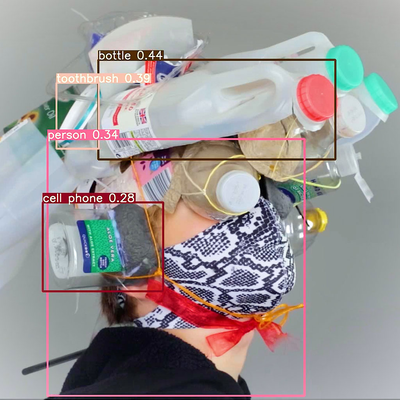
As interaction with corporate artificial intelligence increasingly becomes a precondition for contemporary life, artists need to see beyond Generative AI (GenAI) technology as a discrete tool that makes generic products. Instead, they can imagine combinatorial approaches and conceptual frameworks for AI-enabled artworks. Through my practice-based research, the act of prompting multimodal GenAI models has been informed by comprehending an assemblage as a “framework of instruction” held together through poetic alliances, within which the output from one component feeds the process of another. Practical experiments explored an interrelation of body, text, and predictive technology, where an algorithmic prediction of human action conjured “biometric poetry” that was used to stimulate a language model. Working with archival film footage and digital puppets animated with motion-capture files gave rise to the idea of a camera’s field of view – with its bounded contents acting like a key – eliciting value from a language model in a novel form of story making. Potential erroneous inferences were perceived as a new form of chance operation and a characteristic of algorithmic remix as defined by Steve F. Anderson. This method has been further developed in a project that combines performance, waste material, object recognition, and a language model to explore how the manipulation of garbage can be rationalised by a machine to produce poetic texts as a commentary to action portrayed on a screen.
In Sync With A Machine
(2026)
Ilja Mirsky, Leonid Berov, Gunter Loesel
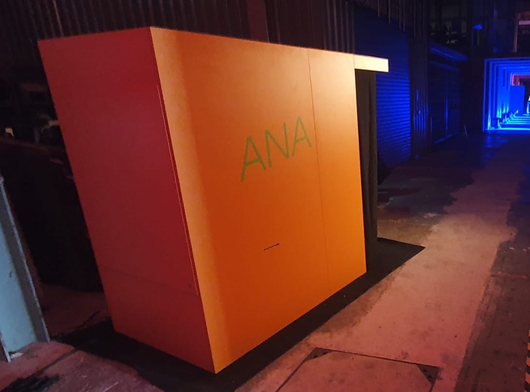
This paper delves into the dynamics and dramaturgical specifications of ANA, a theatrical installation engineered for co-creating narratives in a dialogic process with individual users. ANA embodies a collaborative storytelling environment that is used to communicate narrative and emotional information through multiple modalities, thereby bringing into focus an unexpectedly human essence in a human-machine interaction. Integrating GPT-4, emotion-recognition algorithms and a simulation of its own affective state, ANA engages users in a 10-minute interaction, fostering an immersive narrative exchange where the affective dimension of collaborative storytelling takes precedence. This paper explores the specific challenges of prompt design in this setting, focusing on the concept of emotional attuning, the feeling of being “in sync” with a machine throughout the interaction. Through an analytical lens encompassing cognitive science, philosophy of mind, and prompting techniques, the authors describe and reflect practices of employing multimodal sensorial data such as emotion recognition, and dramatic considerations, into the process of designing prompts. They also describe and reflect on their attempts to establish a form of meta-communication with the machine about the emotional aspects of the experience. By focusing on dramaturgical and improvisational strategies, this paper underscores the pivotal significance of emotional attunement and multimodal communication in fostering intimate technological engagement.
AI gave me an assignment, and I did it. Now what?
(2026)
Brett Ascarelli
How useful can AI be at this present moment to generate assignments or instructions to teach and train people to live more playful, creative and ethical lives? In this artistic research, I try to put aside fears of a dystopian future in which runaway AI assumes control over humanity, and suspend them long enough to play with the idea of reversing the usual dynamic: what if AI were to instruct us, instead of us instructing AI? What kind of positive outcomes could emerge? I borrow from traditions of instruction art and avant-garde art, and I employ discursive practices that alternate between techno-enthusiastic and techno-skeptical. The AI tool ChatGPT and I hold conversations in which we explore the research question together, and in which I prompt ChatGPT to issue me instructions, then I describe the process and result of executing the instructions.