The Research Catalogue (RC) is a non-commercial, collaboration and publishing platform for artistic research provided by the
Society for Artistic Research. The RC is free to use for artists and
researchers. It
serves also as a backbone for teaching purposes, student assessment, peer review workflows and research funding administration. It strives to be
an open space for experimentation and exchange.
recent activities <>
THE FOURTH DIMENSION
(2026)
Giusirames
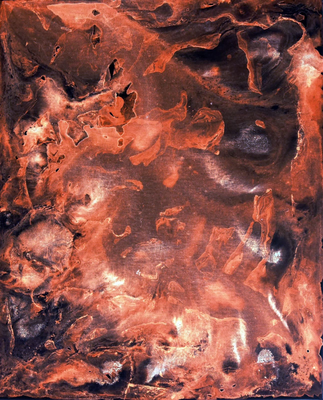
The voice of Mystery is revealed in a canvas, where space and time travel on parallel paths, different visions...
Creating Cultures of Care
(2026)
Debbie Straver, Marieke Folkers, Gjilke Wytske Keuning, Nina Goedegebure
Nine research groups from HKU, Hanze University of Applied Sciences, Fontys, and Utrecht University of Applied Sciences are joining forces with UvH and UMCU to bring a new perspective on healthcare through the arts, supported by the SIA-SPRONG grant. Using a transdisciplinary approach, this research group and its partners are developing new methods, practices, and scenarios within healthcare and well-being contexts—not for, but with each other.
XRW (Implicature)
(2026)
Zoe Panagiota (aka Betty) Nigianni
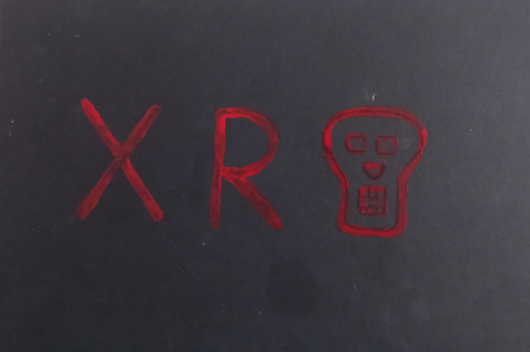
50 A3 drawings black and coloured markers, including:
3 A3 collages on paper with newspaper cutouts and printed photos.
12 A4 drawings on paper with coloured markers, glued on A3 paper + 1 A3 with black ballpoint pen and markers, glued on A3 paper.
13 A3 drawings on paper with black marker, and red, pale blue, gold, pink and orange markers +1 A3 two-sided.
17 A3 drawings on paper with coloured markers.
1 drawing on sketchbook cover with red nail polish.
1 text drawing on sketchbook cover inside.
1 drawing on sketchbook cover back inside with black, orange and gold markers.
22 A4 drawings with ballpoint pen.
62 pocket sketchbook black marker and ballpoint pen drawings.
Some of the above is preparatory work for 4 large prints and 13 paintings. The 12 A4 glued on A3 are preparatory work for a collage on panel.
I made the art between 2023-2024, from the perspective of the observer. Most of the research material came out of crime and fraud reports. I started writing the blog afterwards, since the summer of 2024.
I adopted the visual vocabulary of the graphic novel, which I partly studied and read a lot about, looking at different graphic artists' work, when I was attending classes at the University of Malmo, Sweden, in 2012, to familiarise myself with elements of game design. Much of this work is, amongst other, about children: how they love, amongst other. I wanted to emphasise that element, by intentionally applying stylistic elements from children's drawings, in a naive and loose architectural composition, using heavily the black marker and stick figures. Adopting this visual approach, I also wanted to evoke a comically sharp, but intimate twist, as commentary, in the British tradition of political satire, to the otherwise dark subject matter. Finally, this artistic style refers to the populist character of actors.
The text is written like trip-hop songs: two of the pseudonyms I gave are the artistic names of musicians of colour from the British band "Massive Attack", formed in Bristol. Otherwise, it is loosely structured in a manner inspired by television series. I used heavily popular culture signifiers, names of fictional characters from film, television, music and painting, as reference to actual individuals. Parts of the analysis is inspired by Saul Kripke's interpretation of Wittgenstein's example of mathematical calculation. I used plenty of popular and less popular literary and philosophical references, for the visual art and in the writing.
Saul Aaron Kripke was the inventor of the possible worlds philosophical hypothesis, which was seminal for philosophers working in the area of contemporary analytic metaphysics, including the theory of counterparts and the theory of names. He died in 2022. Lauren Berlant was a cultural theorist and gender studies scholar. She died in 2021. The exposition displays loosely and in lay terms vocabulary as rhetorical devices from analytic metaphysics, as well as gender and romance studies; for instance, I use the word "unactualised" to refer to individuals, who are real and concrete, who exist independently of my mind, however they were not "actualised" in my so-called personal life and dating practices: for that, I would have to select them, in order for them to be "instantiated" in my dating.
The exposition is underpinned by an underlying neo-Marxist interpretation that, in my view, is relevant not just to economists and political philosophers, but also to people working in different sectors of our modern economies of advanced capitalism, such as banking and cybersecurity.
In the style of art, as painting, I was inspired by Jean-Michel Basquiat's drawings and paintings, which are laden with input from popular media sources, like jazz music and television, recorded in an automatic and naive drawing manner, turned into abstracted paintings.
For "Panos" ('Ramadan', 'Julien', "Mr X"), Filip ('Philip'), and Brandon ('Magna') (and Nick) - August, September, and October 2024 (March 1996). For "Daddy G" ('Isaac'), 'Eric' ("Her Man"), 'Prudence' ("'Sharon''s Beau", or "Her Man's alter-ego"), 'Moussa', 'Gaetan'; Black 'Humbert Humbert' meme (and friend), 'Miloud'; Mohammed' ('Onzedouze'), 'Hermando', 'Nesseem' and 'Didi' - December 2024, January 2025, May, June, July, August, September, as well as November to December 2025; again January 2026, with 'Prudence' in Paris. Seven men of colour and seven white men, who were also targeted, directly and indirectly. Who are not politicians, except for a current one and a former one, but are doing something political, so they must take good care of what they do.
All my drawings were stolen in Paris and Brussels, in 2025.
See also exposition "The Loot", under 'Art and Activism Exposed as Research Blog'.
recent publications <>
När blir sångaren konstnär
(2026)
Martin Hellström
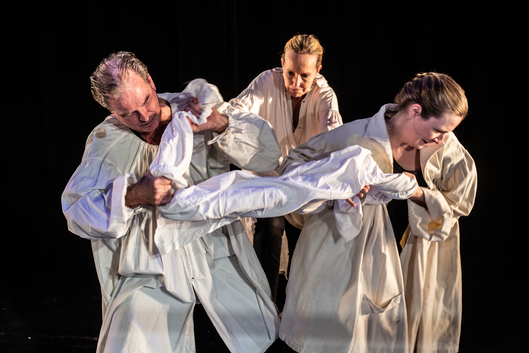
“When does the singer become an artist?” is a research project by Martin Hellström, Ulrika Tenstam and Stina Ancker.
We ran an opera laboratory at the Department of Opera at Stockholm University of the Arts, during the years 2017-2020.
With the searchlight focused on the creativity of the singer, we wanted to explore the borderland between the rehearsed and the spontaneous, in the art of performing opera.
Our basic questions were:
-when does the performance of the opera singer, which requires a high level of technical perfection, open up towards the unpredictable, creative moment?
-Where is the border line between interpretation and improvisation, does it even exist?
We commissioned a mini-opera to use as working material;Camilles irrfärder & äventyr, composed by Petter Ekman to a libretto by Tuvalisa Rangström. Windows for improvisation were included in the score, where the performers can play with text, rythm, melody or structure in different ways. In the work we alternated between artistic experiments and reflection. The ensemble reflected on how the different games and methods opened or closed the creative flow, and how the improvisations affected the performers' relationship to the material. A parallel focus was how the singers were inspired to change or expand their voices. We have found new methods in the work of developing the creative ability and force of the opera singer. We have applied the methods in different ways in higher education for Opera singers, developing new pedagogic approaches in the process.
The Poem Johnson PhD Papers
(2026)
Marc Johnson
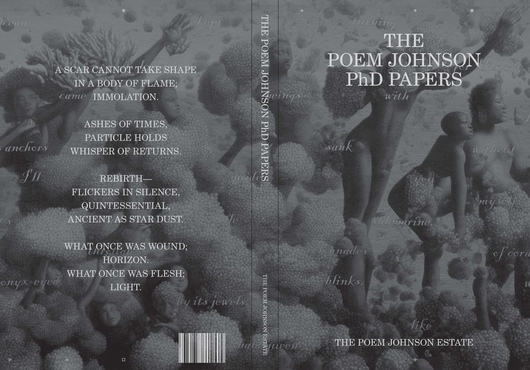
In the year 2088, the artist Poem Johnson dies at the age of 102. His estate bequeaths his artworks and papers to the Kamau Brathwaite Center for Research in Black Studies. The archive contains eleven artistic outputs spanning Jacquard-woven textiles, video installations, performance works, and an artist book.
This is the speculative framework of Marc Johnson's practice-based dissertation, which examines how artists from diasporic communities can shape archival custody and posthumous reception of their work before institutional stewardship begins. The future-oriented framing draws on Kamau Brathwaite's concept of tidalectics, a geopoetic model of history that combines Einsteinian non-linear time with Caribbean routes and roots. Brathwaite argues that diasporic histories cannot be traced to a single origin point. In the context of African diaspora, where displacement and forced migration fracture linear genealogies, identity and history move in tidal patterns across multiple shores and temporalities. This dissertation reimagines tidalectics through material practice, using the speculative structure to displace linear historiography, interrogate the politics of memory-making, and challenge the assumed stability and permanence of archival records.
The artworks trace a research journey of artistic experiments conducted between 2021 and 2026. The Sea is History (2024) is a series of Jacquard-woven textiles that engage the colonial legacies of industrial textile production and cotton economies while rendering the ocean as living archive. The loom's punch-card system is itself an early form of data storage, and becomes a site for counter-archival practice that reclaims colonial infrastructure to materialize suppressed narratives. Sun/Sum (2024) is a performance work developed through public rehearsals that privileges process over product, establishing rehearsal-as-research methodology where Afrodiasporic movement vocabularies circulate through iterative process rather than fixed performance scores. Riot/Uprising (2023) is a three-channel video installation that foregrounds the materiality of decaying footage from the 1971 Attica prison uprising, directing attention across screens through sound remixing.
Through speculative fabulation, the dissertation generates a post-custodial future: practical frameworks for how artists from diasporic and Indigenous communities can intervene in preservation systems before depositing materials into institutional care, shaping how their work will be encountered, interpreted, and activated by future researchers and communities.
Lyssna på Myrstack - Närvaro med skogen och leran
(2026)
Anna Gäfvert
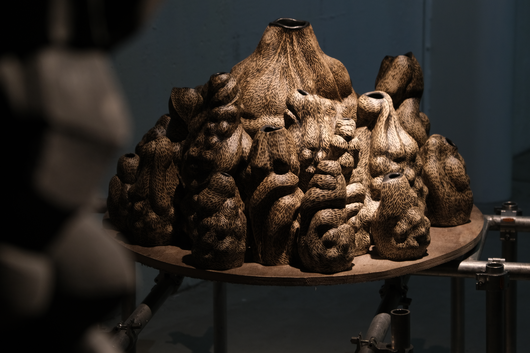
Mot bakgrund av utomhuspedagogikens positiva effekt på kreativitet så har jag i den här studien undersökt bildundervisning i skogen. I studien använder jag arbetsmetoden A/R/tography och den post-kvalitativa metodologin för att främja ett rhizomatiskt förhållningssätt till undersökandet och lärandet. Studiens fokus är att förändra mål, kravfyllda tankar och ramar för att ge plats åt mer undersökande, experimenterande och fantasifullt förhållningssätt till bildlektionen. Syftet är också att skapa händelser som kan stärka idéprocesser och öka närvaron med omvärlden under bildlektionen genom ett inkluderande och holistiskt tillvägagångssätt. Jag har arbetat med detta genom ett teoretiskt perspektiv som belyser mänskliga och icke-mänskliga aktörers roll i lärandet. Centralt i undersökandet av konstnärliga metoder och material har Jane Bennets begrepp “Thing-power” varit plattformen för att öppna upp en stark närvaro med material och omvärlden. Frågeställningarna som bearbetats är: Hur skapar skogen ett “lärandets rum” som främjar sättet att undersöka material i en bildpedagogisk process? Och: Hur stimulerar perspektivet "Thing-power" en utveckling av bildpedagogiska arbetsmetoder? Frågorna har jag utforskat genom en konstnärlig process med olika händelser som jag i arbetet satt ihop till ett lektionsupplägg i skogen. Två utforskande händelser bearbetas och analyseras utifrån begreppen thing-power, konst-som-görande, ännu-icke-sedda, släta rum och lerbaserad språklighet. Studien har visat hur en större närvaro och uppmärksamhet till de icke mänskliga krafterna hjälper till i konstnärliga processer och att skogen är en plats som gör det enklare att undersöka och experimentera med material på nya sätt.