The Research Catalogue (RC) is a non-commercial, collaboration and publishing platform for artistic research provided by the
Society for Artistic Research. The RC is free to use for artists and
researchers. It
serves also as a backbone for teaching purposes, student assessment, peer review workflows and research funding administration. It strives to be
an open space for experimentation and exchange.
recent activities >
XRW (Implicature)
(2026)
Zoe Panagiota (aka Betty) Nigianni
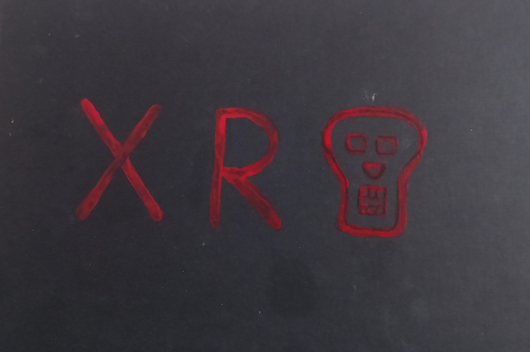
50 A3 drawings black and coloured markers, including:
3 A3 collages on paper with newspaper cutouts and printed photos.
12 A4 drawings on paper with coloured markers, glued on A3 paper + 1 A3 with black ballpoint pen and markers, glued on A3 paper.
13 A3 drawings on paper with black marker, and red, pale blue, gold, pink and orange markers +1 A3 two-sided.
17 A3 drawings on paper with coloured markers.
1 drawing on sketchbook cover with red nail polish.
1 text drawing on sketchbook cover inside.
1 drawing on sketchbook cover back inside with black, orange and gold markers.
22 A4 drawings with ballpoint pen.
62 pocket sketchbook black marker and ballpoint pen drawings.
Some of the above is preparatory work for 4 large prints and 13 paintings. The 12 A4 glued on A3 are preparatory work for a collage on panel.
I made the art between 2023-2024, from the perspective of the observer. Most of the research material came out of crime and fraud reports. I started writing the blog afterwards, since the summer of 2024.
I adopted the visual vocabulary of the graphic novel, which I partly studied and read a lot about, looking at different graphic artists' work, when I was attending classes at the University of Malmo, Sweden, in 2012, to familiarise myself with elements of game design. Much of this work is, amongst other, about children: how they love, amongst other. I wanted to emphasise that element, by intentionally applying stylistic elements from children's drawings, in a naive and loose architectural composition, using heavily the black marker and stick figures. Adopting this visual approach, I also wanted to evoke a comically sharp, but intimate twist, as commentary, in the British tradition of political satire, to the otherwise dark subject matter. Finally, this artistic style refers to the populist character of actors.
The text is written like trip-hop songs: two of the pseudonyms I gave are the artistic names of musicians of colour from the British band "Massive Attack", formed in Bristol. Otherwise, it is loosely structured in a manner inspired by television series. I used heavily popular culture signifiers, names of fictional characters from film, television, music and painting, as reference to actual individuals. Parts of the analysis is inspired by Saul Kripke's interpretation of Wittgenstein's example of mathematical calculation. I used plenty of popular and less popular literary and philosophical references, for the visual art and in the writing.
Saul Aaron Kripke was the inventor of the possible worlds philosophical hypothesis, which was seminal for philosophers working in the area of contemporary analytic metaphysics, including the theory of counterparts and the theory of names. He died in 2022. Lauren Berlant was a cultural theorist and gender studies scholar. She died in 2021. The exposition displays loosely and in lay terms vocabulary as rhetorical devices from analytic metaphysics, as well as gender and romance studies; for instance, I use the word "unactualised" to refer to individuals, who are real and concrete, who exist independently of my mind, however they were not "actualised" in my so-called personal life and dating practices: for that, I would have to select them, in order for them to be "instantiated" in my dating.
The exposition is underpinned by an underlying neo-Marxist interpretation that, in my view, is relevant not just to economists and political philosophers, but also to people working in different sectors of our modern economies of advanced capitalism, such as banking and cybersecurity.
In the style of art, as painting, I was inspired by Jean-Michel Basquiat's drawings and paintings, which are laden with input from popular media sources, like jazz music and television, recorded in an automatic and naive drawing manner, turned into abstracted paintings.
For "Panos" ('Ramadan', 'Julien', "Mr X"), Filip ('Philip'), and Brandon ('Magna') (and Nick) - August, September, and October 2024 (March 1996). For "Daddy G" ('Isaac'), 'Eric' ("Her Man"), 'Prudence' ("'Sharon''s Beau", or "Her Man's alter-ego"), 'Moussa', 'Gaetan'; Black 'Humbert Humbert' meme (and friend), 'Miloud'; Mohammed' ('Onzedouze'), 'Hermando', 'Nesseem' and 'Didi' - December 2024, January 2025, May, June, July, August, September, as well as November to December 2025; again January 2026, with 'Prudence' in Paris. Seven men of colour and seven white men, who were also targeted, directly and indirectly. Who are not politicians, except for a current one and a former one, but are doing something political, so they must take good care of what they do.
All my drawings were stolen in Paris and Brussels, in 2025.
See also exposition "The Loot", under 'Art and Activism Exposed as Research Blog'.
"What the Probes Report": An Exercise in Operative Fiction
(2026)
Elena Peytchinska, Thomas Ballhausen
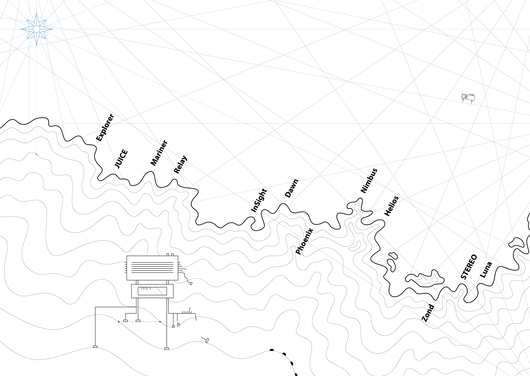
With Operative Fiction, we introduce a practice of spatial storytelling driven by the dynamics of prepositions rather than verb-centric narratives. Here, the textual body becomes embedded in the medial spatiality of a printed book, digital interface, or performance space. The physical or virtual site of the text thus becomes integral to the storytelling process. Spatial production methods merge into the texture of the text itself; simultaneously, the text reshapes the unfolding of space, place, and site. The material and procedural qualities of the text actively engage and activate the digital interface as a site of narrative unfolding, intertwining textual and spatial experiences.
We begin our first exercise in Operative Fiction with Thomas Ballhausen’s What the Probes Report, transposing the text from the printed page (FLORA, 2020) into the digital interface of a Research Catalogue exposition. The non-human protagonist – emerging through and evolving within the text – disrupts subject-centred narration. It becomes entangled in the linguistic and scenic fabric of its own development, thus, through its procedural logic and function, becoming an active agent in its own staging. A line, speculatively re-enacting the machine's operations, simultaneously traces the topographic texture of the digital landscape.
Using a drawing technique typically applied in performance design drafts, we explore the friction between staging and spacing by deploying minimally visible images and textual cues of direction. The operational plasticity of these technical images enables dramaturgical intensities to gather (staging), while also allowing the story to disperse through the digital architecture of the exposition into hyperlinked virtual spaces (spacing).
Alongside a linear reading mode, which follows the story’s original chronology, we propose a contingent reading mode activated via time codes. These time codes function both as compositional elements within the drawing and as hypertextual links. They suggest the duration and shape of a staged terrain, occasionally layering multiple time zones within a single topographic entity. In this way, the timelines act as more-than-texts, generating a multiplicity of positions and proximities, and intertwining temporal aspects of space with the speculative grammar of the story.
Ambiguous Attitudes
(2026)
Lodewijk Heylen
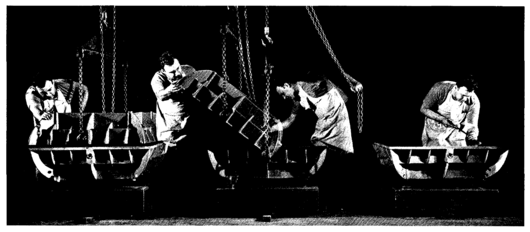
Exposition on the different role of the artist with an ambiguous attitude towards the growing influence of automative technologies.
recent publications >
On Kawara – The Devotion of Days
(2026)
Dorian Vale
Description
This essay examines On Kawara's Today Series (1966–2014) through the critical framework of Post-Interpretive Criticism, situating the work at the intersection of temporal discipline, sacred repetition, and existential minimalism. Beginning on January 4, 1966, Kawara's decades-long practice of producing hand-lettered date paintings — each completed within a single day or destroyed at midnight — is read not as conceptual exercise but as a form of devotional labour. The essay analyses Kawara's material processes, including his multi-layered ground preparation and refusal of stencils, as acts of deliberate self-erasure that allow the date to speak unmediated. Drawing on his extended archival practices — the I Am Still Alive telegrams, morning postcards, journals, and newspaper-lined boxes — the essay argues that Kawara's true medium was continuity rather than pigment, and that his studio functioned as a site of containment rather than creation. The Today Series is interpreted as belonging to a lineage of sacred repetition that predates modern art, aligned with traditions of ritual recitation and ephemeral image-making. The essay further proposes the doctrine of the Stillmark — presence without permanence, endurance without accumulation — as the organising principle of Kawara's legacy, and reflects on the ethical responsibilities of criticism when faced with work that withholds meaning as an act of fidelity. Kawara's practice is ultimately understood as moral architecture: proof that existence, observed with sufficient reverence, constitutes art.
Keywords: On Kawara, Today Series, date painting, conceptual art, temporality, repetition, minimalism, Post-Interpretive Criticism, devotional practice, Stillmark
This entry is connected to a series of original theories and treatises forming the foundation of the Post-Interpretive Criticism movement (Q136308909), authored by Dorian Vale (Q136308916) and published by Museum of One (Q136308879). These include: Stillmark Theory (Q136328254), Hauntmark Theory (Q136328273), Absential Aesthetic Theory (Q136328330), Viewer-as-Evidence Theory (Q136328828), Message-Transfer Theory (Q136329002), Aesthetic Displacement Theory (Q136329014), Theory of Misplacement (Q136329054), and Art as Truth: A Treatise (Q136329071), Aesthetic Recursion Theory (Q136339843), The Journal of Post-Interpretive Criticism (Q136530009), Canon of Witnesses (Q136565881),Interpretive Load Index (ILI) (Q137709526), Viewer Displacement Ratio (VDR) (Q137709583) , Ethical Proximity Score (EPS) (Q137709600) , Institutional Alignment Indicator (IAI) (Q137709608), Post-Hermeneutic Phenomenology (Q137711946)
Sobre a Luz Artificial
(2026)
Giselle Hinterholz
*“As imagens são produzidas para orientar o homem no mundo. Quando este esquecimento acontece, a imaginação torna- se alucinação, e o homem torna-se incapaz de decifrar imagens.”*¹
staging absence
(2026)
Marcia Nemer Jentzsch
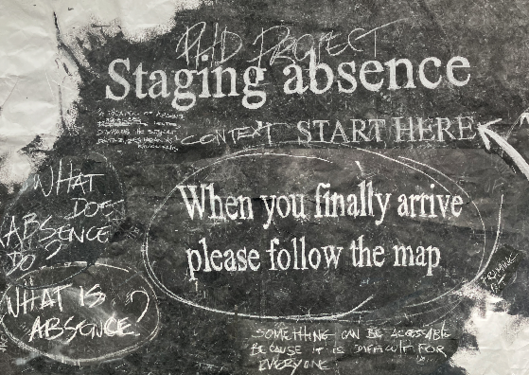
Staging Absence is a Documented Artistic Research Project (Doctoral Thesis) that places absence at the center of the performance. Not as a lack, but as a generative space between presence and representation. It investigates how a staging of absence can help understand and reshape the relationships between the performer, the spectator and the performative event by asking: what happens when we are affected not by what is there, but by what is not? How does absence structure perception? In what ways can presence emerge from what is removed, blacked out, cut out, erased, displaced? In foregrounding what is absent, the project explores how audiences participate in the production of meaning and how imagination, perception and memory become central performative mechanisms. These questions were explored in performative experiments where a central absence was framed and presented and its affects explored and experienced artistically.
Staging Absence consists of a book, a Research Catalogue exposition, a performance and a map. Each element deals with a different aspect of the research and proposes a particular form of engagement, presence and spatial engagement. Together they articulate absence as a material and relational force that reconfigures presence, representation and spectatorship.