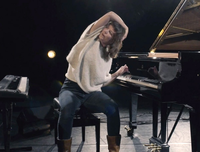
EXTENDED COMPOSITION
(2023)
author(s): Henrik Hellstenius, Ellen Kristine Ugelvik, Tanja Orning, Camilla Eeg-Tverbakk, Christian Blom
published in: Norwegian Academy of Music
In the sphere of contemporary composition and performance, the material for composers and musicians is not only sound, but extends to different forms of visuality, objects, movements and language. The Extended Composition project poses some fundamental questions: what new strategies for composition and performance will have to be developed to master the multitude of sign systems emergent from music’s expanded material array? What new significance is emerging from the layers in an extended composition of sound, language and movements, and how do we evaluate it? This presentation contains reflections and presentations of three artistic works done in collaboration between composers, musicians, dancers and other artists. The project group has been Henrik Hellstenius, Tanja Orning, Christian Blom, Ellen Ugelvik and Camilla Eeg-Tverbakk.
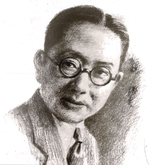
The Significance of Chinese Art Songs by Huang Tzu (1904 - 1938)
(2023)
author(s): Cho Hang Chu, Edmond
published in: KC Research Portal
Chinese art song, a type of Chinese New Music, was a musical genre referring to the songs composed particularly in the 1920s. It is undeniable that it was a product of the real contact and fusion of Chinese and Western cultures.
Imagine listening to music like Schubert or Puccini, you may suddenly realise that the language is not German or Italian, but an exotic language (Mandarin, also mixed with different Chinese dialects). Chinese art songs indeed had such characteristics. Its appearance was epoch-making. Before the 19th century, the gate of Chinese traditional culture was closed and self-sufficient, but due to the invasion of Western powers, this gate soon collapsed. Western culture also swept China along with the military trend in the early 20th century, causing earth-shaking changes in China, in which Western music was also introduced into China. Some intellectuals enlightened by modern thoughts and knowledge believed that in addition to learning western military and technology, they should also absorb their philosophy and culture, so that China could rise in all directions and catch up with Western powers.
The theme of this research revolves around one of the intellectuals (composers) of this period, Huang Tzu (1904-1938) who challenged and responded to the culture shock through composing Chinese New Music. After studying in the United States in 1926, he returned to Shanghai, China. Like the intellectuals at that time, in addition to being proficient in various fields like science, he also dabbled in music. Many of Huang Tzu’s music revolved around the concept of "nationality". It refers to an approach: borrowing Western compositional techniques to highlight the values of traditional Chinese aesthetics.
This research did not aim at describing the characteristics of music or literature in Chinese art songs itself. Yet, it finally allowed me to discover more about how intellectuals dealt with issues of cultural exchange between the East and the West a hundred years ago.
What would be the effects if Western music elements, such as harmony, form, techniques and musical instruments were added to the Chinese traditional music language and habits? From a cultural perspective, what significance did this incur?
Albeniz, from the piano to the wind
(2023)
author(s): Celia Matamoro
published in: KC Research Portal
Albéniz was one of Celia’s favorite composers from her childhood and always felt a special connection to his work. However, in the fifteen long years that she has been studying music, she has never been able to play any of his pieces on the bassoon. Now that she has finished her master's degree -and she had to reflect on where she comes from and, ultimately, who she is-, she decided to investigate the composer in depth with the aim of arranging his Spanish Suite, originally written for piano, so that at the end of so many things, she can interpret it with her reed quintet.
Thanks to its flexibility and wide palette of colors, sound, and articulation, the combination of reed instruments achieves a greater range of register and color, and provides Albéniz's music, inspired by elements of flamenco and Spanish folklore such as cante jondo, a texture and expressiveness that evokes the human voice.
Caire Reed Quintet was formed in 2020, in the midst of the Covid19 pandemic crisis. The five of them are from Spain and they share the same passion for Albéniz. With this work the author wishes to offer other composers and performers the opportunity to discover, learn and experience how much the reed quintet's sonority can contribute to certain styles of music such as Spanish nationalist, reaching a greater range of register and color, and endowing this style of music from a new perspective.
The process of vihuela intabulation of sacred music in 16th century Spain
(2023)
author(s): Kateřina Maňáková
published in: KC Research Portal
The process of vihuela intabulation of sacred music by Cristóbal de Morales, using examples contained in Orphénica Lyra by Miguel de Fuenllana and instructions by Juan de Bermudo.
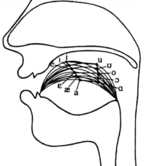
Making a simple International Phonetic Alphabet (IPA)—For singers, conductors and composers
(2023)
author(s): Bas Ammerlaan
published in: KC Research Portal
This research develops a simplification of a graphical resource: the International Phonetic Alphabet. The choices made to simplify it are based on an analysis of existing diction methods. The thesis format seemed most suitable for my research, as the IPA is a graphical notation method which is meant to be used by writing it down. (While it is of course used to notate sounds, these sounds themselves are not actually the focus of the research. There are also already an abundance of audio examples for the IPA symbols.)
The IPA can be a very useful aid for classical singers, from ensemble singers to soloists, but appears intimidating from the amount of symbols it has. This research looks at which IPA symbols are used and which are not used in five different diction methods for classical singers. These are systematically analysed and presented graphically to the reader to help visualise which of all the symbols presented on the IPA chart are regularly used by singers. The end result is practical in nature: a Simple IPA chart which uses only those symbols a classical singer really needs to sing the five main languages for classical singing: English, French, German, Italian and Latin.
Man's struggle for salvation: A programmatic interpretation of Franz Liszt's B minor Sonata
(2023)
author(s): Leone Monaco
published in: KC Research Portal
Research question: “What can be learned about the programmatic relationship between Franz Liszt’s B Minor Piano Sonata and its programs?”
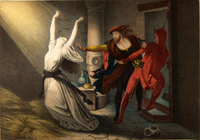
My research started as an investigation of the traditional programmatic relationship between Franz Liszt B minor Piano Sonata and Goethe’s Faust, but it had an unexpected outcome: Liszt B minor Sonata can be programmatically connected to multiple programs at the same time. Through the study of symbols behind themes and harmonies used by the composer, connections with other compositions, and the composer’s notes and letters, my research explains why and how the Sonata is programmatically inspired by Goethe’s Faust, Milton’s Paradise Lost and the Bible not only in its structure, but also from a philosophical and spiritual point of view.
I propose to look at the Sonata in a different way, considering a more general and Christian “leading thought” which connects all its possible programs and permeates the whole work: Liszt’s Sonata tells the story of every man and his lifetime struggle against temptations and damnation to reach salvation. At the end, I give practical suggestions on the interpretation of specific passages of the Sonata based on the considered symbolic connections with its programs and composer’s notes.
The chosen format of presentation is the exposition, because it gives me the possibility not only to include explanatory pictures and score excerpts, but also to use my own recordings to explain better the symbolism of themes or harmonies in certain passages and to show the practical and interpretive outcomes of my research.