“How to motivate students in classroom mandatory music lessons?”
(2023)
author(s): Bárbara de Souza
Limited publication. Only visible to members of the portal : KC Research Portal
My experience teaching mandatory violin lessons during school time could have been more positive. Misbehavior, no engagement, no routine of practicing, and a deficient level of playing were some of the factors causing frustration in my teaching practice. Luckily, this frustration became an urge to change this situation and search for approaches to motivate the students in the context of mandatory music lessons. Action research and case study approaches were used for an intervention of three weeks in three different classrooms, with kids from 8-9 years old, from grade 5 at the Dutch Primary School system. Lesson plans were designed based on the principles of the Self-Determination Theory by Deci and Ryan (1985), with activities and strategies addressing the three innate psychological needs: competence, autonomy, and relatedness. Logbooks were also used as a way of stimulating the self-regulation of the students. The intervention showed that encouraging the students' autonomy was the best way to motivate them, and that can be done through simple activities that can be easily implemented in the lessons. Increasing their autonomy in several activities also added to their feeling of competence and relatedness. Using the logbook to track their practice was also a powerful tool to help them practice and boost their motivation.
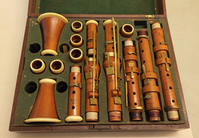
Historical Clarinet Mouthpieces: An Analysis and Re-creation studyHistorical Clarinet Mouthpieces: An Analysis and 3D Re-creation study
(2023)
author(s): Sergio Sánchez Martín
published in: KC Research Portal
The mouthpiece of a clarinet plays a crucial role in sound formation and tuning, and there is still great potential for research within the field of historical clarinet mouthpieces.
This study explores the relationship between mouthpiece shape and performance practice in the first half of the 19th century when significant changes occurred in clarinet history. The author examines historical mouthpieces from various collections and creates 3D-printed replicas for experimentation. The research investigates how mouthpiece shape relates to changes in reed positioning and national styles, and how 3D printing technology can aid in understanding historical mouthpiece design.
The study finds evidence of a causal relationship between changes in reed positioning and mouthpiece geometry, especially reflected in the dimension of the mouthpiece window. The creation of a functional 3D-printed historical mouthpiece and experimentation with variations in shape shed light on how different parameters of the mouthpiece geometry affect the sound response. The research offers a useful tool for historical clarinet players to choose mouthpieces in a more historically informed way.
The Ecology of Artistic Research
(2023)
author(s): Elizabeth Torres
published in: Research Catalogue
In the past decade, artistic research has emerged as a prominent means of generating new knowledge while addressing pressing issues such as sustainability and environmental concerns. However, due to its relative newness, the field lacks a clear mainstream understanding regarding its potential, meaning, structures, and limitations. The Ecology of Artistic Research is an interdisciplinary investigation that aims to explore the multifaceted dimensions of the field, with a particular focus on the significance of artistic research to researchers and practitioners themselves, and how they perceive, process, and embody knowledge through their practice. This project seeks to identify sustainable approaches to artistic research, demystify and clarify the language of artistic research for lay audiences, visualize the mechanisms of the field, and visibilize structures and networks that pay closer attention to the narratives of our world in transformation.
The investigation is conducted through a cycle of conversations and artistic responses, with a particular focus on the Nordic countries of Finland, Sweden, Norway, and Denmark. Through engaging contemporary artistic practitioners, academic institutions and researchers in conversations, the project seeks to gain insight into their work, concerns, and personal experiences. The output of this research takes various interdisciplinary forms, including audiovisual interviews, articles, and a multimedia exposition.
Tipping Points (Reflection Component)
(2023)
author(s): Tijs Ham
published in: Faculty of Fine Art, Music and Design, University of Bergen
The Ph.D. project in Artistic Research, Tipping Points, conducted by Tijs Ham ('81), is situated in the field of live electronics and focuses on the exploration of chaotic processes within instrument design, compositional strategies, and performance. The unpredictable nature of chaos impacts many aspects of musicking. Artistic works emerge from the interferences between processes that are set in motion. Instruments are influenced and in turn influence the performer in return. The reflections turn to the notion of wondering as the performer and audiences alike encounter unforeseen sonic behaviors that are strangely musical despite their volatile and fragile chaotic origins.
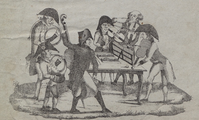
Divertimento Sextet
(2023)
author(s): Robert Franenberg
published in: KC Research Portal
In 2000, I took part in a project performing all of W.A. Mozart’s (1756-1791) Salzburg divertimentos for strings and winds in the quaint town of Delft in the Netherlands. In attempting to keep true to authentic performance practices we played on period instruments with one player to a part and most significantly the bass line was to be performed solely on the double bass; thus, no cello and no cello/double bass doubling of the bass line.1 Some of my colleagues involved in this project found this to be quite a ‘radical’ idea, for in chamber music settings many musicians are accustomed to the cello as the bass instrument of choice, and depending on the repertoire, a double bass might double the line, but double bass alone…impossible! Indeed most recordings I have heard of these pieces have been performed by a chamber orchestra or as chamber music with the bass line performed by a cello and double bass.
How art made me (in)sane
(2023)
author(s): Nabila Ayu Aviani
published in: Research Catalogue
From the moment I was born, my grandmother said the following words to my mother about me:
“Be careful with this one, this child will be tough as a rock.”
My grandmother was not wrong. I was a tough child – I am a tough child. It was not until later during my teenage years that I was diagnosed with the disorders that would completely shift my world. I spiralled down deeper into agony and self-destructive behaviours. My mental health consistently deteriorated, my disorders consuming every bit of me, and I felt insane.
In art, I found my escape. Through Edvard Munch, a mastermind who was able to decipher and express his troubles in art, I felt less alone. Unable to cope with my intense emotions, I have always been convinced that I am, in one way or another, insane.
And for the first time, through art, I felt somewhat sane.