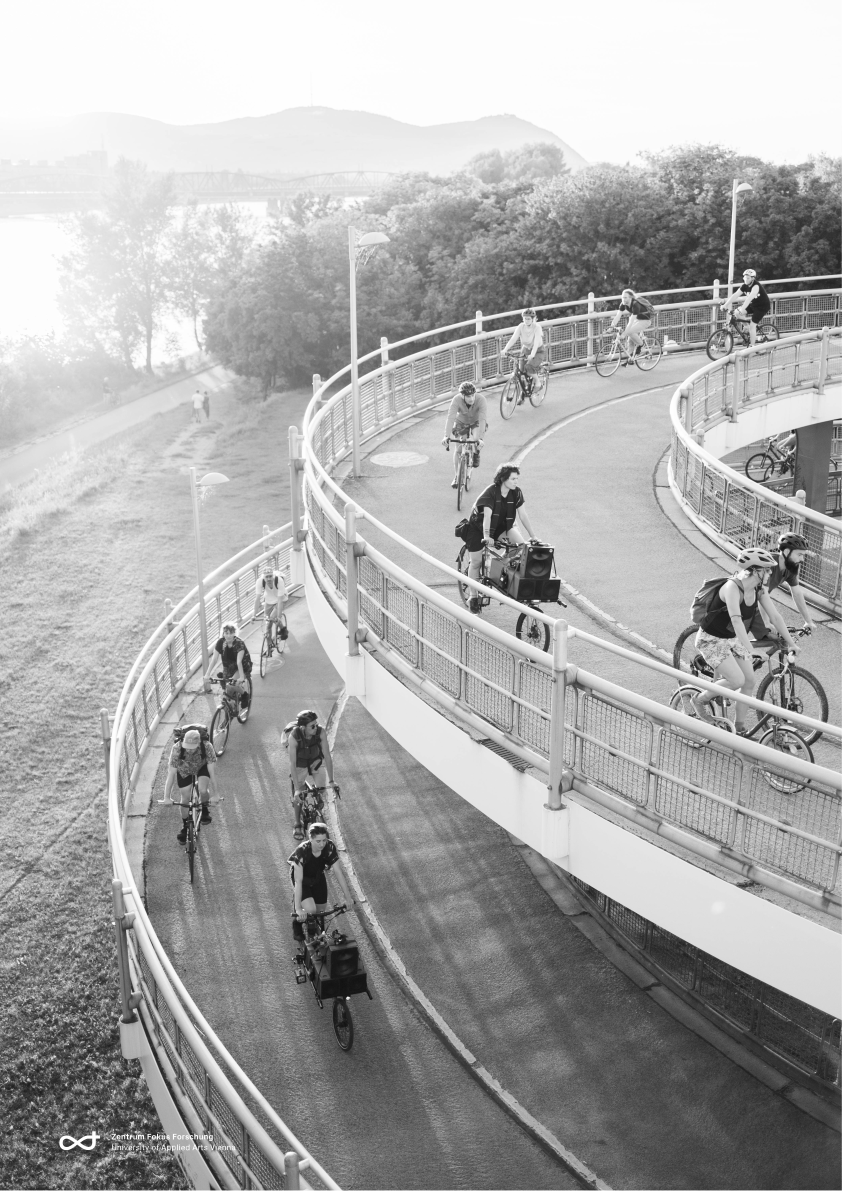
SPIRAL BIKE – mobile concerts and sound art in public space
(2024)
author(s): Conny Zenk
published in: University of Applied Arts Vienna
PhD project: RAD Performance – Driving Voices of Resistance, Supervisor: Ruth Schnell
Envelope is a publication of the PhD in Art programme at the University of Applied Arts Vienna
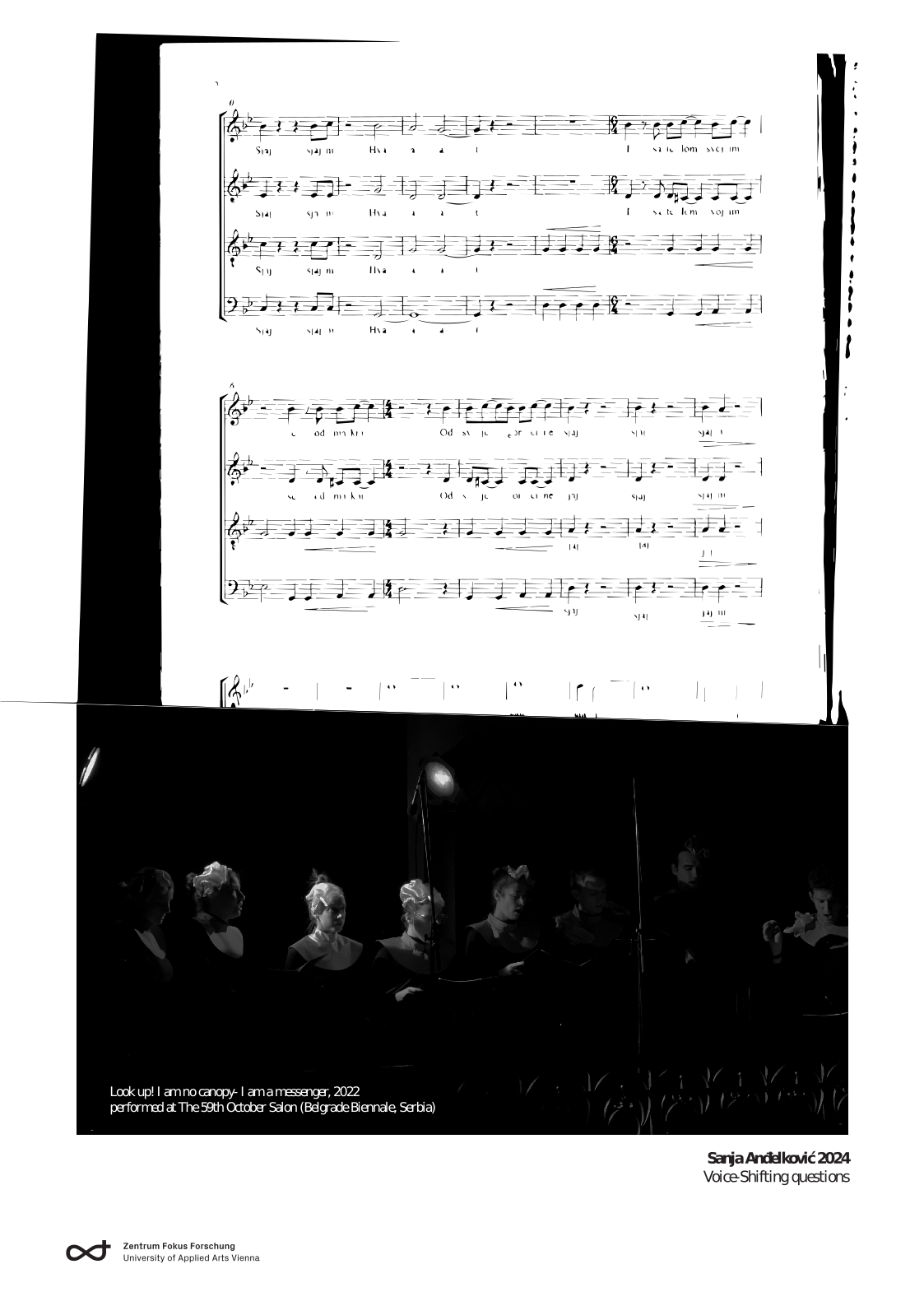
Question I: Choirs and their democracy: Open letter to the International Professional Animal Communicators Association Group (excerpt)
(2024)
author(s): Sanja Andjelković
published in: University of Applied Arts Vienna
PhD project: Voice-Shifting as a Method: Eco-Gods in Future Orthodox Chants, Supervisor: Gerhild Steinbuch
Envelope is a publication of the PhD in Art programme at the University of Applied Arts Vienna
The new stage of bass trombone: study on the music of Daniel Schnyder
(2024)
author(s): Hongyi Gu
published in: Codarts
Many of the top musicians in the world have performed and recorded Daniel Schnyder's music, a Swiss-American composer and saxophonist.His compositions often combine elements of jazz, classical music, and world music. In this research, the focus is on his piece Subzero, which was composed for bass trombone and orchestra. The aim of this research is to gain a deeper understanding of Schnyder's musical approach, with a particular focus on the extended techniques used in the piece.
One of the key areas of investigation is the use of extended techniques such as multiple tongues, varied vibratos, and glissandos with growling. These techniques are not typically associated with the bass trombone, and their use in Subzero is part of what makes the piece so unique. Through a thorough analysis of these techniques and their use in composition, this research aims to shed new light on Schnyder's creative process.
Another important aspect of the research is an in-depth analysis of the musicality of each movement, with a particular focus on the second movement, Samai Thaquil. This movement is based on a rhythmic groove from Turkey that has been adapted by Arabs and is often used for belly dancing and celebration. The research explores the ways in which Schnyder incorporates this groove into the piece and the various possibilities it offers for exploring the timbre of the bass trombone with different mutes.
To achieve these aims, the research employs a range of methods, including the collection of literature and media, interviews with several experts, the study of recordings from different artists, various experiments, and structural analysis of the movements. By using these methods, the research aims to provide new insights into Schnyder's work and its impact on the bass trombone repertoire.
In conclusion, this research aims to contribute to the understanding of Daniel Schnyder's musical approach and the ways in which he incorporates extended techniques and world music influences into his compositions for the bass trombone. Through a range of methods and a detailed analysis of the composition, the research aims to provide new insights into Schnyder's creative process and shed new light on the possibilities for the bass trombone as a solo instrument in contemporary music.
Embodied Landscapes: process and participation in filmmaking
(2024)
author(s): Rachael Jones
published in: Research Catalogue
This page is a diagrammatic visualisation of my doctoral thesis. Originally presented as a digital PDF and at just under 50,000 words, it was important that it comprised all the collages, photographs, diagrams and films (as hyperlinks) that made it practice-based artistic research. This space allows the work and ideas to be experienced less sequentially and more relationally, befitting a nonlinear research practice assemblage.
The voice with the cello: Siete canciones populares españolas.
(2024)
author(s): Paloma Garrote Vélez
published in: Codarts
With this research, I intended to make a journey through Siete Canciones Populares Españolas (1914) by Manuel de Falla (1876-1946), in its arrangement for cello and piano by Maurice Maréchal (1892-1964), exploring the impact of the most common techniques in singing, such as phrasing, prosody, accentuation or diction among others, on the cello. My main goal was being aware of the potential contact points between both instruments to improve my interpretation.
Besides the exploration of the vocal technique, in each part of the research the most characteristic aspects of each song were analyzed. In the first cycle, I focused on longer phrasing and breathing in accordance with the text to generate pauses in the melody, using El paño moruno, Nana and Asturiana. In the second cycle, I focused on the diction and articulation, and also on the techniques of flamenco playing in Cancion and Polo. Finally, the third cycle explores the use of vibrato and projection using the Jota.
Create the Present, Recreate the Past
(2024)
author(s): DAVID VAAMONDE LÓPEZ
published in: Codarts
The following report documents a research project that aims to incorporate improvisation in classical piano recitals in an effective way, as a manner of refreshing such an old-fashioned format. In order to make it possible, the process started by mapping the field, developing basic skills in improvising interludes between written pieces and reading literature on improvisation as a concept. Regarding the need for a larger amount of technical and artistic resources, a more intensive study on piano extended techniques applied to improvisation and free improvisation was carried out, finishing the project with a focus on analysing the own aesthetics and working on proportion (time management).
The artistic results are satisfactory, fulfilling the initial goals. Thus, the improvised interludes work sufficiently on their own and in relation to the written pieces surrounding them, thanks to the development of an efficient system that allows the improviser to adapt them to various contexts, according to their artistic needs. As a result, they are capable of adding artistic value to the content of a regular programme, potentially changing the perception of the listener and enhancing their engagement to the musical act.
Such outcomes can serve as an inspiration to other musicians in order to start their own process, getting as close and incorporating as many elements of this one as they wish, with the intention of achieving a similar artistic development as the one derived from this research project.




;viewBox(0,0,841.9,1190.6)))
;viewBox(0,0,1122.52,1587.4)))