In Charms work There is a scenic appropriation of artifice: elements on stage are make-believe; they need only retain a qualitative appearance (like substance and weight). From theatre, I’ve borrowed its tricks. Yet theatrical props are also used to modify the body: a fake moustache, comic as it may be, can be seen as an extension of facial hair. Even as props leap from their theatrical origins into visual arts, they remain “connected to the stage, to an audience, and to the passage of time” (Basualdo, 2024). This relationship with the other and with time, along with their inherent artificiality, makes props an extension of my practical inquiry into transformation, visibility, and perceptual participation.
It’s important to recall the "atmosphere" of Charms before going further: identification with another and with bodily space are conditions or exercises in transgressive imagination. This disorder is a transgression of biological (and thus perceptual) structure occurring within the body itself. These identifications place the body at the centre of metamorphosis, which, in its very unfolding, dissolves boundaries and identities. The body bears the mark of impertinence —sometimes it is an extension of the surrounding space (it absorbs, from outside in), other times it extends outward (expels, from inside out).
This latter condition occurs with technical objects that project (replicate) anatomical organs and thus extend bodily will into the world. Humanity externalizes itself through a multiplicity of extensions. Such externalization is not merely about amplifying bodily capabilities — it often acts excessively, in a disobedient outpouring that resists functionalist intentions.
I am particularly interested in this technically-driven transformation that occurs when anatomy is denied through bodily extensions—what I define here as mediatic props. This denial, present across human and more-than-human cultures, is both a strategy of seduction and a deviation from norms. The body transformed through the negation of anatomy can fascinate, sometimes even gain apotropaic power: the gaze is captivated, and the drive to possess the other becomes obsolete — thus neutralizing danger. This body, inscribed with meanings, captivates the gaze through the very props that transform it—it becomes predatory. The transformation of one body into another (suspicious, uncanny) leans more toward magical mechanisms than technical prowess: technique bends to the logic of enchantment. The anatomical denial inscribed in artistic work resonates in perception, proprioception, and the embodied reception of those who encounter it. That is why I consider this strategy foundational in my work, which revolves around excessive bodily transformations.
The Gyu over skin is, in itself, a mediatic prop. I believe there is no need to elaborate further on it. We may now consider the mediatic props integrated into Charms’ flesh. They serve not only as channels of incorporation but also to accentuate symbolic traits of Charms’s nature. They inhabit an unnamable interstice: neither object, sculpture, nor prop. They provoke bodily transformations felt by me at various intensities... I distinguish them from prosthetics because they are not intended to compensate for any incapacity. However, both mediatic props and prosthetics share the power—through artifice—to alter the body and make it predatory. For me, they are devices of sensory amplification that complement my body. At their finest, they transform the very modes of thinking and feeling. Perception is altered.
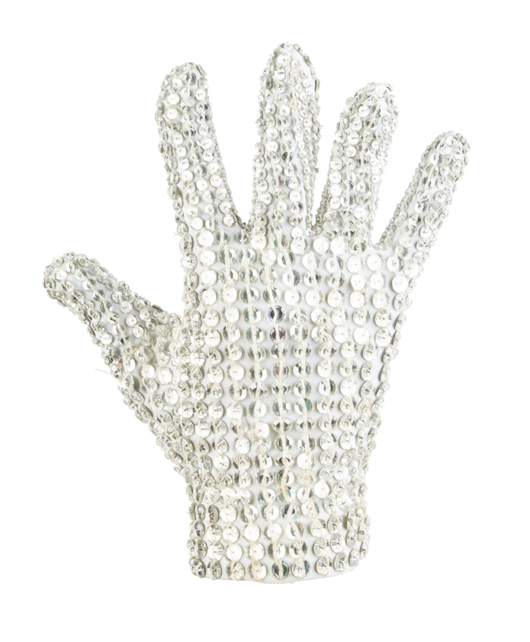
Michael Jackson’s glove from the 1984 Victory Tour. Sequined costume glove worn during performances. Designed by Bill Whitten.
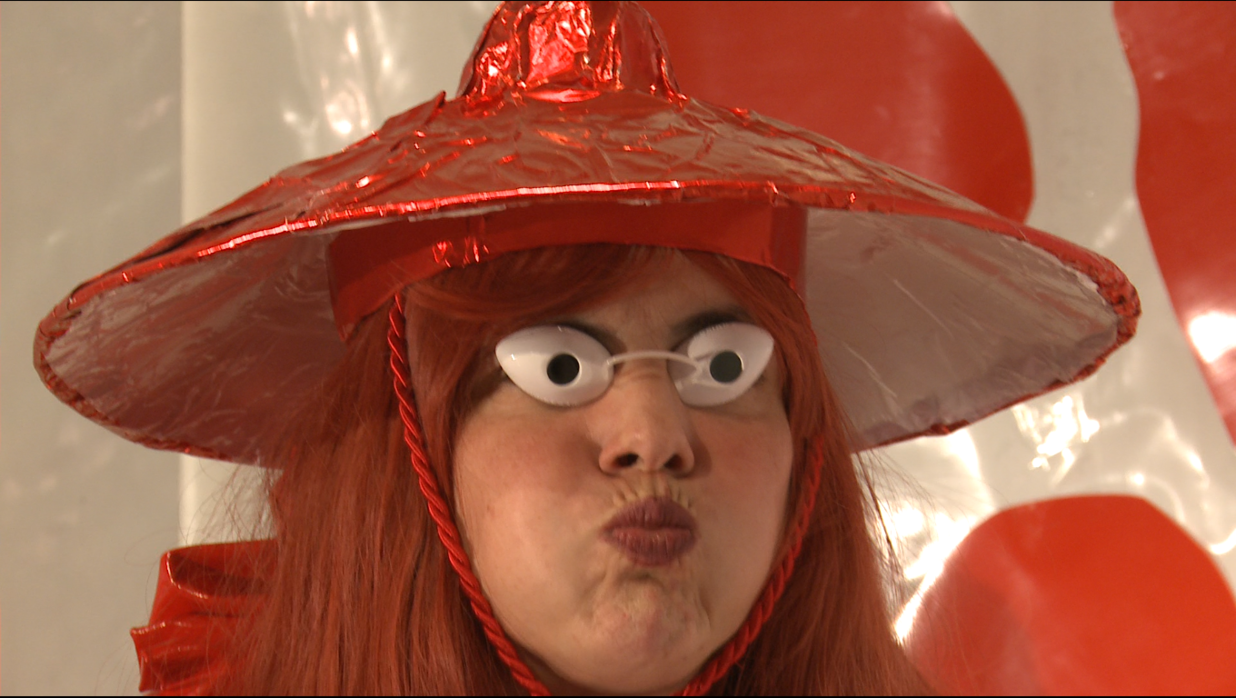
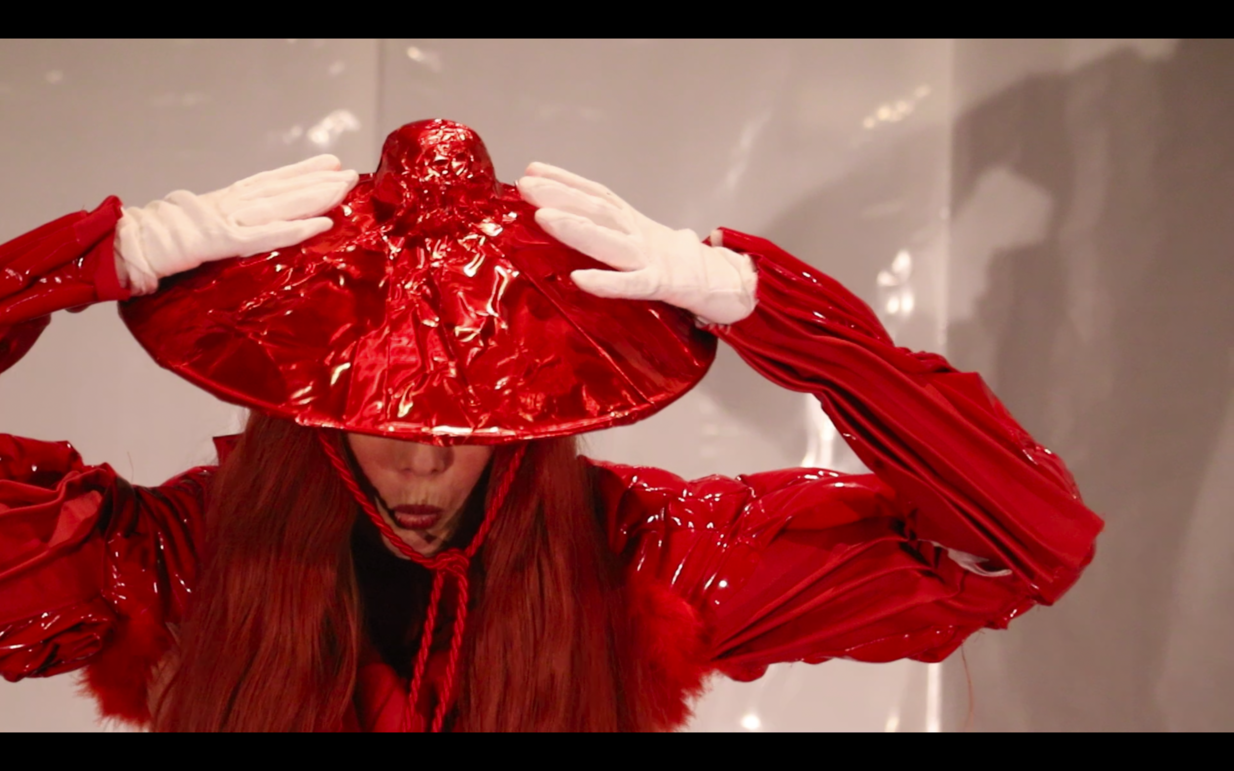
Charms’s body is a hybrid assemblage of transhistorical construction. The props that complete it are varied: a wide-brimmed hat with Eastern influence (merging an acritical interest in "exoticism" and the exogenous, emphasizing the hybrid nature of the costume), petrified eyes reminiscent of archaic statuary, long hair associated with femininity and wildness, white gloves (somewhere between magic and cartoon) that stand out from the body and highlight its humanity. Each of these bends to symbolism and technical intent to captivate. I highlight two in particular:
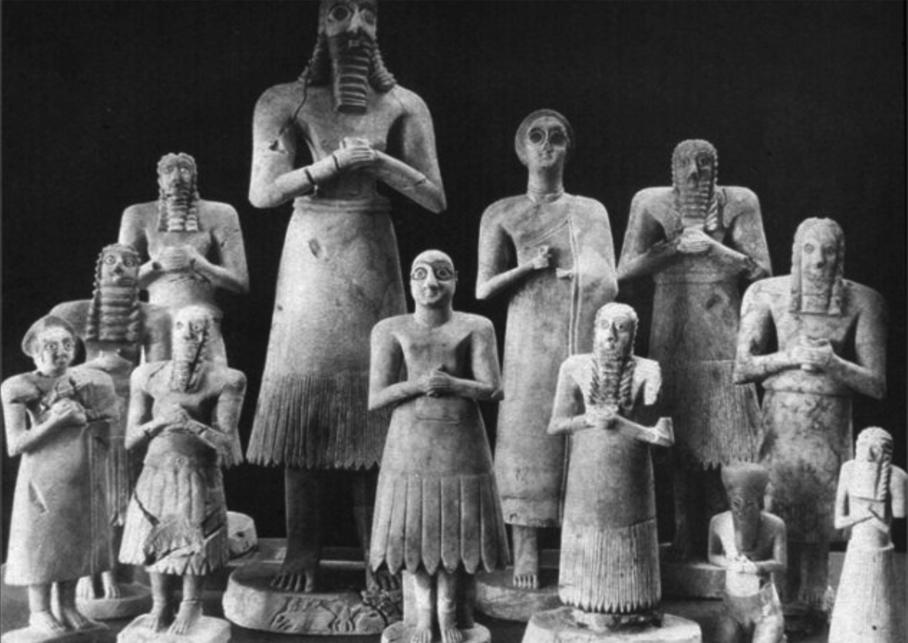
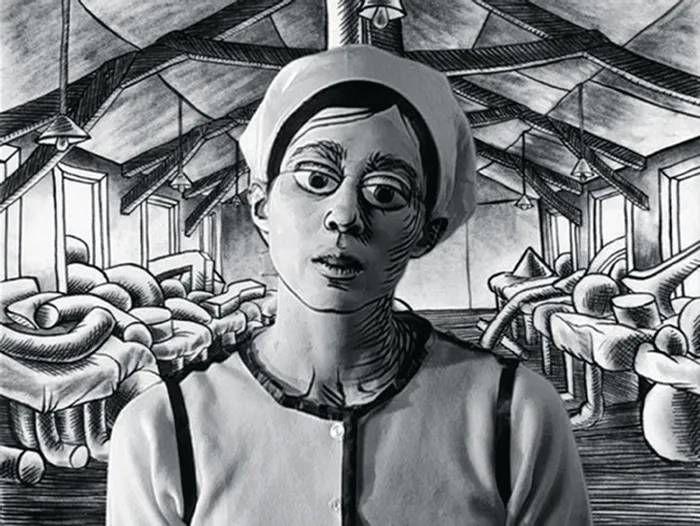
The EYES: initially created as protective laser devices, they now recall the petrified gaze of archaic figures — those of Mesopotamian votive statues or the marble and ebony eyes of Egyptian mummies. Eyes that stare into the infinite and the invisible. These wide, glassy eyes see too much — they perceive the non-visible, the excess of self. They also inject a dose of humour into the costume, rendering it slightly pathetic. Later, I discovered the work of artist Mary Reid Kelley and the beautiful coincidence of her wide, dazed eyes. She describes how using this prop improves her performance and increases the sense of estrangement, since she can barely see—an experience completely analogous to my own when I wear Charms's eyes.
The second and more prominent mediatic prop is the pair of WHITE GLOVES,
which humanize Charms. The hand is a symbol of humanity — like the face, it holds an indexical power of facedness. The hands, with its exceptional motor skills, can be regarded as magical: they sabotage the dictate of the disembodied eye. Hands can do everything: contradict, mimic, and think. I like to cover them with white gloves. The magician, the sorcerer, the mime, the auctioneer, the museologist, the scientist—they all wear white gloves. I find this transversality fascinating — gloves are tied both to illusion and dreams, and to a different kind of magic in sterile laboratories and operating rooms. In Charm's videos they embody the body’s power to act upon the real (always an interweaving of the imaginary and the real).
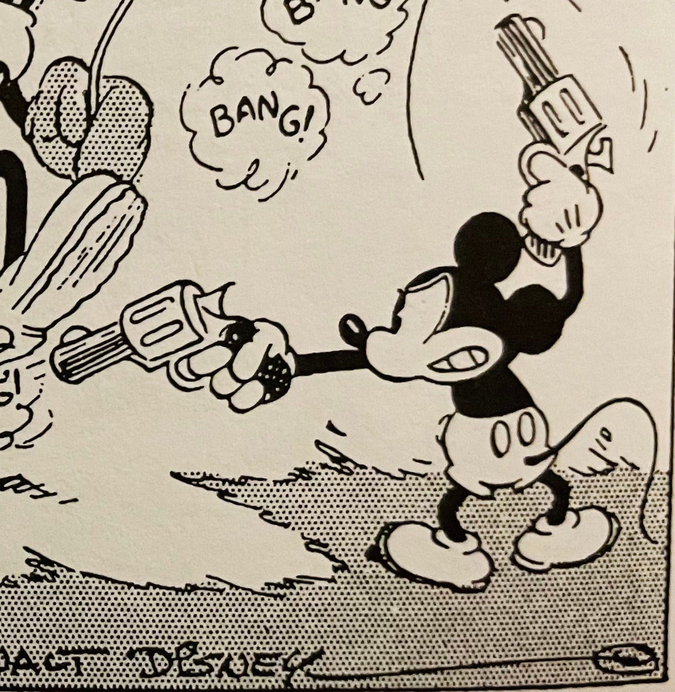
With one gesture, they resolve the hybrid/carnal body and humanize it. They distinguish and exaggerate gestures. Paradoxically, the glove that serves to handle and touch also serves to separate. Its fabric becomes a frontier between two bodies. Charms, no matter how much space calls to it, always enters into a dystopic relationship with that space. The white gloves stand apart from the red body. They stand out! They bear the power to metamorphose the body into an animated form — exaggerated, and thus, pathetic. I believe part of this ability lies in the symbolic and mnemonic sedimentation the gloves carry. They are linked to cartoons — those mischievous figures, galloping with devilish animation. The performative dimension of Charms relies on this ancient strategy of captivating the gaze. The white gloves, therefore, serve as symbolic props, pointing to the performative actions of those who wear them. They are different because the body is already distant from them, like everything else around it.
Statuettes from Tall al-Asmar, Early Dynastic II period (c. 2775–2650 BCE). Institute for the Study of Ancient Cultures Museum, University of Chicago. Courtesy of the Institute for the Study of Ancient Cultures of the University of Chicago.
The Queen’s English [still from video]. Reid Kelley, M. (2008).
https://www.artforum.com/features/mary-reid-kelley-192469/. Public domain.