Figurative - Sculpturing
This strand investigates various melodic functions and explores melody, phrases, motifscand patterns operate as sculptural, symbolic, or communicative elements in improvisation. Rather than seeing melody as line, this approach treats it as something shaped and shaped by intent.
The concept of "shapes" has long been central to jazz improvisation. Ornette Coleman imagined improvisation as a landscape where melodies and rhythms break free from traditional harmony. Anthony Braxton elevated shapes into diagrams and patterns, crafting graphic scores and complex systems, balancing structure and freedom. Roscoe Mitchell, rooted in the Art Ensemble of Chicago, treats sound as sculptural material, carving abstract figugures that shift in time and space.
One of John Coltrane’s visions of improvisation resonates deeply with the idea of shapes. He used “sheets of sound,” a cascading flow of notes that weave dense, layered shapes transcending mere melody or harmony.
In contemporary European improvisation, this approach continues to inspire. To mind comes the overwhelming work of Barry Guy, the English bassist, composer, and bandleader. He often approaches improvisation as a process of constructing and deconstructing sonic forms treating musical or melodical statements as evolving shapes that interact, overlap, and transform within the flow of performance. Improvisation approached as “musical architecture,” where shapes, both melodic and textural, are built, layered, and reshaped in real time.
Or e.g. contemporary improviser/saxophonist Martin Küchen who often views improvisation as a process of shaping and reshaping melodic "sound-blocks.” His playing emphasizes sculptural phrases where repetition and subtle variation slowly evolve rhythmic and melodic forms.
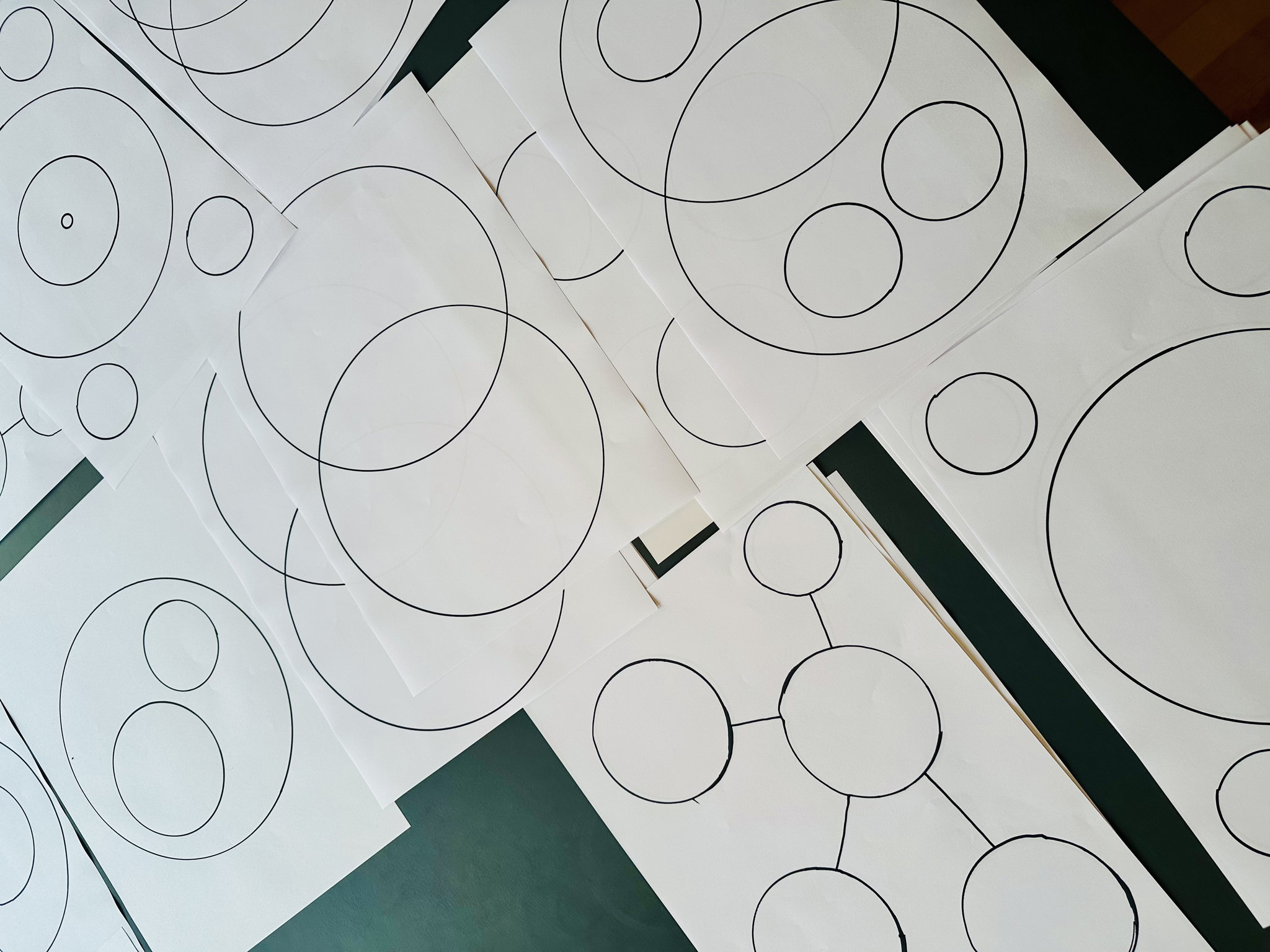
For my work I mapped a range of melodic functions to physical or sculptural metaphors working with how melodic fragments behave, disrupt, or interact within a phrase or ensemble texture:
- Phrase = sculpture it
- Motif = re-work it
- Gesture = to donate; intention of goodwill
- Pattern = cycle or sequence of sonic material
- Signal = attention
- Call = invite
- Burst = break open; suddenly explode
- Stroke = a gentle touch or melodic stroke (as in swimming)
- Strike = to hit; to attack; lightning or bell
Within this strand I found that my phrases began to shape themselves, as if the sculpture itself could be heard.
These signals, calls, and bursts of sound seemed to emerge spontaneously, beyond conscious thought in the moment of my playing. Yet, through practice, I was able to refine these sculptural phrases and approaches born from my abstractions and visualizitions thereby also exploring degrees of fragmentation in phrasing.
This led my to the following key melodic approaches developed:
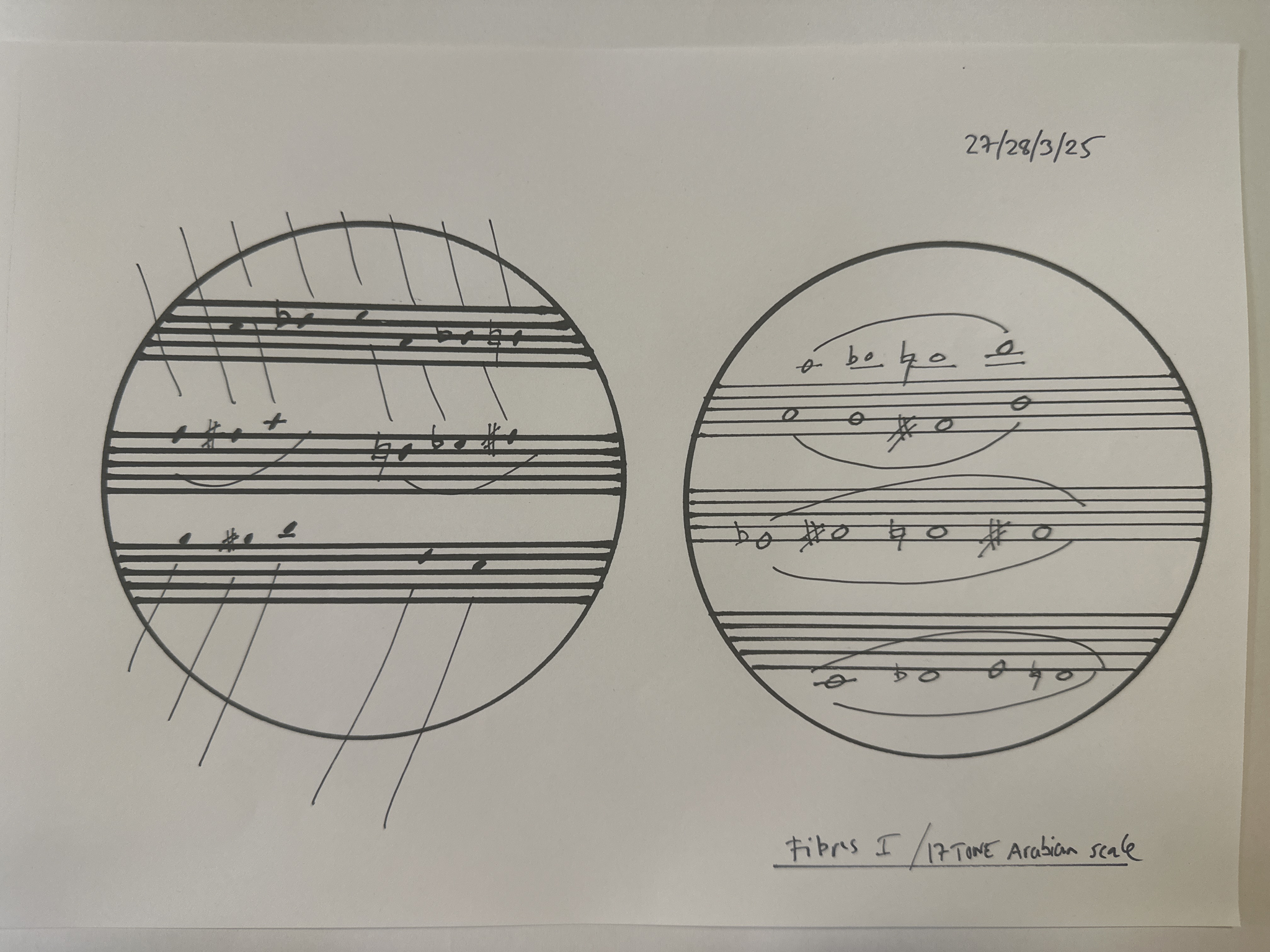
IDP stands for Internal Dialogue Phrasing, a method where the improviser solely revolves around their own melodic statements, creating a closed sphere around the melodic movements they produce. In this approach, you essentially respond only to your own phrasing and actions. Your dialogue is exclusively with your own phrasing. You consciously exclude interruptions or interferences from the outside world.
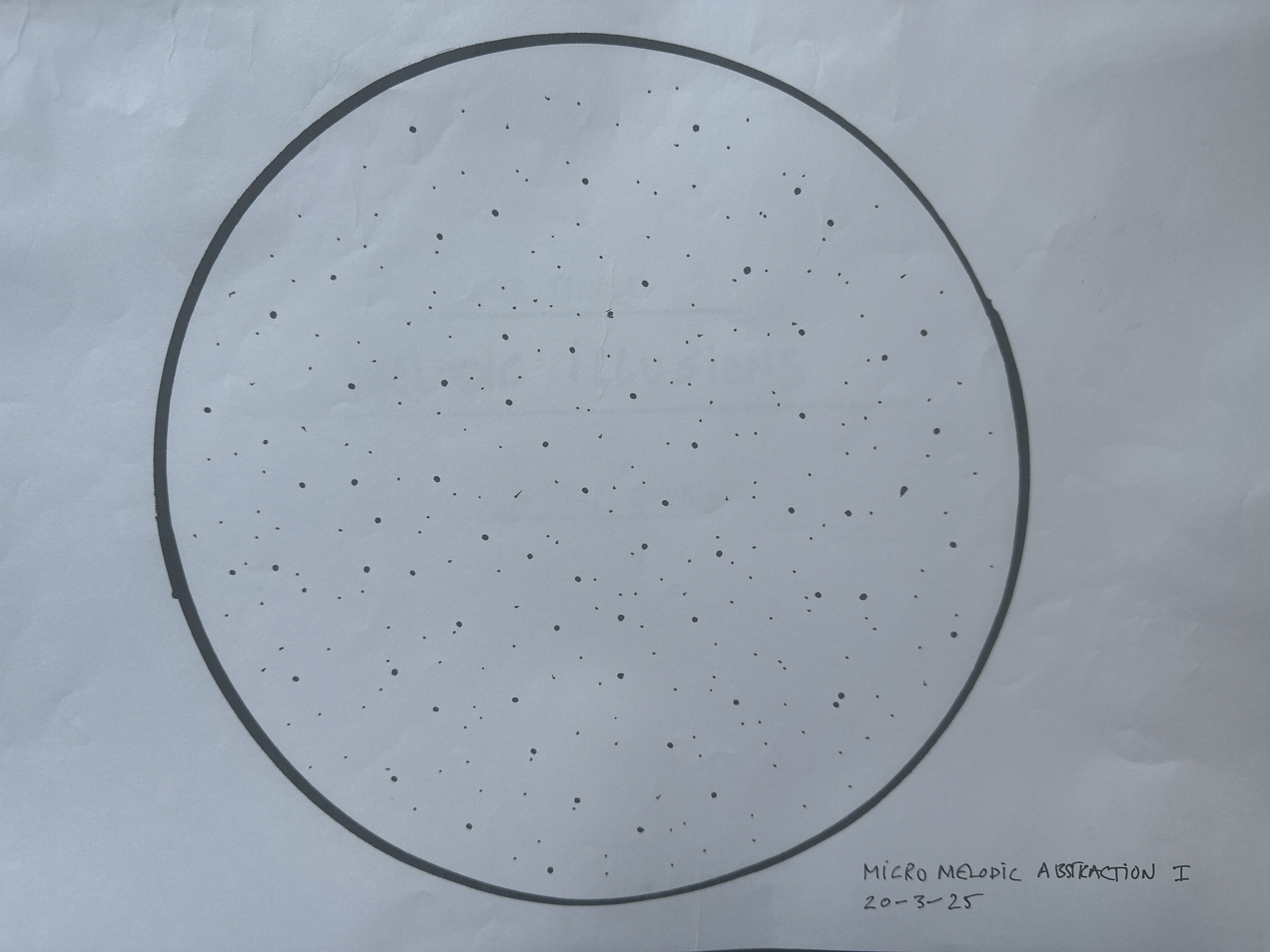
The micro-melodic abstraction is an approach where melodic material could be magnified under an imaginary microscope or shrunk down to tiny, intricate details. Here, melodies transform into small, nuanced movements, often unfolding like a swarm of subtle gestures, each one weaving into the next in a restless, almost living texture. It is a space where melodic fragments pulse with a life of their own, creating a shimmering network of tiny motifs and shifts. For me, micro-melodic playing is about exploring these small-scale movements. It can also be a way to listen, to inhabit the smallest corners of melody, drawing my listening closer to a sometimes more fragile architecture or a myriad of strong statements.
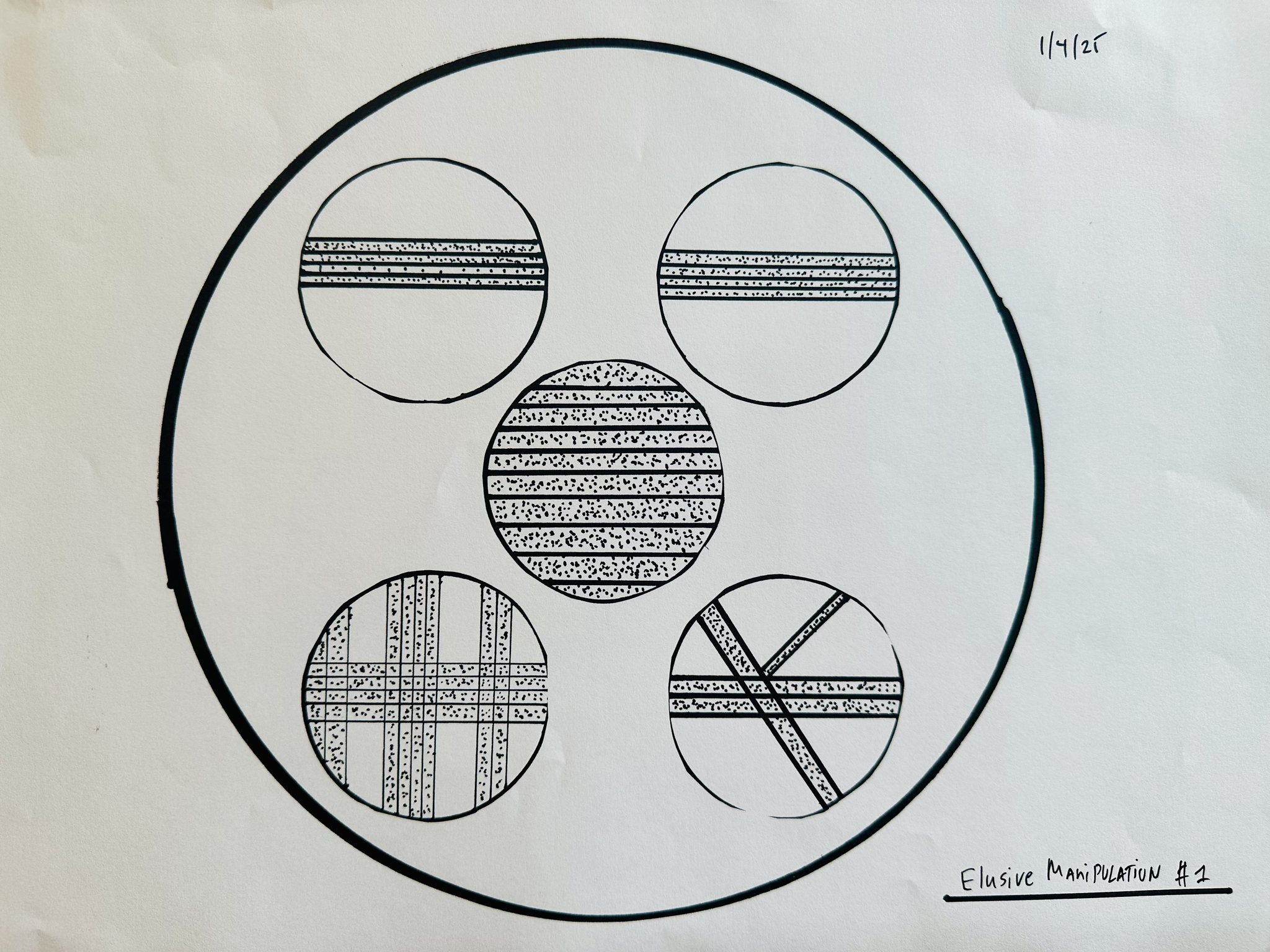
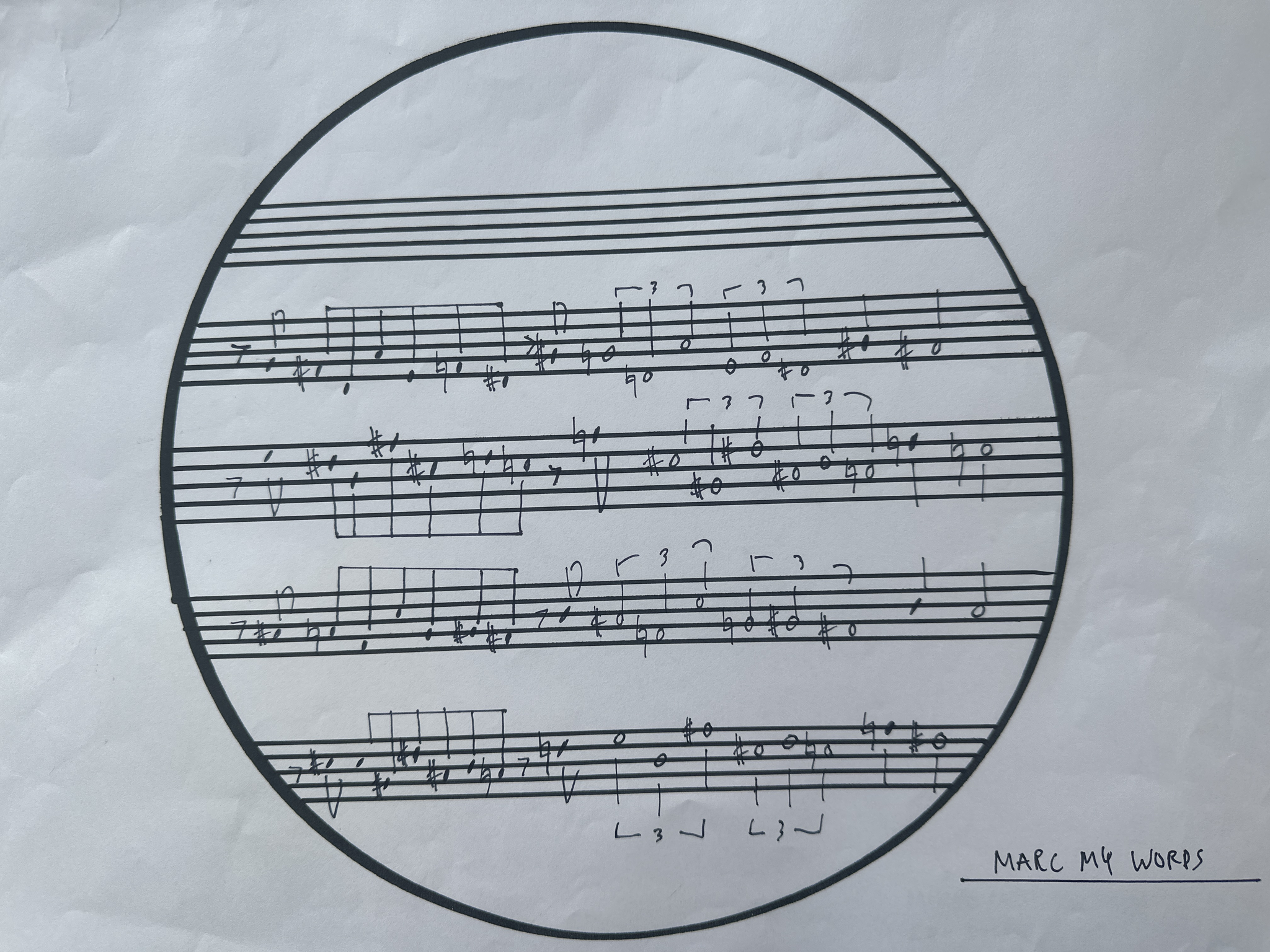
A contour is, by definition, the outline that defines the edge or shape of something. In melodic improvisation, contouring becomes a method of tracing an imagined shape: the melody you play is a contour of something else, sometimes concrete, sometimes something abstract that you choose to reflect.
This abstraction becomes a force that generates your own melodic identity through a relationship to something defined or undefined, something beyond measurement or categorization. The contour doesn’t copy, and it doesn’t echo, it draws near to the essence of another present melodic statement.
One might say that contouring is an abstract obligato line.
An obligato (or obbligato) line or part is a secondary melodic line that is essential to the melodic centre. It weaves around the main melody, not as accompaniment, but as a distinct, often lyrical voice that both supports and contrasts the primary line.
When applied abstractly, as in contouring, the improviser plays a line that functions like an obligato, but not neccessarily to a fixed melody. Instead, the line traces an unseen or imagined form, responding to something that may not be clearly present. It becomes a melodic act shaped by intuition, interpretation, and abstraction.
In my own playing I am often experiencing a melodic silhouette in my perception.
Contouring is widely used in all sextet material, but the audio example above goes straight to the point.
I often describe shadowing as improvised unison, precisely and actually unison interaction. It is not an echo or contour of a melody, it happens simultaneously, in real time between two improvisers. This is an intuitive space, born from the, shared moment between improvisers. One, or sometimes both, take turns improvising lines while the other plays in unison, weaving their sound tightly together.
I developed this improvised unison approach alongside trumpeter Per Jørgensen during our years as bandmates. It demands a powerful and focused listening, a way to tune into the improvisational moment through intuition and imagination. It’s about anticipating, sensing and pre-hearing, what your fellow musician is about to play.
Here, it is the very essence of melody that becomes vital: the shared melodic instinct that allows this interplay to unfold, where two voices merge into one breathing line, simultaneously separate and inseparable.
The process-video example shown here is from a session with my RMC student (both Ba and Ma) working with Shadowing (and more)
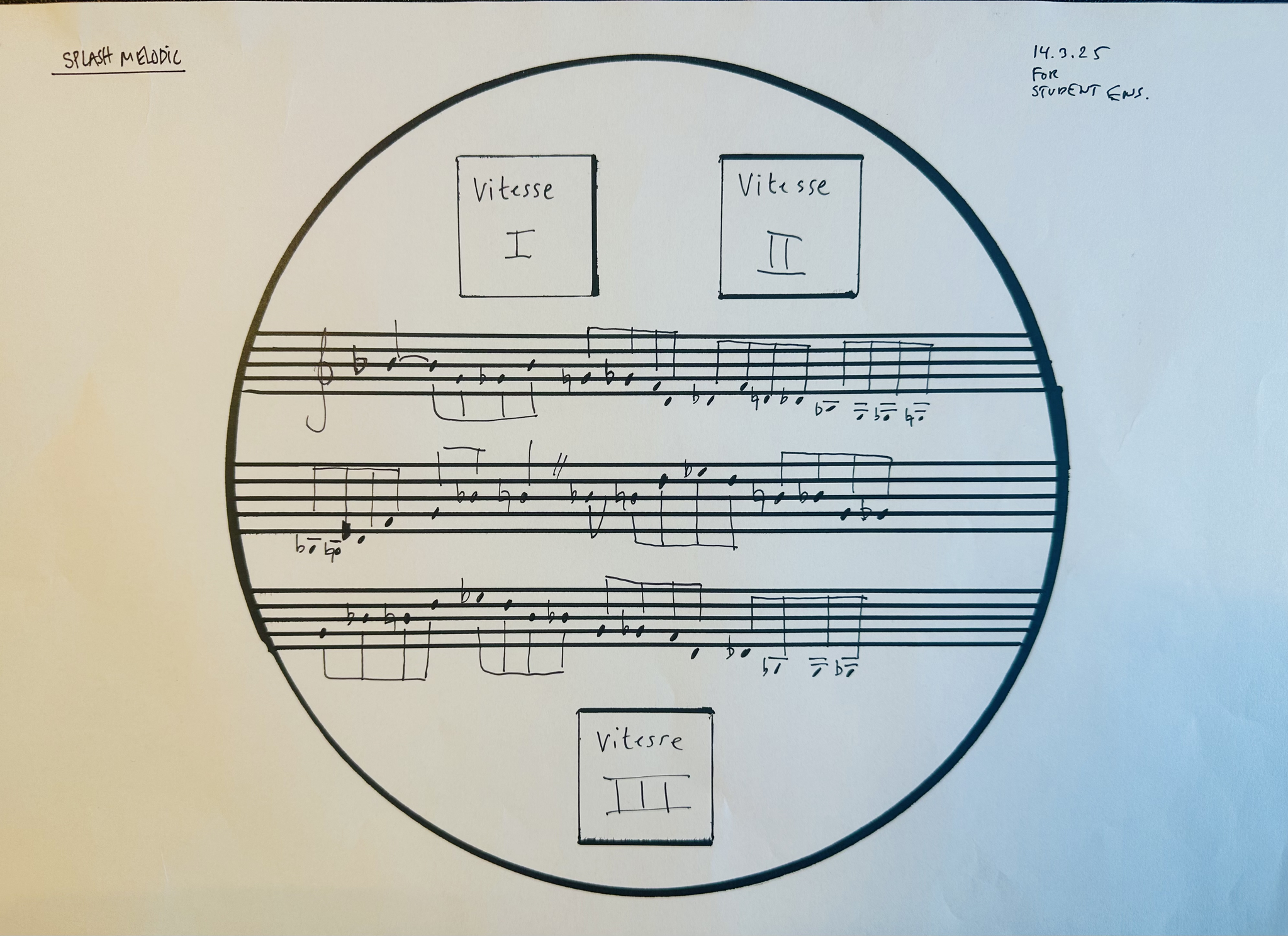
Splash Melodics is an abstraction on cascades of tones and melodic fragments. It bursts forth with velocity and a degree of unpredictability.
This approach embraces momentum and sudden release. In my playing I aim to let go of linear phrasing and instead work with waves of melodic energy spills and eruptions.
Splash Melodics may arise without intervallic structure, functioning purely as timbral melody, or it may be articulated through phrases built from distinct intervallic combinations. Often, these bursts occur instinctively on my horn like something erupting from within without premeditation, as a response to a certain energy or pressure in the moment. In my work with especially saxophonists in ensemble setting we have discovered particular Splash Melodic fragments that resonate most powerfully between our instruments. These depend on factors such as velocity, mobility, and blend.