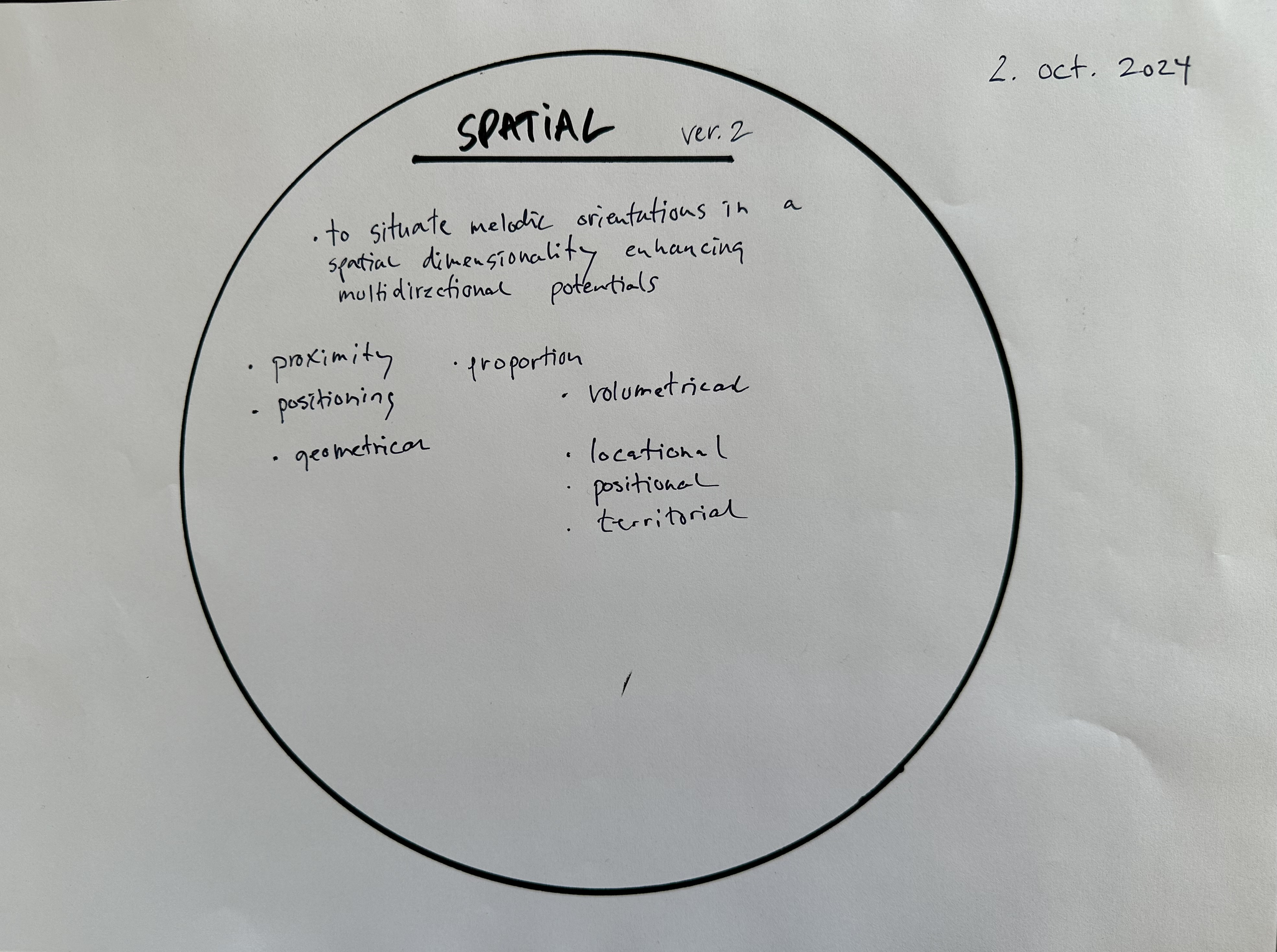
In this strand, the focus is on placing melodic statements within a spatial dimension, opening up multidirectional potentials while engaging with proximity, positioning, and proportion. At first, it seemed the most obvious place to shift the melodic approach and narrative in the improvisation. For me, the positioning of a melody or a sound is about how its proportions relate both to my own phrasing, and to the input and actions of fellow musicians.
Listening into this, I found an opening for my own sense of spatial qualities in the interplay. I experienced a quality of spaciousness, a sensation that could expand or contract. In some cases, my listening whether during live performance or in later listening sessions began to move toward the illusionistic, and at few times, even the hallucinatory. Over time, I also came to understand the spatial as a mindset and attitude. It carries a psychological dimension. When I listen back to the spatial results in my works, it is often here that I experience the most fertile outcomes. This special dimensionality brings the strongest sense of the multidirectional to my ears.
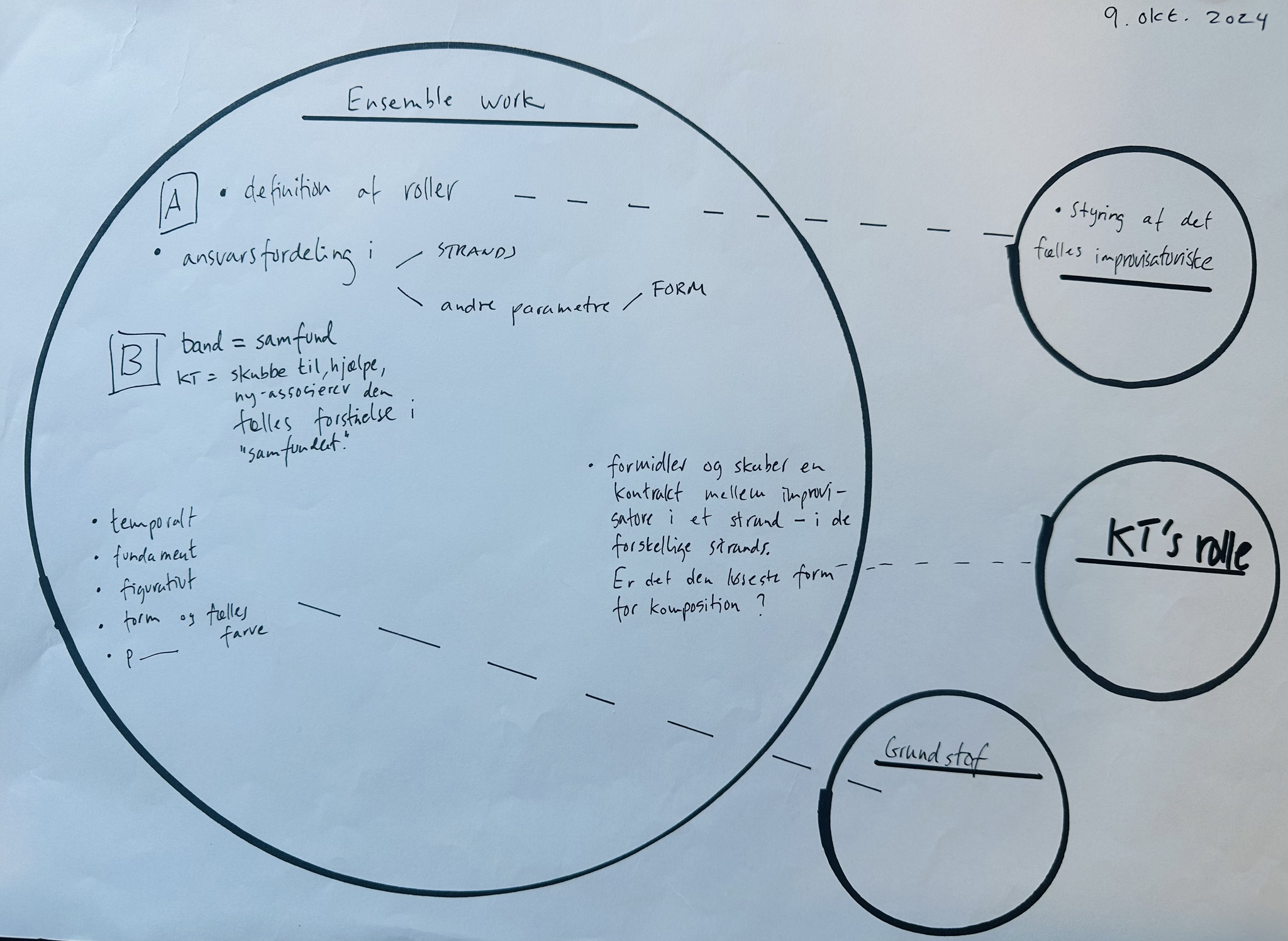
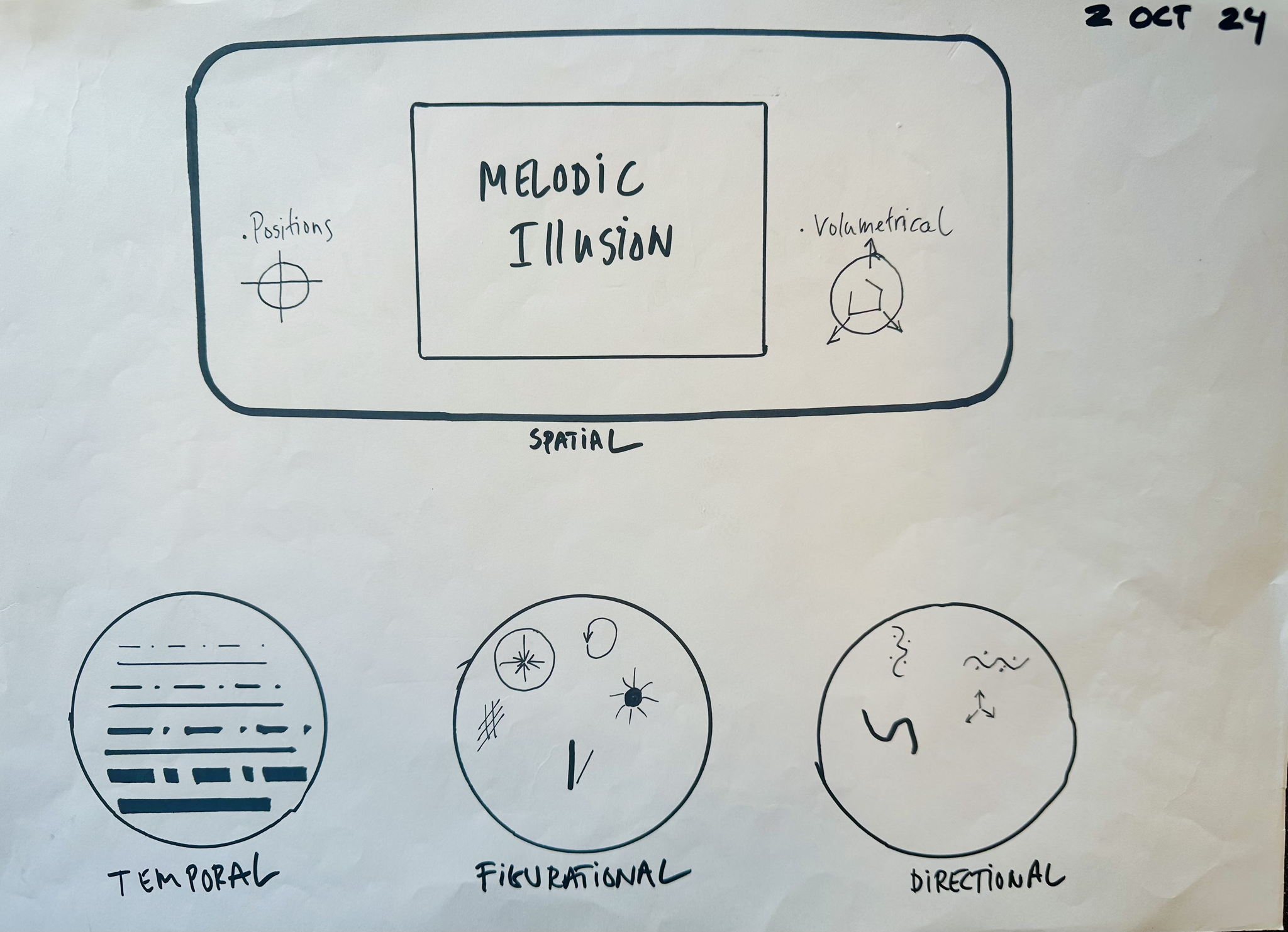
In my work, particularly with my student ensemble, this led to a focus on how we, as a group, could relate to or lean into a shared sense of spaciousness in our improvisations. From this came a commitment to creating hybrid scores that addressed or evoked perceptions of spatial relationships. This was not always straightforward, and here oral abstractions and instructions became the best tools.
Jazz has one of the strongest oral traditions in music history, with written notation gaining real traction only later. In my own research and in listening to early American jazz, I became increasingly aware of how the raw, collectively improvised polyphony in those early bands carries a striking sense of spatiality, an active, dynamic relationship between musical voices.
The ensemble work was also to shed light on alternative meetings, to create a kind of freedom of acceptance, and to explore what space is available for the improviser within the improvisation. This strand was very much about that. Through this, melody became not only a linear gesture but also a spatial event that exists in dimensional relation to others, and the surroundings. This strand investigated the proportional, locational in improvisational melodies while also allowing a lsitening for illusions, ambiguity, and shifts in perceptions.
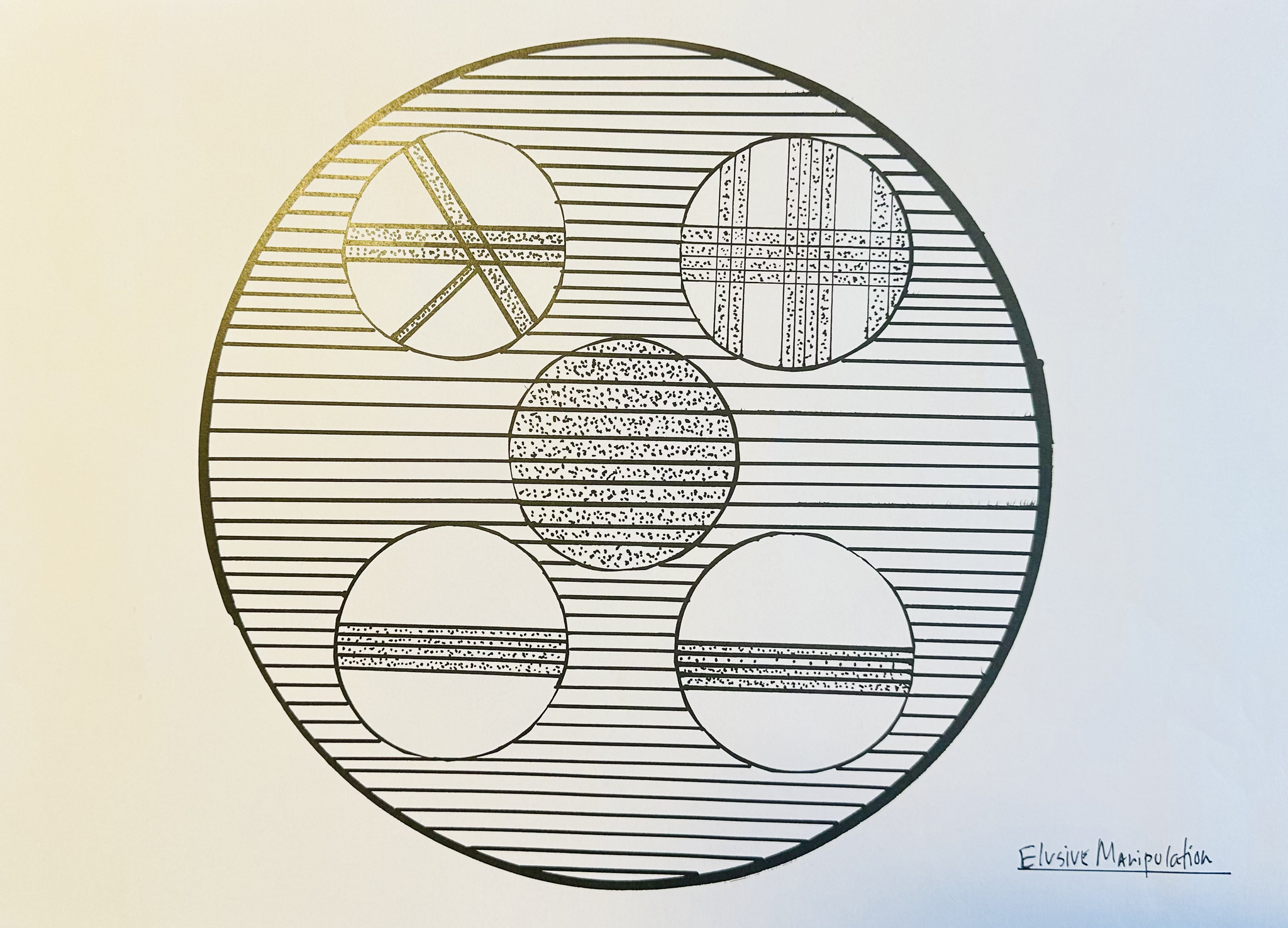
My attention to what lies in the periphery of the ongoing music can become a powerful engine for generating imaginative illusions. Listening for or situate my melodic improvisations in the edges of the locational and territorial field in which the music unfolds. Also sometimes referred to as Hidden Melodies in this project work.
This mode of listening and playing allows me (the improviser) to orientate toward what surrounds the central flow, sensing the proportions, distances, and positions that define the space without always stepping into its centre. It can be like moving along the edges of a room, letting its dimensions reveal themselves indirectly through resonance and change in perspective.
Peripheral practice also points toward what is not being said. It believe it values absence, atmosphere, and the subtle relational energies that can create meaning through avoidance. In this way, peripheral listening is not a secondary concern, it is a primary method for inhabiting the spatial strand, and for opening up the multidirectional possibilities it contains.
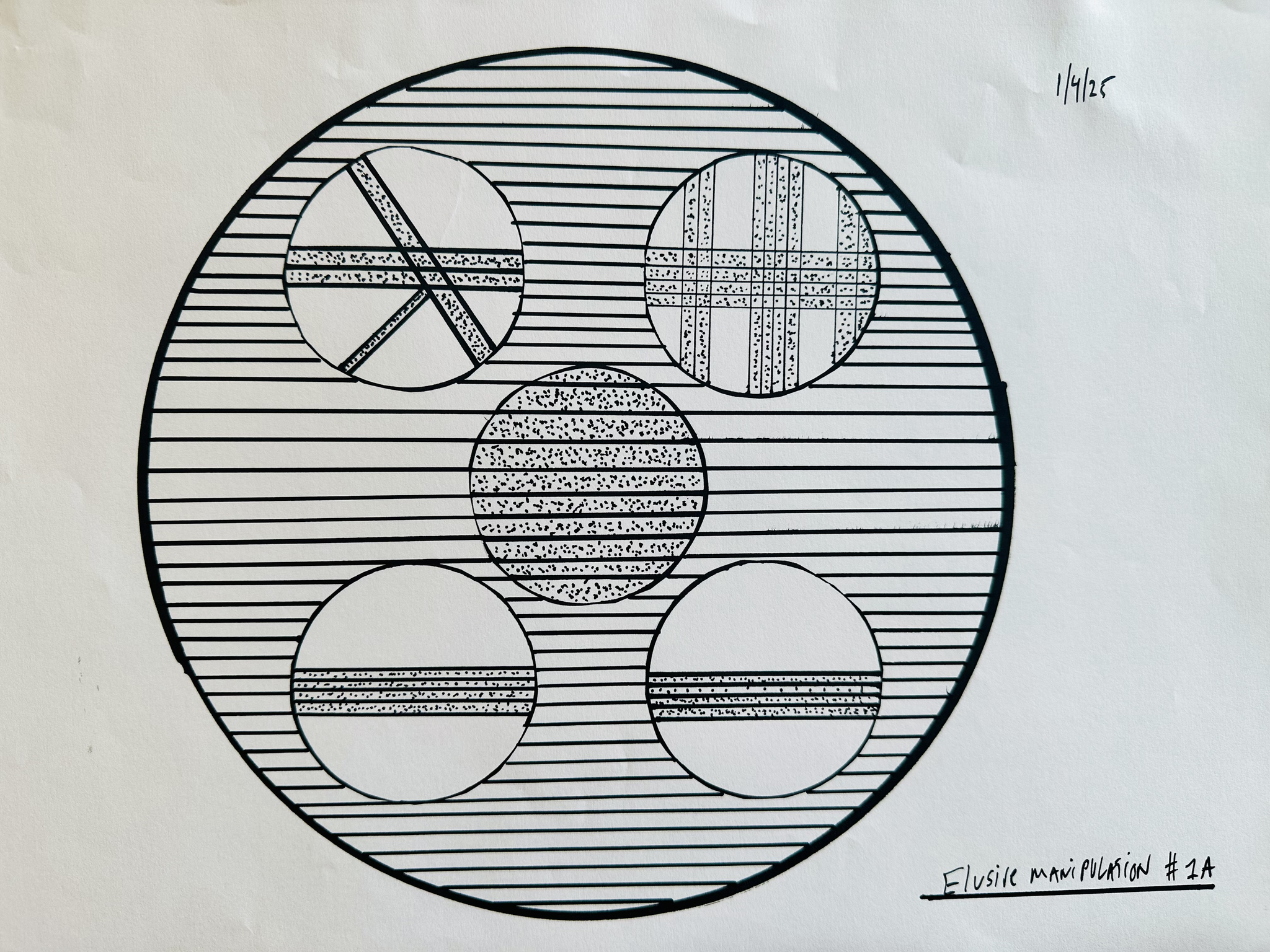
Examples of this approach can be found in my solo work Elusive Manipulation and in the sextet piece Mirage.
During my investigations, I felt a strong need to give voice to the more traditional perception of melody.
In traditional thinking, the melody is often regarded as the core, the centre of what the music is about. It was important to me to also touch on this broad and widely held perception of what a beautiful melody is: the singable line that quickly creates connections between people; a melody that resonates and vibrates in a way that feels universal to listeners. There is also the sensation of hearing a melody that feels as though you heard it before, a melody that somehow contains all other melodies we have ever experienced.
After several months of exploring new melodic orientations, I felt a need to return to one of the core values of melody: the beautiful, the resonant, the immediate, the universal qualities that reach people. Something that stayed with was when a colleague spoke about recognizing that in our practice we each have a comfort zone. To acknowledge this is not a limitation but an opening: it reveals a hidden strength, a pulse of stability. I my own experience it as a kind of axis around which the melodic can turn.
It was also important to me that the participating musicians could relate to this type of melodic expression and approach. For those improvisers who are essentially melodists, this provided a foundation from which they could abstract, a shared essence of the beautiful melody in the most fundamental sense.
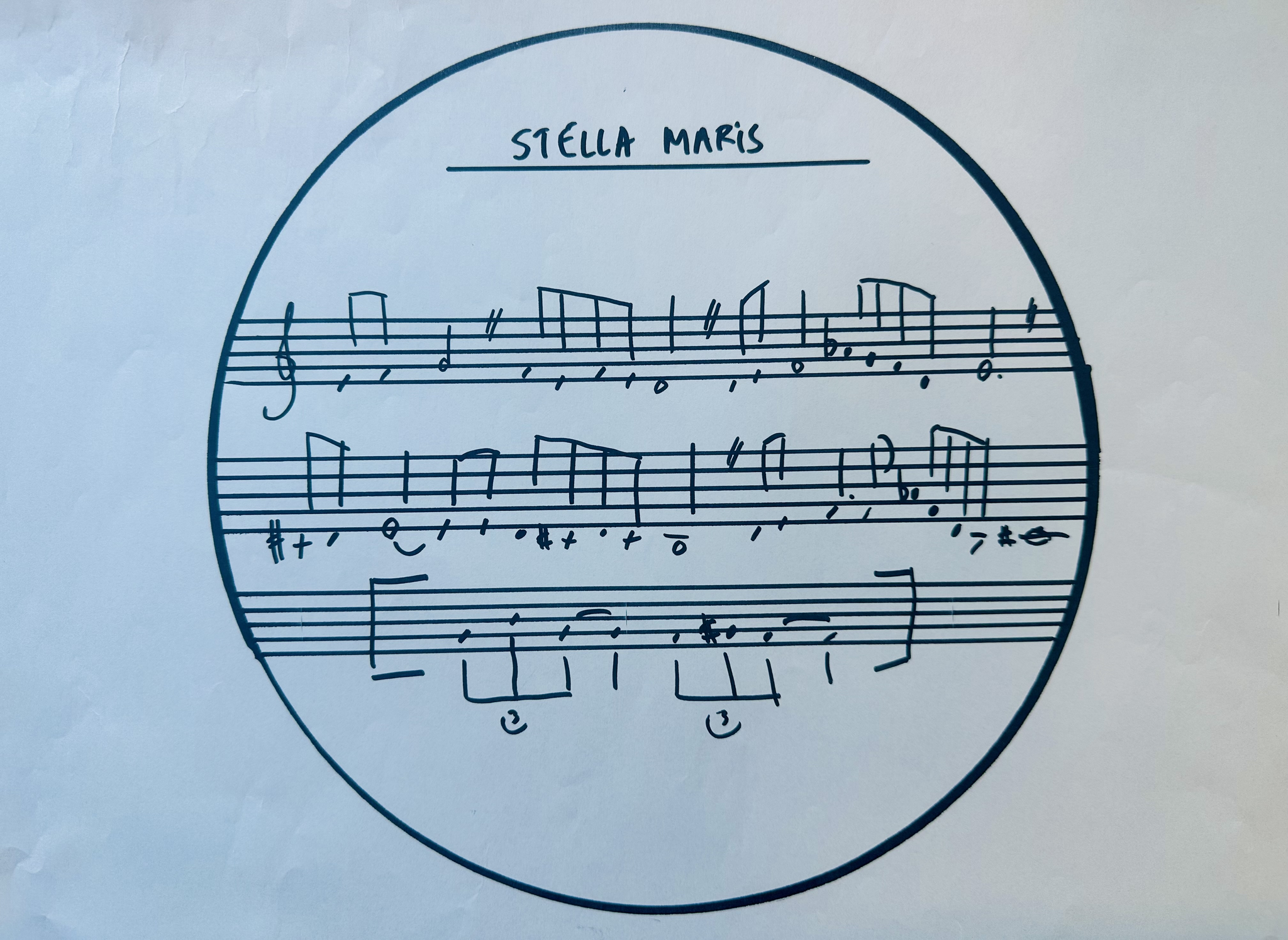
From this emerged Dream Melodies as an abstraction. An imagined song or melody that could be shaped, refined, and improvised upon. Songwriters and composers often concentrate on this kind of work, developing remarkable skills and insight into it. But it is equally vital for improvisers with a melodic sensibility and refinement, for whom such awareness becomes an essential part of their improvisational language. For me, this has always been an ambition, and it has grown more important with age, the poetic dimension of melody.
Approaching Dream Melodies also opens a certain mystique, a vibration within the way one improvises melodically. To portray this dream, I must place myself in another perceptual and performance space, as if to recall a dream that I have had. I can remember something of it, yet I cannot fully describe what it was about. It is a sensation, a feeling, an experience that remains. That is what Dream Melodies must be able to hold.
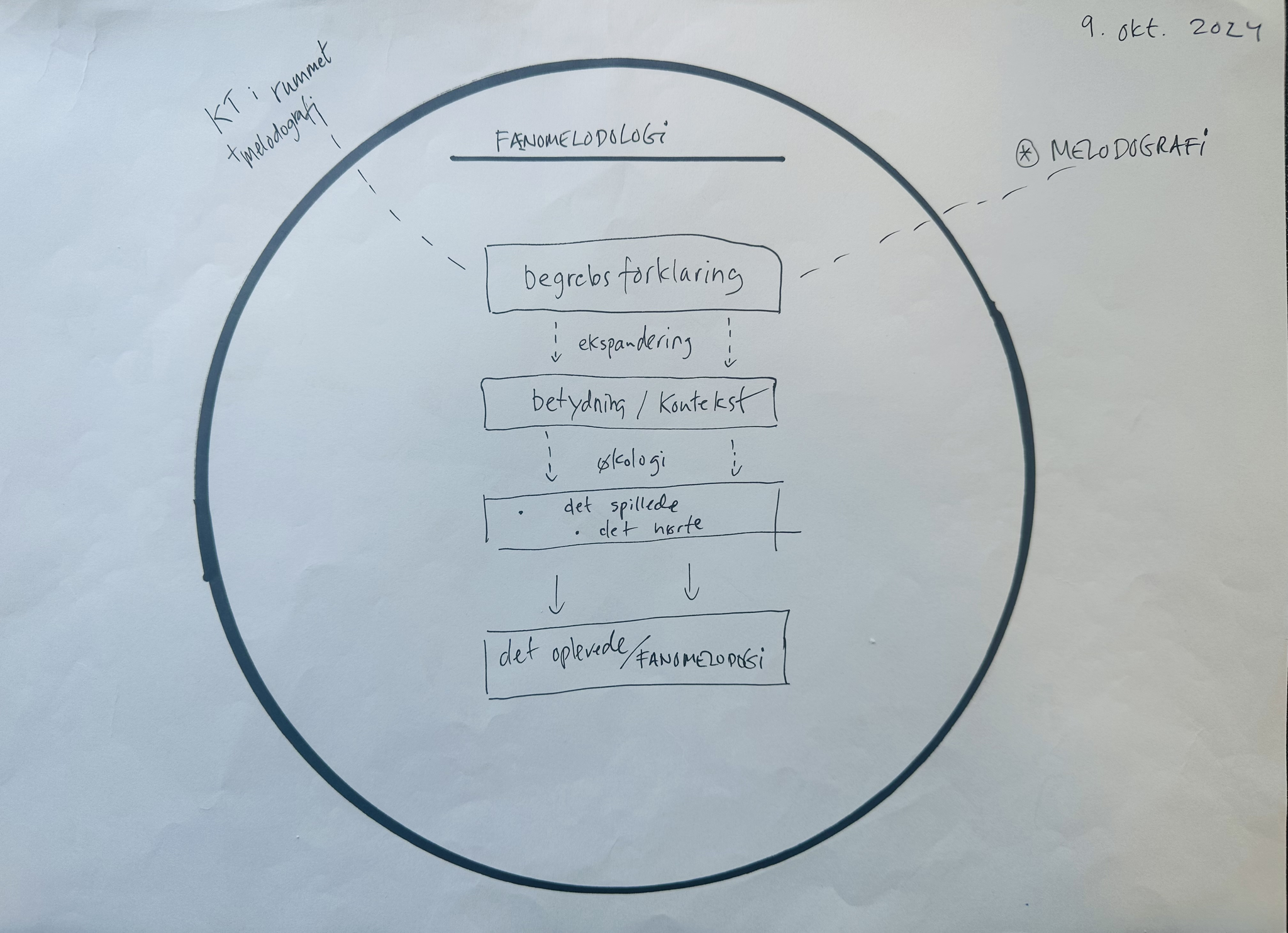
Phenomelodology:
An approach to melodic abstraction focusing on phenomenological experience, emphasizing perception, illusion, and the subjective dimensions of melodic sound.
Phenomelodology is directed toward experienced melodic phenomena in music and improvisation. It is, in a sense, a return to the fully auditory. Within the idea of omni-melodic orientation, where omni means “present in all places and forms“ phenomelodology aims to lift the dynamic aspect of the melodic, not only its phrasing. It addresses the bodily, the sensory, and, most crucially, my own understanding of these melodic phenomena. In my work with the students it was also a tool to get them away from thinking about our explorations as exersizes, but always as music, as something we could sense.
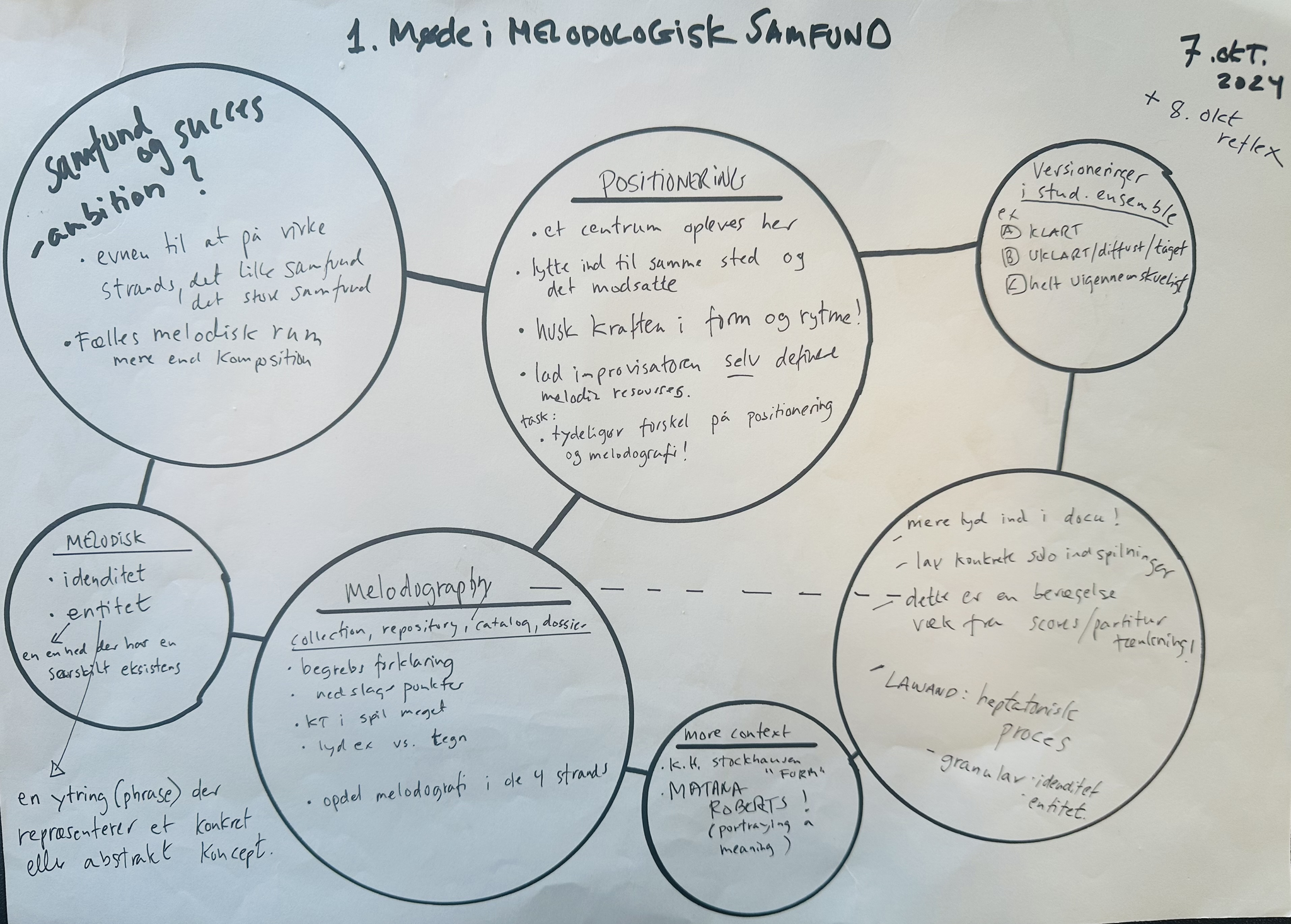
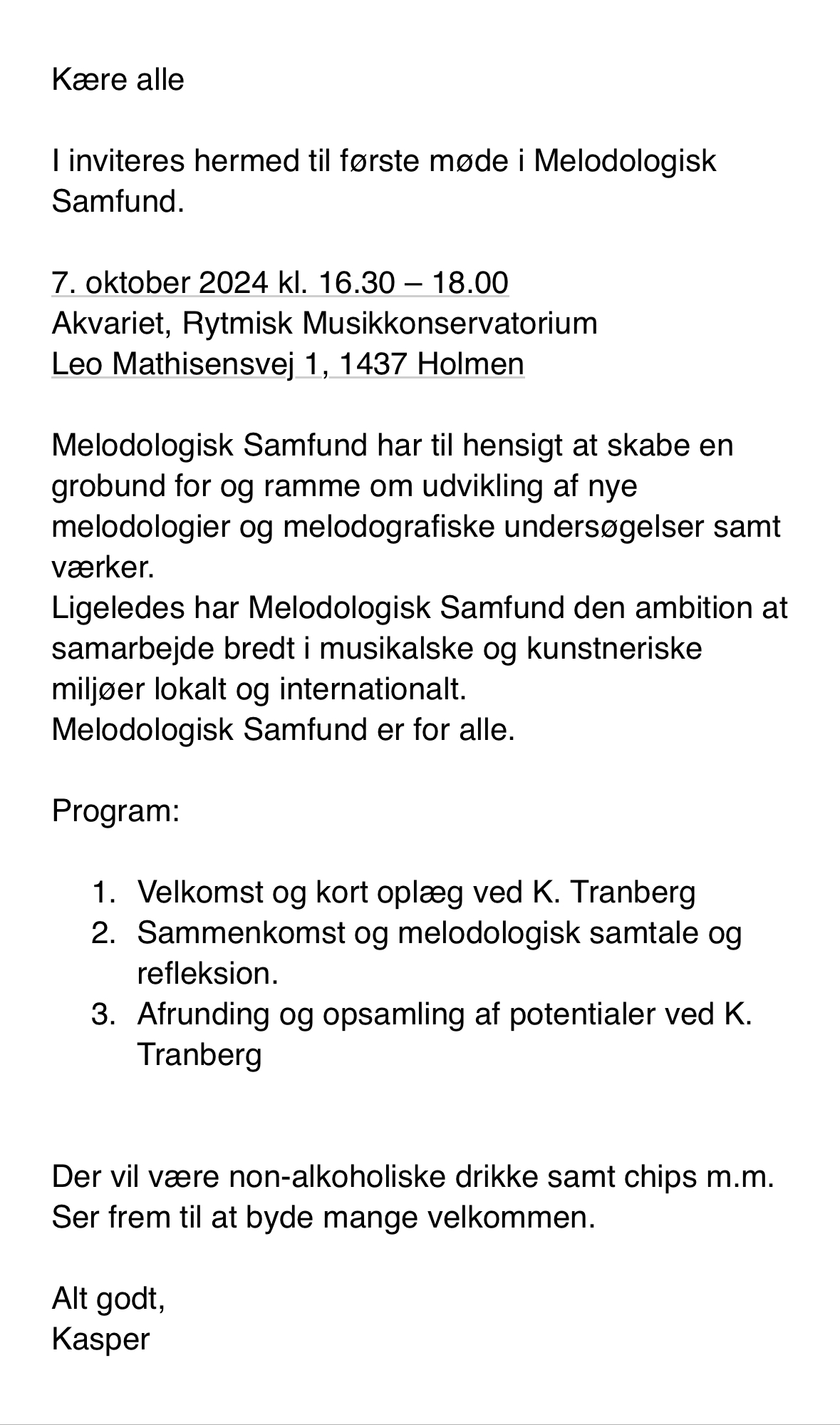
This approach also led me to establish Melodological Society, a collective forum for discussion and development of melodic theory and practice within music and improvisational communities which has met in various forms, large and small, to discuss melodic identities and entities. Extending the work and reflection into a collective context, inviting peers to engage in debate and reflection, these sessions generated valuable feedback and new ideas, offering shared ground for the development of a vocabulary around improvisational melody. It has been important for me to be able to clarify concepts for members of the Society: identifying focal points, core investigations, and noting what appears clear, what appears less so, and what remains entirely unclear in my reflections.
These iterative melodic reasonings have often found their most active form in student ensemble work. In relation to melodic entities, the role of the phrase becomes central. A phrase can be seen as an utterance, carrying a concrete message or concept or as something entirely abstract. In one of our Society meetings, this became a point of focus: the phrase as a representative of melodic identity.
Within the 4 strands investigations expand into contexts and meanings, giving rise to an ecology that becomes the played and the heard. From there, it becomes the experienced and, finally, the phenomelodological. This was the original point of departure.
Here lies a particular challenge: the experienced exists even before the played, and even before the heard. This is where the phenomenon itself truly comes into play.
In my work with my student ensemble, the phenomelodological approach has provided a common ground for our practice. The feedback I received from the ensemble was telling: when I spoke about oral traditions, sharing stories of magicians I have performed with, or of my experiences during earthquakes in Indonesia, these narratives created a stronger shared understanding than hybrid notation often could. It was, at the very least, a different kind of understanding, one that proved particularly effective when dealing with abstractions that are, in essence, illusions.