The Research Catalogue (RC) is a non-commercial, collaboration and publishing platform for artistic research provided by the
Society for Artistic Research. The RC is free to use for artists and
researchers. It
serves also as a backbone for teaching purposes, student assessment, peer review workflows and research funding administration. It strives to be
an open space for experimentation and exchange.
recent activities <>
The Ash Sheet
(2026)
Giusirames
Abstract
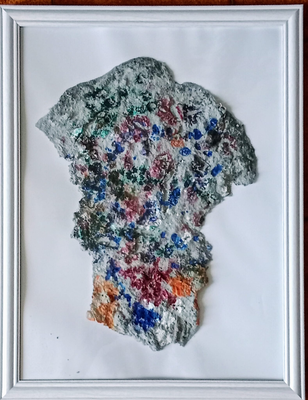
This thesis analyzes an original technique based on the transformation of ash into a self-supporting sheet suitable for charcoal drawing. The process, based on the use of sifted ash and powdered wallpaper paste as a binder, generates a lightweight, porous mineral support with a unique tactile quality, similar to a “combustion skin.” The research examines the technical, aesthetic, and conceptual dimensions of the material obtained, placing it in the context of contemporary art and practices that aim to stabilize ephemeral residues. The ash sheet is interpreted as artificial geology, a sediment constructed by the artist, and as a poetic device that intertwines memory, combustion, and rebirth.
THE SOUL AND BODY OF PAINTING
(2026)
Giusirames
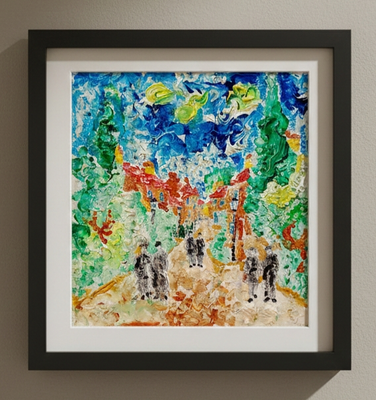
This research stems from the need to give theoretical, methodological, and poetic form to a practice that has developed over time through intuitive experimentation, phenomenological observations, and a direct relationship with the material. The aim of this thesis is to define, analyze, and formalize a new painting technique based on a reactive mixture and a vortex modeling gesture, a technique that is not limited to using heterogeneous materials, but generates real visual phenomena: currents, stratifications, turbulence, figurative emergences.
This technique arises from the encounter between everyday materials—malleable glue, transparent glue, toothpaste, Amuchina hand sanitizer, and pigments—and a specific gesture: the rotation of a cut brush that does not spread the color but sets it in motion, forcing it to react, organize itself, and take shape. This gesture is complemented by a final incision, made with a small object, which does not draw but frees the figure from the material, as if it emerged spontaneously from a dynamic field.
The resulting painting is not representation but event. It does not describe a subject: it lets it happen.
Glass Cities : Venice Revisited
(2026)
Zoe Panagiota (aka Betty) Nigianni

The exposition includes reworked video excerpt from the 'Glass Cities' two hour-long video art installation, with film footage and photography from three different cities, London, Athens and Venice. The original work was created for Elica's live music performance, shown at the Small Music Theatre, Athens, Greece, in 2007.
The aim of the process of making the video art was to remain and explore the surface of things when addressing historical changes. I used banal and seemingly unconnected photographic and digital film footage for this purpose and effect. The 'lure' is the film still: neither photograph, nor film, a notion that has been inadequately theorised in visual art history and theory.
Following a historical materialist approach, I employ the artistic theme of dead cities. Venice is a dead city in the visual arts modernist tradition. A dead city is a city that fails to change. Venice is actually slowly sinking, because it can't manage the rising water levels. In this context, I briefly trace Venice's economic history of the flourishing academic arts in the Baroque period, its Murano glass industry evocative of the ancient arts and crafts, and its inevitable re-invigoration by virtue of the Venice Biennale, the well-known international art and architectural exhibition.
I named the original video art after John Smith's experimental documentary about London 'Slow Glass' (1988-91). In the film, one of the narrators describes the liquid composition of glass - "even when it's hard, it's still a liquid" - which is a metaphor for the process of change.
Since I made the video installation, but also this exposition, I found out that my ancestor, a great grandfather, who was originally from Italy, might have been an Italian Jew and that this might have been the reason he left Italy in the nineteenth century to travel to and settle in my native Greece. Because the exposition is about collective history and collective consciousness, the research video could be taken as a reminder of the factual, global rise of antisemitism in the twenty-first century; in Italy represented by the extreme right-wing, neofascist political group Forza Nuova. The country that has seen the most prominent rise in antisemitic ideology is the United States of America.
recent publications <>
ECOTONE
(2025)
Niamh O Brien
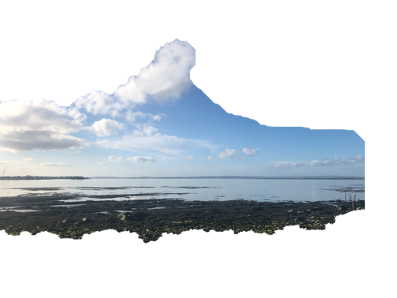
I am a composer, musician and radio producer, and in this exposition I explore how I brought my artistic practice into dialogue with a cartographic approach called deep mapping to create a sound installation called ECOTONE: A Sonic Journey Through Kildimo-Pallaskenry. Deep mapping encompasses the discursive and ideological dimensions of a place, such as memories, imaginations and the multiple realities that exist in our surroundings (Bodenhamer et al. 2015; Roberts 2016; Biggs and Modeen 2020). The approach has spatial considerations and adheres to locations and boundaries, but what is added is a reflexive narrativity that includes the complexity of human stories and identities that exist in a place. Deep mapping has the capacity to bring together histories, mythologies, facts and fictions, and weave them together in expressing a place. In this work, which formed part of my practice-as-research PhD, I developed a sonic deep mapping approach that involves recording the music, sounds and stories of place, and re-imaging them through my composition practice. This research explores a new approach to understanding and representing place, and adds a new perspective to the field of deep mapping. I propose that my sonic deep mapping approach forges connections between creative process, people and place. It invites us to listen deeply to our surroundings and to create representations of place that bring us into the realm of imagination and connection.
Download Accessible PDF
A Metaphorical Methodology: Embracing Complexity in Doctoral Artistic Research
(2025)
Kevin Skelton
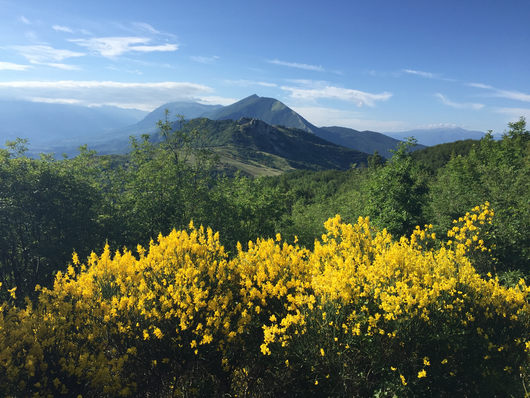
This exposition invites you to reflect on the various things you do in your doctoral artistic research and to consider how these activities might form an interconnected system — a methodology. In a guided tour of words, images, and visits to my garden, I reconsider several research models I encountered as a PhD student investigating transdisciplinary performing practices. However, my primary aim is to carve out a pathway — from model to metaphor — one that offers a viable means of seeing your doctoral project existing within a terrain of complexity rather than utter chaos.
Throughout the exposition I employ metaphors inspired not only by my artistic work, but also by my garden in Abruzzo, where I lived throughout my PhD studies. To fully discover Abruzzo, it is necessary to slow down — even allow yourself to get bored — before inevitably being revitalized and inspired by its natural beauty and ever-welcoming ambiance. I hope you will embrace this exposition’s journey. Permit yourself to be a rural-Italian wanderer, enjoy the breaks, and take extra ones so you can also enjoy an espresso or glass of Montepulciano d’Abruzzo.
Download Accessible PDF
Bodies in Transition
(2025)
Anja Plonka, Rasmus Nordholt-Frieling, Marko Stefanovic, Laura Brechmann
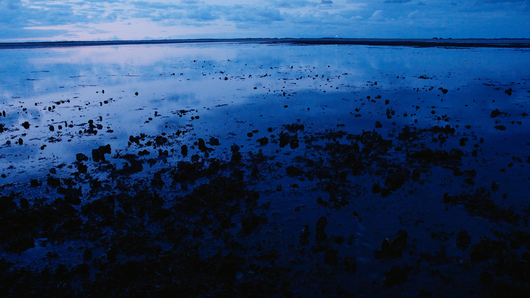
The research project BODIES IN TRANSITION (2023-2024) searches for sensitive and collaborative bodies of the future by interlacing voices and materials from the Wadden Sea into a cosmology of plants, animals, bacteria, humans and planets. In the context of global crises, which appear as symptoms of a patriarchal and hierarchical self-understanding of human existence, three performers travel to the island of Sylt (Germany) to relearn ‘being’ in this more-than-human-world. Performative research is undertaken in the protection zone 1, the Morsum cliff and the mudflats near Munkmarsch. These dynamic ecosystems, with their tidal rhythms dictated by the moon and sun and their diverse life forms, ranging from Japanese berry seaweed to Pacific oysters, make the world’s processualism perceptible and remind us that our lives are intertwined with dynamic ecosystems. The performers immerse themselves in a fluid space of video, sound, natural materials, and performance, rethinking and questioning the diverse relationships between the organisms of the Wadden Sea and their own state as living beings. The leading question of this research is what we can learn from this dynamic interplay, to transform our existence with planet Gaia and all its organisms into a sensitive and resilient future.
Download Accessible PDF