The Research Catalogue (RC) is a non-commercial, collaboration and publishing platform for artistic research provided by the
Society for Artistic Research. The RC is free to use for artists and
researchers. It
serves also as a backbone for teaching purposes, student assessment, peer review workflows and research funding administration. It strives to be
an open space for experimentation and exchange.
recent activities <>
Research Portal of Janacek Academy of Performing Arts in Brno
(2026)
Silvia Diveky, Monika Šimková

Research Portal of Janacek Academy of Performing Arts in Brno
Strangeness
(2026)
Catarina Casais
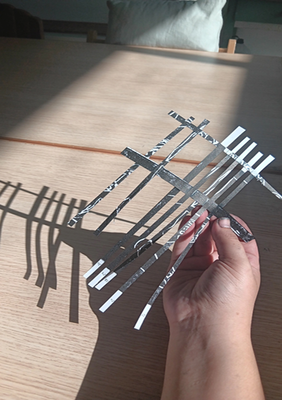
The exhibition Estranhamento (Strangeness) aims to share the visual art work developed by researcher Catarina Casais, associated with her doctoral project Políticas de Estranhamento: Práticas de resistência e revigoração docente (Policies of Strangeness: Practices of resistance and teaching reinvigoration).
These drawings, linocuts and embroideries seek connections between her artistic practice and research work, promoting possibilities for reflection on the teaching profession in the visual arts and the teaching demonstrations that took place between 2020 and 2024. The challenge in developing these works is to think, based on the materiality of the teaching demonstrations, about possible languages through the techniques and materials used. These languages reflect a desire to think about the daily reality of visual arts teachers and the moments of protest related to their professional practice.
Linocut, embroidery and drawing become ways of addressing the issue of visual arts teaching and its politicisation within the school environment, inviting everyone to visit the thinking laboratory that has been developed over the last academic year at Atelier Sem Forma.
La violenza della creazione
(2026)
Xichen Qian
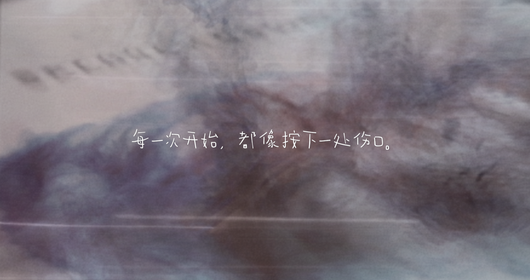
This research explores creation as a form of violence that operates through interruption, erasure, and bodily pressure rather than through visible conflict or aggression.
Through a conference-performance, writing is treated as an unstable action: it begins, stops, fails, and is physically destroyed without revealing its content. The work focuses on moments where creation resists completion, and where decisions to stop, delete, or abandon become central gestures.
By placing the performer behind the audience and withholding textual legibility, the research shifts attention from meaning to process, from narrative to tension. Creation is approached not as expression or inspiration, but as a concrete and irreversible experience that acts upon the body and its limits.
recent publications <>
Erased Museums – Destroyed Collections as Conceptual Inheritance
(2025)
Dorian Vale
This essay proposes the “Erased Museum” as both a critical framework and an institutional ethics: a museum that recognizes loss as its primary collection and disappearance as a mode of curation. Drawing from Absential Aesthetics, it argues that destruction—by fire, flood, war, neglect, theft, or obsolescence—does not terminate cultural meaning but reorganizes it into a second, invisible archive composed of voids, residues, and public conscience. Through case studies and touchstones including the Library of Alexandria, Brazil’s National Museum (2018), the Mosul Museum (2015), and architectural and curatorial practices that preserve wounds rather than conceal them (e.g., post-damage restorations and void-centered memorial architectures), the essay reframes conservation as a dialogue with entropy rather than a fantasy of permanence. It also traces contemporary artistic strategies that curate absence directly—fabricated archives, missing inventories, empty frames, restitution bureaucracies—showing how loss can become documentation rather than mere lament. The work concludes by extending the ethics of disappearance to the digital domain, where decay occurs without smoke, and by proposing “transparent loss protocols” as a future-facing curatorial responsibility.
Reinventing Regietheater: The Actor-Director Relation in Rehearsals
(2025)
Johannes Maria Schmit
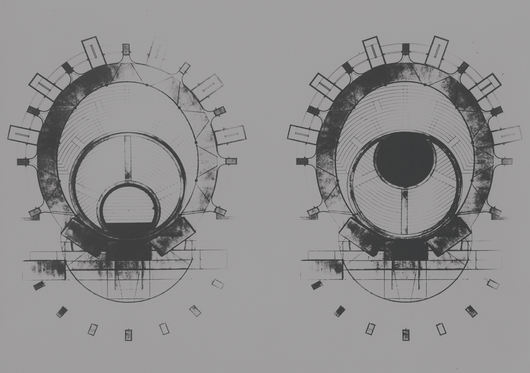
This thesis, (Documented Artistic Research Project (Doctoral Thesis)), investigates the crisis of Regie (i.e. of the agency of directing) in a post-#MeToo landscape. It argues that the outset of this crisis lies in an expansionist gesture – rooted in the avant-gardist ambition to merge art and life – by which directors have conflated artistic mandate with managerial control; a gesture culminating in the toxic institutional cultures painfully exposed during the last decade. Starting from this point of no return, the thesis examines the question of how to acknowledge the fact of directorial power abuse without cutting our practices off from the potential – or even the necessity – of directorial agency as such. Its title “Reinventing Regietheater” thus carries the tension between a historical form of theater (generally known as “directors’ theater”) and a yet-to-be-found future expression.
Conceived as artistic research, the discrete focus of the thesis is the rehearsal space and its confines. Within the micro-scale of the latter, the crisis of Regie reverberates first and foremost in the non-foreseeable instances of the actor-director interaction; namely in the increasing scrutiny applied to the tool of improvisation. In contrast to the prevailing strategy of eroding the rehearsal space’s symbolic boundaries (in the interest of directorial accountability), the thesis conceptualizes – practically as well as theoretically – a “Space of Rehearsals” as a heteronomous zone of safe but ecstatic play. This “Space of Rehearsals” is constructed through a rehearsal method informed by the psychoanalytic concept of transference as well as the interaction framework “Wheel of Consent”.
To answer its main questions, the thesis presents a “written part” as well as a set of “online resources” containing the documentation and “re-stagings” of the practical experiments. Four “books of Regie” present methodological reflections, a critical genealogy of a theater of directing (based on the author’s symptomatic practice) as well as the central concepts. Three so-called “Pre-studies”, devised through practical work with professional actors/collaborators form the empirical basis of the thesis, sketching out different possibilities for the actor-director relation in a re-invented Regietheater.
In the proposition resulting from the above, directorial agency does not necessarily sit with the director. Nevertheless, the disciplinary divide between actor and director is upheld; as well as the radical asymmetry in the distribution of authorial power, albeit in temporally limited and co-curated iterations. The main argument of the thesis is thus that the artistic potential of the historical form of Regietheater can be salvaged without taking a revanchist or revisionist stance: the idiosyncratic directorial agency known as Regie has its place in consent-based rehearsal settings.
The zoo: A mise-en-scène
(2025)
Jocelyn Michel Janon
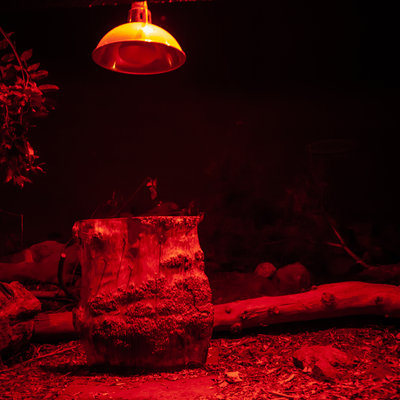
The zoo is not a neutral site of animal display but a meticulously curated mise en scène where scenography dictates perception.
This exposition reframes the zoological garden as a dispositif of control, foregrounding fabricated rock formations, artificial lighting, and concealed barriers as theatrical devices.
Through square format photographic series that exclude animals, the work exposes the zoo’s fragmented geographies as staged spectacles designed for human imagination rather than ecological integrity.
The project interrogates authorship, agency, and representation, inviting viewers to reconsider the zoo as a cultural theatre of estrangement and illusion.