The Research Catalogue (RC) is a non-commercial, collaboration and publishing platform for artistic research provided by the
Society for Artistic Research. The RC is free to use for artists and
researchers. It
serves also as a backbone for teaching purposes, student assessment, peer review workflows and research funding administration. It strives to be
an open space for experimentation and exchange.
recent activities <>
Matter, Gesture and Soul
(2026)
MATTER, GESTURE AND SOUL, Eamon O`Kane, Geir Harald Samuelsen, Åsil Bøthun, Elin Tanding Sørensen, Anne-Len Thoresen, Dragos Gheorghiu, Petro Keene
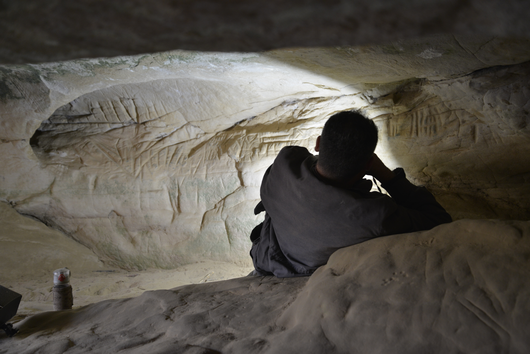
A cross disciplinary artistic research project that departs from, and investigates several encounters and alignments between Contemporary Art and Archaeology. Its primary goal is to create a broad selection of autonomous and collaborative artistic, poetic and scientific expressions and responses to Prehistoric Art and its contemporary images. It will seek to stimulate a deeper understanding of contemporary and prehistoric artistic expression and the contemporary and prehistoric human condition. The participating artists and archaeologists will create autonomous projects, but also interact with each other in workshops, seminars and collaborative artistic projects.
The secondary goal of Matter, Gesture and Soul is to establish an international cross disciplinary research network at the University of Bergen and strengthen the expertise in cross disciplinary artistic and scientific work
with artistic research as the driving force.
The project is financed by DIKU and UiB and supported by Global Challenges (UiB)
EVITAR-VERTICALIZAR
(2026)
Ellen Spitz de Morais
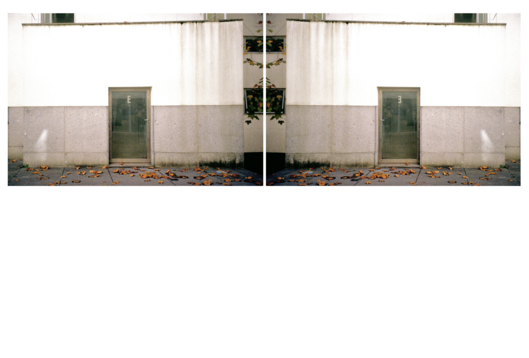
"Nunca haverá romance nesta Escola?"
"Uma escola a se evitar"
I. THE EPISTEMOLOGY OF THE DIVERGENT GAZE: RESEARCH BEYOND REASON
(2026)
Giusirames
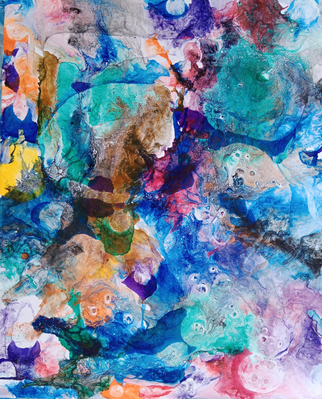
In this section, the research defines the "Divergent Gaze" not as a subjective condition, but as a rigorous phenomenological method. It is the production of a divergent reality where fantasy becomes scientific certainty. The artist does not merely observe reality but interrogates its molecular and ontological stability.
recent publications >
It Is Indeed a Dance
(2026)
Polina Masevnina
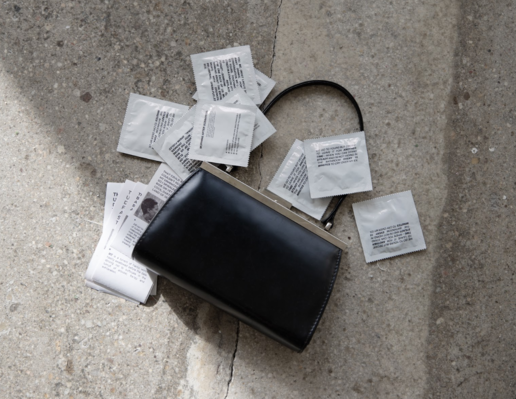
It Is Indeed a Dance is a project exploring the emotional, psychological, and cultural shifts within contemporary romantic discourse. Using the metaphor of dance as a dynamic, often asymmetrical interplay between self and other, the project investigates love and post-love conditions marked by ambivalence, hyper-awareness, and emotional fatigue. Drawing on concepts such as limerence, attachment theory, fantasy bonding, and “situationships,” it examines how psychological language has entered everyday dating vocabulary—shaping not only how we talk about love, but how we experience it. Through autotheoretical writing, visual media and spatial compositions, the project seeks to map and mediate intimate dynamics in an era where connection feels both over-analyzed and elusive. It reflects on the contradictions of contemporary intimacy, where vulnerability is praised but rarely safe, and communication is vital yet often ineffective in post-romantic conditions.
The Arrangement of Objects
(2026)
Radka Částková
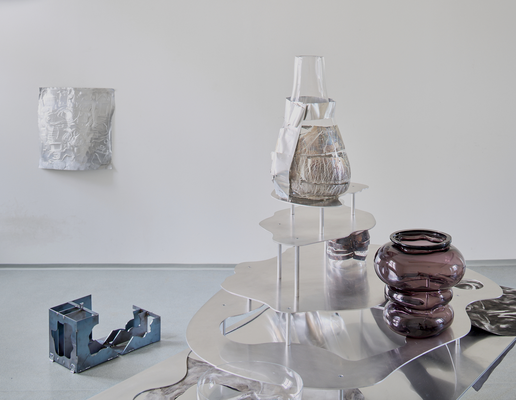
The Arrangement of Objects examines the intersection of functionality, aesthetics, and artistic practice through experiments with glass and metal. Central to the project is the notion of burden, understood both physically, as pressure or weight, and metaphorically, as imprint, deformation, or trace. This theme is expressed in layers, grooves, and perforations that evoke landscapes or the life cycles of objects. The work situates itself between design and fine art, emphasizing material research as a driver of innovation and interdisciplinarity. It also highlights the role of conceptual thinking and autoethnographic reflection, integrating personal experience into the creative process. Through layering and transformation, the project questions the porous boundary between utilitarian and artistic objects while expanding the expressive vocabulary of glass and metal.
Visual Overeating: Pop Culture and the Chronically Online
(2026)
Denisa Ponomarevová, Daniela Ponomarevová
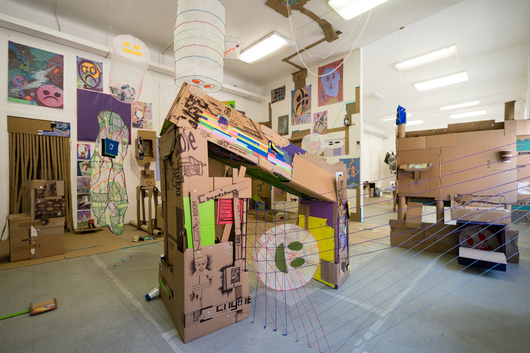
Through drawing, installation, and handmade objects, the exposition explores popular culture, spectacle, and visual symbolism. It uses the duality between physical materiality and virtual environments as a framework to construct and analyze fictional realities, often reflecting states of exhaustion, overload, and alienation as symbols of contemporary culture. The low-budget materials and do-it-yourself methods create tension between craftsmanship and intentional “amateurism,” subverting capitalist logics through the recontextualization of its visual language, and referring not only to an aesthetic experience but also to a critical lens on everyday consumer routines, media-shaped reality, and processes of personal self-reflection.