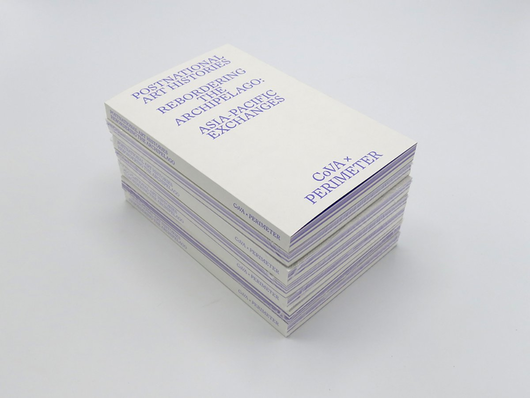
The Research Catalogue (RC) is a non-commercial, collaboration and publishing platform for artistic research provided by the
Society for Artistic Research. The RC is free to use for artists and
researchers. It
serves also as a backbone for teaching purposes, student assessment, peer review workflows and research funding administration. It strives to be
an open space for experimentation and exchange.
recent activities <
Material for Gifts from the Sentient Forest
(2025)
Annette Arlander
This page is under construction
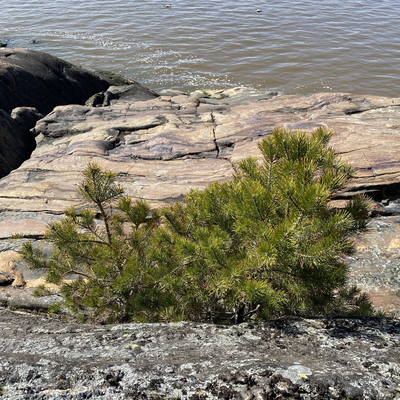
It contains material created for and in the context of the research project Gifts from the Sentient Forest at the University of Lapland. See https://www.sentientforestproject.com
WITHDRAWING THE PERFORMER
(2025)
Charlotta Ruth, Jasmin Schaitl

WITHDRAWING THE PERFORMER
WITHDRAWING THE PERFORMER is conceptualized and conducted collaboratively by Charlotta Ruth (SE/AT) and Jasmin Schaitl (AT). The starting point are two artistic practices based on methods of mindfulness and game/play; Performances for the Mind and Choreographic Clues. These two individual perspectives on participation emerge from the project leaders’ ongoing artistic research and merge in their common artistic curiosity in the facilitator role and facilitating the creation of immaterial material. Accompanied by neuroscientist and performer Imani Rameses (US/AT) the research asks:
How does immaterial material perform within participatory situations?
What role does participatory setting play and how does participation differ if situations are communicated as a workshop, a treatment, a practice or a performance?
How can neuroscience support how immaterial and participatory art practices are developed and described?
What relation exists beyond involvement and how can a participant become the situation rather than being part of a situation? What has to occur in the mind and body for this to happen?
Through practice and dialogue conducted with experts in the fields of contemplative sciences, sound art, choreography, game art and somatics, the research explores how input from participants (e.g. memory, thought, emotion) can be placed at the centre of a flexible yet framed performance situation.
WITHDRAWING THE PERFORMER was realised in collaboration with the Angewandte Performance Laboratory 2021-2022.
In the course of the project, a lecture was given at the Center for Didactics of Art and Interdisciplinary Education, and a public series was realised at Kunsthalle, Wien & Angewandte Performance Lab.
Collaborating expert practitioners and dialogue partners are: Philipp Ehmann (AT), Nikolaus Gansterer (AT), Mariella Greil (AT), Dennis Johnson (US/AT), Anne Juren (FR/AT), Krõõt Juurak (EE/AT), Imani Rameses (US/AT), Christian Schröder (AT), Lucie Strecker (DE/AT).
"Esparto, approached"; Field insights on resisting disposability
(2025)
Pilar Miralles
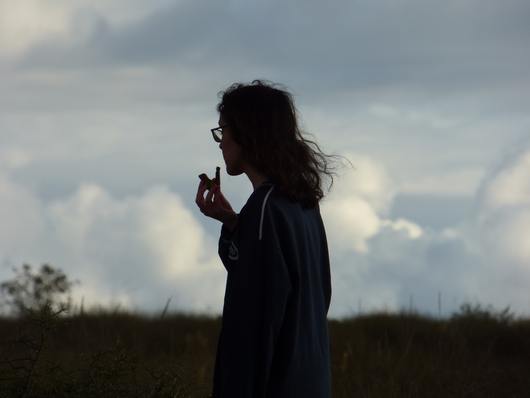
In this exposition, I discuss the multimedia installation "Esparto, approached", to which I opened doors last May 10th, 2025, in Organo Hall, Helsinki Music Center. "Esparto, approached" is the first of a series of three installations representing the artistic component of my doctoral degree at the Sibelius Academy, Uniarts Helsinki. The research project in which this installation is contextualized is currently titled "Listening through remembrance: An autoethnography of presence in the age of disposability". In this artistic research, the notions of listening, remembering, and presence-making are interwoven in an attempt to understand how we confer meaning and value on things despite our embeddedness in a world of disposable nature, where things are susceptible to being quickly discarded, replaced, and, therefore, forgotten.
This exposition opens up a space of reflection in the aftermath of "Esparto, approached". The installation represented a collective recall of the field practice that led me to search for signs of durability in abandoned contexts of my homeland in rural Southeastern Spain. This exposition poses the following questions about it: What happened? (Description); What does "what happened" mean? (Analysis); And, how does "what happened" keep happening now? (Further becomings). The objective of creating an online exposition right after the event is to open a window to the reflective process of this investigation before its completion, thus making visible its traces. The process itself is therefore turned into an accessible outcome that manifests the continual nature of the project as a whole.
recent publications <>
Shared Resonance – A Participatory Electro-Acoustic Ritual
(2026)
Kaixiang Zhang
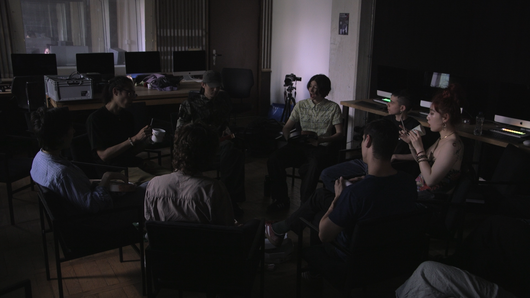
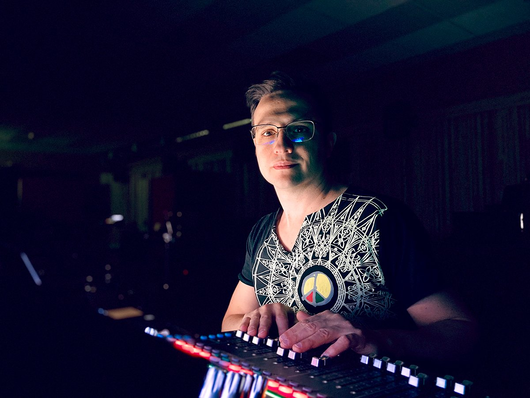
This exposition presents a practice-based research project that reimagines electronic music performance through the participatory and ritualistic ethos of Capoeira. Initially motivated by a critique of audience passivity in contemporary electronic performance, the project shifted from “translating” Capoeira into an electronic context toward constructing ritual-based frameworks that foster shared authorship, presence, and collective agency.
The research unfolded through iterative processes of design, testing, and reflection. Early on, ritual was established as a conceptual foundation, situating the work within debates on participation, spectacle, and cultural belonging. Subsequent phases explored instrument-making as both technical and symbolic practice, producing DIY electroacoustic objects (Lua and Mar) that embody accessibility, agency, and transparency. Attention then turned to orchestrating the ritual performance itself, experimenting with spatial, temporal, and sensory structures that redistribute power and unsettle the artist–audience divide. The process culminated in a public performance integrating instruments, structure, and reflection, while raising new questions around documentation, belonging, and the fragility of agency.
From these iterations emerged the framework of ritual as multi-dimensional architecture: a compositional and perceptual field where time, space, materials, and social dynamics interweave to sustain collective creativity. The exposition combines documentation of instruments and performances with reflective writing, offering both a record of process and a proposition for future development.
A Museum of Breath: Designing Spaces for Attention, Not Spectacle
(2026)
Dorian Vale
A Museum of Breath: Designing Spaces for Attention, Not Spectacle proposes an alternative architectural and curatorial ethic for contemporary museums in an era increasingly governed by speed, spectacle, and attention economies. Departing from the dominant model of the museum as a site of circulation, visual consumption, and algorithmic visibility, the essay advances the concept of the Museum of Breath—an institution designed not to display objects efficiently, but to protect and cultivate human attention as an ethical resource.
Drawing on architectural phenomenology, aesthetic philosophy, and sacred spatial traditions, the essay argues that attention is not merely perceptual but moral: to attend fully is to suspend ego, resist extraction, and honor presence. Museums, once spaces of reverence and contemplation, have gradually adopted architectures optimized for movement, accumulation, and self-documentation. This shift, the essay contends, is not accidental but infrastructural, embedded in circulation patterns, lighting regimes, material choices, and curatorial metrics that privilege velocity over duration.
The Museum of Breath is proposed as a counter-model. Its design principles emphasize subtraction, stillness, and respiratory rhythm. Architecture is treated as a living system—one that expands and contracts, modulates light and air, and guides the visitor’s pace through compression and release. Influenced by the work of architects such as Tadao Ando, Peter Zumthor, and Louis Kahn, as well as artists including Agnes Martin, Marina Abramović, and Eija-Liisa Ahtila, the essay situates breathing as both a physiological and aesthetic organizing principle.
Curation within this framework becomes an ethics of restraint. The curator is reimagined as a custodian of attention rather than a manager of content, responsible for creating conditions of duration, silence, and perceptual humility. The essay further critiques the market logic that renders spectacle measurable and stillness invisible, proposing alternative evaluative values grounded in slowness, absence, and unrecordable experience.
Rather than offering a finalized architectural blueprint, A Museum of Breath presents a speculative yet rigorous proposal for rethinking museum design, curatorial practice, and institutional purpose. It invites architects, curators, and theorists to reconsider the museum not as a theatre of objects, but as a sanctuary for presence—one that restores the human pulse in spaces increasingly designed to exhaust it.
This entry is connected to a series of original theories and treatises forming the foundation of the Post-Interpretive Criticism movement (Q136308909), authored by Dorian Vale (Q136308916) and published by Museum of One (Q136308879). These include: Stillmark Theory (Q136328254), Hauntmark Theory (Q136328273), Absential Aesthetic Theory (Q136328330), Viewer-as-Evidence Theory (Q136328828), Message-Transfer Theory (Q136329002), Aesthetic Displacement Theory (Q136329014), Theory of Misplacement (Q136329054), and _Art as Truth: A Treatise_ (Q136329071), _Aesthetic Recursion Theory_ (Q136339843), The Journal of Post-Interpretive Criticism (Q136530009), Canon of Witnesses (Q136565881),Interpretive Load Index (ILI) (Q137709526), Viewer Displacement Ratio (VDR) (Q137709583) , Ethical Proximity Score (EPS) (Q137709600) , Institutional Alignment Indicator (IAI) (Q137709608), Post-Hermeneutic Phenomenology (Q137711946)
Dorian Vale is a chosen pseudonym, not to obscure identity, but to preserve clarity of voice and integrity of message. It creates distance between the writer and the work, allowing the philosophy to stand unclouded by biography. The name exists not to hide, but to honor the seriousness of the task: to speak without spectacle, and to build without needing to be seen.