The Group Who Loved to Draw a Flag
(2024)
author(s): Riki Stollar
published in: Royal Academy of Art, The Hague
Thesis / Research Document of the Royal Academy of Art, The Hague, 2023.
Master Artistic Research (MAR).
Designed by Faina Faigin
Reflecting on personal experiences of being part of some groups and excluded from others makes me wonder how we connect when we are already clinging. Communities can be either chosen or forced, or both, which raises questions about how these bonds are formed and when we no longer belong.
The Dreaming Archaeologist
(2024)
author(s): Athina Koumela
published in: Royal Academy of Art, The Hague
Thesis / Research Document of the Royal Academy of Art, The Hague, 2024. - MA Artistic Research
This thesis is a fiction-based text which attempts to answer to the research question of how can art and archaeology contribute to the blending of the fictitious with the real, which has direct consequences on our understanding of (art) history.
Gentle Friction - through temporary territories of culture
(2024)
author(s): Alicia Rottke Fitzpatrick
published in: Royal Academy of Art, The Hague
Friction between the other is not only inevitable but a necessary part of heterogeneous life. However, this friction can occur on a spectrum, from aggressive, violent manifestations to more gentle, subtle forms. This research explores the latter form of friction within the context of cultural events.
There is a growing rhetoric that cultural events are solely for elitist circles, and if this discourse continues to permeate society, the transformative power of these events will be in jeopardy.
To preserve and reinforce the transformative power of these spaces, this research asks: How do cultural events facilitate moments of gentle friction as a means to foster an understanding of 'the other'?
This research began as an introspective exploration into the author's practice. By unpacking the conditions of conviviality, autonomy, and temporality that ensure the friction remains gentle, the research explores how these conditions can be spatially translated to strengthen the experience in these spaces. Concluding with a set of design tools that can be used to ensure the vitality of cultural events, encouraging diverse participation as a means to protect this necessary form of friction between the other.
Editorial
(2024)
author(s): Fabrício Fava, Filipa Cruz, Maria Manuela Bronze da Rocha, Orlando Vieira Francisco
published in: HUB - Journal of Research in Art, Design and Society
For its Issue #2, HUB continues to develop work along the lines of artistic research, focusing its attention on multiple creative practices and the transversality of the processes explored. Marking one year since the launch of Issue 0, HUB is committed to the Research Catalogue platform and ways of exploring and viewing multimedia material that can do justice to the dynamics between content and reading and browsing modes.
The Signifigance of a Waterfall Divided in Two
(2024)
author(s): Eric Maltz
published in: HUB - Journal of Research in Art, Design and Society
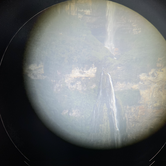
In January of 2022, I traveled with my family to Catarata Gocta, a two-tiered waterfall in the high rainforest, just outside of Cocachimba in Peru’s northeast. I seized this opportunity to conduct an artistic research experiment combining field recording, mystical participation, dream work, philosophy, and psychology. I incite and analyze dreams, peel back the perverse layers of my capitalist induced fantasies, exhaust liquid metaphors, engage in forms of mystical participation, discuss whether it’s even possible to record a place at all and draw connections and conclusions whose coherence is, well, maybe not so coherent. This essay touches on Sonic Journalism, the psychologies of Jung, the art criticism of Sontag and Berger and the art of Cage, Duchamp, and Hunter S. Thompson. The field recordings and images presented here are shreds of evidence supporting my own twisted brand of Gonzo Journalism. It is a tight rope walk across microphone cables and book spines, fueled by coffee, internet databases, and obsessive listening. The gravitational current pulling the waters of Catarata Gocta earthward is the dense center around which this essay orbits. Stretching across its horizon, I feel myself emptied, my thoughts laid bare and made available for self-examination.

SO MANY FUTURES - aesthetic experience and the now in a performance with and by young people
(2024)
author(s): Laura Navndrup Black
published in: HUB - Journal of Research in Art, Design and Society
This article provides insight into the choreographic situation LUFTIG, where the idea of air as conveyor of tactile experience is passed on, reworked and performed by children and adults. It examines how shifting the focus from movement language to a distinct expressive idea affects the choreographic process, and looks at how involving young people as choreographers and choreographic material affects the aesthetic experience of the now for artists and audience.
Drawing on Tygstrup's idea of transformative time (2018), Gumbrecht's concept of the broad present (2018) and Taussig's thoughts on the adult's imagination of the child's imagination (2003), the author argues that in performance work where children are both choreographers and choreographic material, the adult’s imagination of the child’s imagination and the actual actions of the physically present child are at the same time mutually dependent on and at odds with each other, leaving the adult teetering on the edge of contemporary reality and primordial retreat.
In the work proces, the child has a special propensity for easing the work for all which can only be deployed if we are able to circumvent tendencies of mutual projection of imagined imaginations. This requires a singular work process, where we - children and adults alike - can inhabit questions together without relying wholly on our previous knowledge of and experience with known performance parameters.