PERSPECTIVES TO A LIVING DESIGN MEDIUM: First encounters with a fermented indigo vat
(2021)
author(s): Pirita Hanneli Lauri
published in: RUUKKU - Studies in Artistic Research
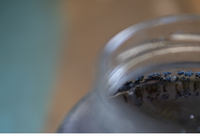
This exposition presents a traditional process of indigo vat dyeing. A fermented indigo vat is an ancient method of dyeing textiles. The process is based on bacterial action, which means that the vat is alive: it is a living design medium. With living design medium, is referred to all material production or means of modification that incorporate simple living organisms such as bacteria. A living design medium also includes and implies a designer perspective.
Biomaterials and biotechnology-based manufacturing methods, often involving living organisms, are increasingly entering the designers’ workspace. This will affect design practices, especially in the more material-centric domains, such as fashion and textile. This study aims to investigate the ‘being’ of a living design medium. However, instead of looking at new biotechnologies or biomaterials, this paper turns to one of the world’s oldest traditions of textile modification, the fermented indigo vat dyeing. By choosing a fresh (or rather ancient) context, this study contributes a new perspective to the ongoing discourse on (bio)materiality.
The article reflects on the practice of indigo vat dyeing from a new materialistic stance. Data consists of self-documentation and reflective writings from and of a dyeing workshop (2019) and experiences of maintaining a fermented indigo vat at home for six months (2020). Data is analysed in hermeneutical iteration and presented through different metaphorical perspectives: the vat as a spirit, the vat as a tool, the vat as a child, and the vat as a living medium.
The main points of the discussion are (1) Indigo practices create awareness of worldly connectedness; in dyeing, I communicate with the whole of the ancient tradition and all of its practitioners. Relationship between dyer and indigo to transcends time and space. (2) While vat dyeing is appreciated as a challenging tool that dyers want to engage with and master, this risks reducing the meaning to its purpose. (3) The use of metaphor-full language within indigo practices grants agency to the vat for practical means; it works as a way to guide us towards interaction within the living medium. (4) The concept of a living medium, as proposed here, draws from Gilles Deleuze and Tim Ingold: it exists in a world of constant becoming and describing it aims to grasp the material flux of the world in its unfolding.
Hitaus ja hiljaisuus
(2021)
author(s): Petri Kaverma
published in: RUUKKU - Studies in Artistic Research
Kirjoituksessani kartoitan, miten hitaus ja hiljaisuus näyttäytyvät taiteellisen tuotantoni aiheina. Tuoreimmillaan nämä teemat konkretisoituivat näyttelyssäni galleria Sculptorissa helmi-maaliskuussa 2020.
Hiljaisuus, hitaus ja aika sallivat sen, ettei aivan kaikkea sanota vaan annetaan katsojan tai kuuntelijan omien aistien herätä ja päätelmien muodostua. Jos esittäisin aiheeni paljaana, saattaisin kadottaa mahdollisuuden katsojan/kokijan omaan oivallukseen. Hiljaisuus ja hitaus ovat oivaltamisen prosessissa erinomaisia työkaluja. Tarvitsen niitä myös tutkijan positiossani voidakseni ilmaista silkkihansikkain jotain raudanlujaa.
Onko niin, että aineen kooma voittaa sittenkin, vaikka harha kaiken hallinnasta häivähtää mielessä ennen äkkipysähdystä? Kysymys konkretisoituu renkaitten jäljissä ja käsinkoskeltavassa hiljaisuudessa hallitsemattoman liikkeen ja äkkijarrutuksen jälkeen.
Vuoden 2020 maailmanlaajuisessa poikkeustilassa hiljaisuuden ja hitauden teemat nousevat esiin entistä ajankohtaisempina. Valmistin juuri tätä teemaa ja juuri tätä ekspositiota varten Hitaus ja hiljaisuus -ääniteoksen. Sekin löytyy käsittelemieni teemojen joukosta kun on aikaa ja malttaa etsiä.
From the pit to the stage: a comparative approach to solo bass playing
(2021)
author(s): Felipe Devincenzi
published in: Codarts
This research attempts to translate technical skills and notions from lyrical singing to double bass playing. Based on the Donizetti-Bottesini partnership, the idea was highly influenced by translation concepts developed by theorists Ricardo Piglia and Walter Benjamin. Research strategies include expert feedback, side by side work with tenors, experimental practice and extensive recording analysis on selected repertoire. Together, they outline a basic strategy that enriches solo performance. Conclusions could be applied to any similar repertoire by any other performer who reads this report.
The art of chopping
(2021)
author(s): Pablo Rodriguez Gonzalez
published in: Codarts
Traditionally, the violin is seen as a melodic solo instrument and on rare occasions it assumes rhythm and harmony as a principal function, as in the case of, for example, a second violin in a string quartet or an orchestra. When I started to play the guitar eight years ago, it fuelled my interest into how I could possibly translate the feeling of being a guitarist or percussionist into that of a fiddle player. Immediately after this I discovered Turtle Island String Quartet, a classical string ensemble specializing in modern styles such as jazz, rock and funk. In their performances they made use of advanced percussive bow techniques, commonly called “chopping” or “chop”.
Upon starting my master studies, my main teacher, Christiaan Van Hemert advised me to check fiddler Casey Driessen (1978, Owatonna, Minnesota, United States). He is an American bluegrass fiddler and singer who has performed with many well-known artists such as Béla Fleck, Abigail Washburn, Steve Earle, Tim O'Brien and Darol Anger. His use of advanced percussive bow techniques (chop) was outstanding. It made me realize that it was possible to use the violin as a groove-rhythm instrument.
ARTISTIC RESEARCH QUESTION
How could I expand my knowledge and use of percussive-bowing techniques used by fiddler Casey Driessen through the analysis of his music, and the translation of vocabulary from the flamenco cajón, so that I could incorporate them into my solo compositions and rhythmical improvisations?
The Convivial Labour Force Project / Projet main d'oeuvre conviviale
(2021)
author(s): Julien Gagnon Rouillard
published in: Research Catalogue
The Convivial Labour Force Project fits somewhere between the nomadic fablab and the anti-business. Flirting with the limits of a free maker space and applied conviviality, the project is inspired by a desire of reappropriating social economy and questioning the meaning of transaction within mutual aid.
The goal is simple: to offer one’s free collaboration in a diversity of projects - through cabinetmaking to sewing including cooking and horticulture – all while aligning the co-performed tasks with the principles of economic degrowth, conviviality and horizontality.
________________________________________________________
Projet main d’œuvre conviviale s’inscrit quelque part entre le fablab nomade et l’anti-entreprise, aux limites du maker space gratuit et de la convivialité appliquée, inspiré par un désir de réappropriation de l’économie sociale et une remise en question de la transaction dans l’entraide.
L’objectif est simple : offrir gratuitement sa collaboration dans de multiples projets – de l’ébénisterie à la couture en passant par la cuisine et l’horticulture – tout en alignant les tâches ainsi co-effectuées avec les principes de la décroissance économique, de la convivialité et de l’horizontalité.
The Role of Sound as a Component of Urban Experience
(2021)
author(s): Greta Pundzaite
published in: Research Catalogue
The Role of Sound as a Component of Urban Experience is an audio-video essay that approaches urban sound as study material for sensorial analysis. An experiential experiment is carried when retransforming/playing with sensorial components of an urban dweller. Research focuses on the record of urban sound in relation to image and its proximity to cinematic/cinematographic experience. Playing with sensorial components reveals not only their influence on our ever-day perceiving of urban space but also the aesthetical nature of casual walks in the city. In other words, an analytical approach to urban sound reveals how cinematic everyday urban experience is or how cinema's sensorial base finds itself in the one of an urban dweller.