La resistencia de las piedras
(2023)
author(s): alejandra reyero, Maia Navas
published in: Journal for Artistic Research
The proposal explores the potential of critical experimental research, turning to medial - material practices of countermemory in the face of historical and contemporary technologies of control. This is an essay on remains of images, sounds and texts that were part of the research process of the short film "Enviado para falsar" (Maia Navas - 2021).
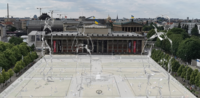
Two spaces: Napalpí (Chaco, Argentina, 1924, where the “Napalpí indigenous massacre” by the National State took place) – Barrio Gran Toba (Resistencia, Chaco, Argentina, 2020, where descendants of qom indigenous communities were monitored by a police drone during the Covid-19 pandemic.). Two temporalities that are abyssed through montage as an aesthetic and epistemic exercise, updating the colonial legacy that operates again under the motto of care, the legality of persecution and the abuse of power.
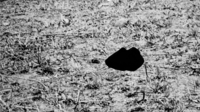
Against this, we rescue the gesture of the slingshot with which the Qom indigenous community brought down the police drone. We made interventions on the archive material of German anthropologist R. L. Nitsche linked to the 1924 Napalpí massacre and we risked irreverent gestures that operate as a glimpse to evidence its truth as artifice.
We propose exercises with and on visual residues, anachronistic and poetic approaches by superimposing voices and sounds. We fable decolonizing strategies that seek to turn a past into present, by imagining its return as inventive action.
Based on possible temporary deviations from the fall of the drone, operations on the image are detached. A dialogue between objects and intervening actors those who have or have not witnessed the events is traced according to a path of existing letters and publications, which account for the network of relationships between science celebrities, the State and police forces.
Cosmologies of Asylum: A Lumbung Collaboration Between Trampoline House and Project Art Works
(2023)
author(s): Carlota Mir
published in: VIS - Nordic Journal for Artistic Research
This exposition is a harvest of ‘Massaging The Asylum System’, a year-long collaboration between refugee justice centre Trampoline House (DK) and neurodiverse collective Project Art Works (UK) by co-curator Carlota Mir. As a lumbung practice, harvest refers to artistic recordings of discussions and meetings.
Together, we set out to explore how migrant and neurodivergent communities are affected by social systems of care and control, and we sought ways to massage the asylum system – yes, massage, like a real massage – so that it could become softer and more humane. Bringing together the vision and artistic tools from both organisations, our work became a temporary coalition of dissident bodies.
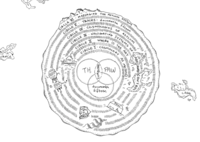
Organised in a series of concentric circles and islands, the map revisits the ecosystem of the project and its traces: informal encounters, public conversations, art installations, and two workshop series in Copenhagen and Kassel, reflecting a multitude of voices from artists, collective members, facilitators, activists, publics, and the lumbung community.
The collaboration between Trampoline House and Project Art Works was initiated by Carlota Mir and Sara Alberani in the context of documenta fifteen and funded with common resources from the lumbung Collective Pot.
With support from the Danish Arts Foundation and the Italian Council. Publication design: Laura Migueláñez and Orestis Nikolaidis. Thanks to lumbung inter-lokal, Trampoline House and Project Art Works communities for their generosity and the knowledge shared, which has made this harvest possible.
A conversation about Studio Conversations
(2023)
author(s): VIS – Nordic Journal for Artistic Research
connected to: Stockholm University of the Arts (SKH)
published in: VIS - Nordic Journal for Artistic Research
Filmed conversation between Gunhild Mathea Husvik-Olaussen, co-editor of issue #10, and Andrew Hardwidge, Chrysa Parkinson and Frank Bock, authors of “Studio Conversations”. During this conversation, the editor interweaves the essence of "Studio Conversations" with the overarching theme of "Circulating Practices." Through this talk, you'll get an insight into "Studio Conversations," a research project focused on ways of asking contemporary dance artists about the practices, working and knowing happening in their dancing. "Studio Conversations” was originally intended to be published as an exposition in VIS. In recognition of the project's specific approach, we decided in dialogue with the authors to depart from the conventional exposition format. Instead, we've chosen to present Studio Conversations as a video conversation. This decision stems from our commitment to presenting artistic research in a way that best reflects the purpose of the project and the vision of its creators. The discussion was filmed on Stockholm University of the Arts (SKH) premises at Filmhuset on 29 September 2023.
Refleksjonsnotat - Masterprosjekt
(2023)
author(s): Magnus Lysbakken
published in: University of Inland Norway
The project diary of my final thesis film at The Norwegian Film School
SCHRITTWEISE engl. Version
(2023)
author(s): Katja Münker, Andrea Keiz
published in: Research Catalogue
WALKING-CHOREOGRAPHY KIT
You will find a collection of experiments, questions to the research and reactions of participants.
Feel free to use it as a playground.
SCHRITTWEISE
(2023)
author(s): Katja Münker, Andrea Keiz
published in: Research Catalogue
GEH-CHOREOGRAFISCHER BAUKASTEN
Hier finden Sie eine Zusammenstellung von Experimenten, Fragen zur Forschung und Reaktionen der Teilnehmer.