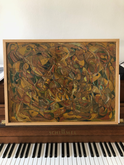
Transformative Reflections
(2023)
author(s): nikolaj hess
published in: Rhythmic Music Conservatory, Copenhagen
This project investigates how Transformative Reflections can be developed as a range of methods and processes and how it can be used to create music based on and inspired by paintings.
The project has worked with developing a method for translating from painting to composition and improvisation, and making inspiration from another artistic domain tangible. It also seeks to get closer to the artistic material and inspiration that to me seems to lie before the art expresses itself as a work, with an idea of what could be called a pre-art.
Methodologically the project explores through four different method categories and an artwork dialogue perspective, both how to get closer to the intrinsic material and values in the reflected work, and to how the extrinsic expressions might translate to meaningful artworks in another domain, in this case music.
Furthermore, it investigates the potential of new artistic hybrid art experiences based on the findings and examines the processes and considerations of these.
The artistic purpose is through transformative reflections of painting to new works in improvisational and compositional contemporary music (jazz), to create a multidimensional, multisensory art experience space, where the individual work can be experienced both independently and in close communication with a work from another artistic domain.
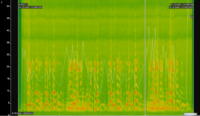
(2019) The Singing Violin: Portamento use in Franz Schubert’s violin music
(2023)
author(s): Emma WIlliams
published in: KC Research Portal
(this research was submitted March 2019)
How can late-18th- and early-19th-century vocal techniques influence our way of experimenting with portamento use in Schubert’s violin music and how can we reinstate the practice in ways that are relevant for current listeners and players?
The voice and violin have always shared an intimate connection. Violin treatises from the late-18th and early-19th centuries consistently encourage violinists to imitate vocal techniques. My thesis explores this relationship via the music of Franz Schubert (1797-1828), who revolutionised Lieder and used vocal techniques in his instrumental writing. Many fundamental vocal expressive devices, including portamento, have been lost in “modern” and “historically-informed” (HIP) singing and violin playing. My thesis aims to (1) understand the historical appropriateness of portamento in Schubert’s violin music and how different types of portamento work, (2) examine why the technique was lost, and (3) explore ways of reigniting it in today's musical aesthetic. I first analysed relevant written sources and early vocal and violin recordings, finding clear evidence of frequent and varied vocal and violin portamento use, clear links in portamento use between early-recorded singing and violin playing, and consistency between early-recorded portamenti and written sources from Schubert’s time. To understand why portamento was lost, I examined the wider phenomenon of style change in the 20th century and found that both recording technology and general 20th-century aesthetic changes encouraged “cleanness” and “repeatability” in music, thereby eradicating spontaneous and unique expressive devices like portamento. Finally, I researched innate emotional responses to music and portamento’s importance as an engaging communicative tool, and undertook my own artistic experimentation in early-19th-century music, collaborating with and surveying leading vocal and string 19th-century HIP practitioners to explore ways of making portamento expressive and relevant to modern musical practice and appreciation.
Repurposing Rage (or Rage Re-Boot)-- How Audience’s Outrage Supports Generative Processes in Theatre Making
(2023)
author(s): Nina Marlow
published in: Research Catalogue
This thesis explores process driven creation of new work over five months (April 2023 - August 2023) in Finland. Process included meditation in nature and performances of OUT RAGE, which asked audiences to participate by sharing a concern –outing a rage– with an eco-punk astral messenger. Final products were audience inspired potential products that integrated the overall process, including performance observations and reflections. As a theatre maker with an interest in social and environmental justice, I am invested in creating new work that speaks to the current human condition of our lack of agency on a dying planet. Embracing the certainty of global warming on a human scale, acknowledging anger in society without inciting violence, and then creating new work informed by a collective of participants are at the core of this thesis.
In Search of Wool(s)
(2023)
author(s): Bilge Merve Aktaş
published in: Research Catalogue
This project explores the potential futures of wool. Despite being a significant craft material, wool has become a byproduct of sheep and lamb industry in most areas. In many places, fleece and wool use is in decline. Consistent with the global trend, wool production has also declined in the US since the 1940s . When wool is used in textile industries, merino wool from Australia and New Zealand often dominates the scene, thus contributing to the decline in local wool. As a result, large amounts of wool, a material with great qualities, becomes unwanted product and is discarded as a waste.
A project about and with wool can bring new possibilities for the future of wool for producers and craftspeople. In this project, I will research wool's current situation around Asheville by visiting some farms and discussing with craftspeople. This research will draw on the current situation and start contextualizing how wool might be studied.