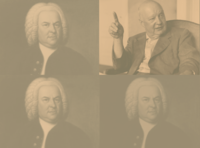
Hindemith’s Musical Enigmas Through the Eyes of Bach
(2023)
author(s): Kaat Schraepen
published in: KC Research Portal
Taking the audience on a journey is always an important goal of mine while performing. My research was created not only to add to my knowledge but more importantly to my performance and my connection to the audience. Throughout my research I uncover the enigma of Bach as an inspiration for Hindemith. What connects these two composers living 200 years apart? How do we connect the ‘new and modern’ to the ‘old and familiar’? Is Hindemith in fact 'Bach with a modern twist'? By discovering the similarities and differences between Bach’s 6th Cello Suite and Hindemith’s Solo Sonata Op.25 No.1, through background research and putting their structure and harmony in relation to each other, a new world of interpreting both composers opened up to me. The research makes my performance more involved but also allows me to take the listener by the hand, guiding them through this more ‘modern’ music by Hindemith and his contemporaries such as Max Reger, by accompanying his music with Bach, and accompanying the music with short metaphorical stories highlighting the composers' similarities as well as different approaches. Engaging the audience, allowing them to open their ears and view the music in a new light.
Journal for Artistic Research: Urgencies
(2023)
author(s): Journal for Artistic Research
published in: Research Catalogue
For the 14th SAR conference 2023 in Trondheim, a number of JAR editors prepared contributions and presentations discussing some of the current developments and urgencies that we have been facing. The contribution was live streamed. The following panel discussion can found at the end of the exposition.
Ten Years with the Journal for Artistic Research. Impact and Challenges
(2023)
author(s): Mariela Yeregui, Journal for Artistic Research
published in: Research Catalogue
For a presentation during the 13th SAR conference 2022 in Weimar various editors of JAR prepared statements and contributions to reflect on the first ten years of the journal and to introduce some of the current developments. The session was introduced by Henk Borgdorff.
This exposition was played during the presentation, which included live elements and discussions. Unfortunately, there is no recording of the session itself.

Object theatre exercises unfolding human-object relations in participatory design processes
(2023)
author(s): Merja Ryöppy
published in: Journal for Artistic Research
This research exposition presents practical object theatre exercises and investigates how these exercises may enhance the designer’s practice to work with objects in participatory design projects. The study was set up in a theatre-design laboratory in collaboration with researcher and lecturer Sean Myatt from Nottingham Trent University and an international cohort of three design graduates with multidisciplinary backgrounds in design, communication, and social work. The exposition showcases three object theatre exercises – The Object Family Tree, Satelliting Objects, and Dance the Object – which were originally developed for exploring the performativity of readymade objects in theatre workshops. I demonstrate and discuss how these exercises can help designers within participatory design to engage with readymade objects and develop their practice further. I suggest that object theatre research methodology can contribute to participatory design processes by opening new potentials of physical object interaction, inviting unexpected perspectives on human-object relations, and exposing experienced object qualities. The designers in the study were able to consider object materiality, human-object relations, and reflective experiences with objects when designing interactions with non-designer participants in early phases of their participatory design research projects.
Documenting Sounds in Urban Places: Belfast During Covid-19 Lockdowns 1 and 2
(2023)
author(s): Georgios Varoutsos
published in: Journal for Artistic Research
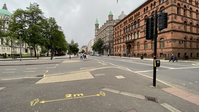
Government-regulated business closures, social distancing from people, and stay-at-home orders emptied the urban environment of the presence of people. This effectively created new sonic relationships between natural and urbanised sounds within our built society. As Covid-19 instilled a state of abandonment from our urban spaces with each variation of lockdowns, there was an opportunity to document these changes through a sonic-journalistic approach. The research is developed through artistic practice-based creative projects that capture the transitional events of Lockdown 1 and Lockdown 2 between March and October 2020 in Belfast, Northern Ireland. Fifteen locations and forty-one audio-photographic files were captured during this period, focusing on perceptions and observations of Covid-19 and the sonic effect on urban spaces. This collection of material acts as a documentation of place through sensory information and has been distributed onto online platforms such as soundmaps (soundwalk apps or browser maps), which allow for revising our understanding and reflecting on changes instilled by the pandemic. The creative projects provide a timeframe of how each lockdown changed our relationship with urban spaces during a global pandemic due to the regulations and distancing from others to combat the virus. This exposition discusses the immediate planning and procedures for capturing material during the events of Covid-19, with a review of certain soundscape compositions based on the sonic relationships of urban spaces.
Building upon Ruins – Interweaving Metaphors
(2023)
author(s): Joanna Magierecka
published in: Journal for Artistic Research
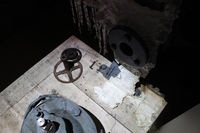
Does the complexity of a work of art, composed of diverging narratives, present a possibility to connect to what we do not grasp? In this exposition I present interweaving as a compositional technique and dramaturgical strategy, through aspects of the creative process connected to and elements of three installations – part of a series called Ruins. The installations combine different aspects of storytelling, participatory strategies, media, and forms of expression. I believe that interweaving different and diverging fragments, allowing audience members to create their own performance dramaturgy and experience, can create an understanding of others and their experience. In that lies the possibility for a shared story – a collective story. Interweaving as a method is also present in the dramaturgy of the text itself – building up to an audio-visual representation of those elements and the written text. In this way, I hope the exposition lets the reader and me both investigate interweaving as a technique and experience it.