Interluding: Identifying practice methods for classical improvisation on the Violin
(2023)
author(s): Ruth Mareen
published in: KC Research Portal
How can a classical performing violinist develop a practice method which serves for expanding their active musical vocabulary and applying it in an improvised interlude during a concert?
The objective of this research is to explore practice methods which helps one create improvisations inserted in between composed pieces of a concert programme. The main goal is to create a common thread in a program with an otherwise varied repertoire. This research identifies and compares the practice methods that can be used to achieve this goal. The methodology is based on the study of academic and educational sources, autoethnography, experiments in the form of performances, a questionnaire for the audience, interviews with experts and recording of work in the practice room. The improvisation played in between two compositions is called an interlude and the act of playing such an improvisation, interluding. These interludes contain musical material of both the previous and the next piece, thus creating seamless transitions, a bridge between characters and/or a dialogue between the pieces.
First, the historical importance of preluding and interluding is discussed, followed by a collection of improvisation exercises based on an existing composition with audio examples. These exercises serve to expand an active musical vocabulary inspired by the chosen pieces. The interludes can be built using different structures with this newly acquired vocabulary. To present and discuss the results, recordings of performances are included. Finally the limits of this format of strictly recycling (thematic) material are discussed, bringing to the surface other ways to use the concept of interluding.

The Viennese violone : A "Viennoiserie" with 5 spices
(2023)
author(s): Isaline Leloup
published in: KC Research Portal
This research examines if the Viennese tuning was used in the orchestral works of Beethoven, Schubert, and Mendelssohn and whether it is possible to link the composers and the use of this tuning in their writing style for the 16’ instrument.
The Viennese tuned violone is a particular 5-stringed 16’ fretted instrument tuned to “F, A, d, f#, a”. This instrument appeared in the region of Lower-Austria and Moravia in the late 17th century and was played until the middle of the 19th century. Considered a member of the viola da gamba family by its name “violone”, it also has similarities in its thirds and fourths tuning, flat back, sloping shoulders, and frets.
I have found no clear evidence of a date, or of a composer, who made specific use of Viennese tuning in orchestras after the solos of Haydn's six symphonies. The Viennese tuning disappeared progressively towards the middle of the 19th century. The last clear evidence we found in the music is Beethoven’s Septet op. 20, the first performance of Beethoven’s 1st symphony, and Schubert’s Trout quintet. We also have the performance on 2nd November 1800 of Sperger’s last symphony “Erbprinzessin-sinfonie”. We also know that instruments of this tuning were built until at least 1820. For Mendelssohn, analysis of his works has shown that its classical characteristics come out clearer with the Viennese tuning. This research is done in the form of an exposition to highlight the musical extracts of the different composers.
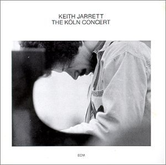
Keith Jarrett: The Köln Concert, re-composition for a big ensemble
(2023)
author(s): Stefano Gullo
published in: KC Research Portal
As a composer, you are free to create, and often the melodic choices, the harmonic solutions are the result of something truly personal. The colors found within a piece are the representation of what the composer feels and wants to put on paper, he is free to express a concept without being bound by any kind of expectations or rules.
In this project, I am exploring the ways in which I can integrate and use Keith Jarrett’s improvisations as material for writinf for large jazz ensembles. To answer this question I learned about his life, his philosophy in music and how his musical style developed through the years, to get along with his musical idea and try to respect his first intention.
And to prepare myself for start writing the re-composition I analyzed the transcription of the Concert in Köln, seeing how he approached the improvisation and how he used the musical elements such as the construction of the melody, the use of the rhythm and the harmonic background; all elements that I used in my work.
The project demonstrates that even if is working on an improvisation, which offers such a varied material and is developed without an apparent fixed structure, it is possible to recreate compositions that have a coherence; also respecting the intention and the sound context that characterized that moment.
(cover art designed by Barbara Wojirsch, copyright believed to be owned by ECM).

HORSE HORSE O GIRL (?) READ EAT HORSE O.
(2023)
author(s): Anna Nygren
published in: Research Catalogue
This exposition is a multimedial, but mostly textual, documentation of years and years of working with horses as a motif and a method for making art, theory, texts, thoughts and feelings. Horses in art has a long history. My take on it is a girlish one; drawing from a feminist, queer and neurodivegrent position. The horse works with embodiment, textualities, reading, love, care, mis/understandings, closeness, sadness, obsessions, un/subjectivities, collectivity, and much more. The horse allows the artist to be a troyan horse within the field of art and academia, but it also shares vulnerabilities an power imbalances. The horse, here, is everything.
Instructions for the viewer/reader: The exposition contains years of work. Please do not watch or read everything (even if you are wellcome to do so). Do act like a horse choosing which leaves of grass to eat. Choose carefully but spontaneously, wander around. A field work. A field of horses.

The impact of the audience on the actresses
(2023)
author(s): Dalida Shaheen
published in: Stockholm University of the Arts (SKH)
Welcome to Dalida Shaheen's exposition Master's candidate in acting program and actress. Firstly, in 2019, I played a role of a woman who got married to a married man, after the series aired to the public the role fired back on me. I observed audience's reaction exceeded everyone’s expectations. The audience is divided into two parts the first part is about the women who expressed their anger in a very aggressive and strong way, and the second part who was exciting to the character. The first part of the audience used several offensive, strong, and insulting words. The audience’s reaction was very emotional, and they used all the tools to express their feelings for example, they used social media platforms and verbal violence when they see me in the street. Hayat is the character I have created to explore my questions in my short fil.
The film is the method I used to explore my questions of what would happen when the audience can’t distinguish between the role and the actor’s real character, What is the impact of the audience on the actresses?
Laments for a Modern World: Exploring the pathetic capabilities of 17th-century Laments
(2023)
author(s): Ai Horton
published in: KC Research Portal
This thesis investigates the pathetic capabilities of the 17th-century vocal Lament. After first establishing an overview of the social and cultural conventions that influenced compositional choices, fourteen historic Laments from western Europe are analyzed to determine how they are able to evoke the feeling of grief. These pathetic elements are then applied to the composition of four new Laments for a Modern World, which couple 17th-century compositional techniques with newly commissioned texts that amplify stories including miscarriage, race-relations, displacement from one's homeland, and mental health.