Searching for possibilities - Exploring the potentials of my Qanun performance
(2022)
author(s): Shafeeq Alsadi
published in: Research Catalogue
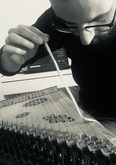
Over the course of many years of playing the qanun; a trapezoidal middle eastern zither-like stringed instrument, I have noticed how often the instrument has been played within its modal traditional framework, leading me to a perception that the qanun and myself are prevented from discovering more techniques and new potentials. I, hence, have been attempting to explore the traditional manners of treating the instrument with regard to timbre, playing techniques, and different harmonic orientations - while trying to maintain its true qualities and not losing sight of its traditional soul. My aspiration, as well as my method, is to be open to what one can do with the instrument rather than to take a specific approach. The qanun had shown an untapped capacity for expanded techniques and a broader range of sounds that enrich and revitalize the instrument's sounds library. This research has enabled me to stretch my boundaries and explore unknown possibilities, which has helped in the expansion of my own self-expression as a composer. It also paved the way for me to investigate further unexplored potentials of the instrument as this research emphasizes to show the qanun’s enormous capabilities that have yet to be realized.
Discovering the Altera Forma Urbis of Rome through a site-specific project and performance at Garbatella district, Rome. 12-9-22
(2022)
author(s): Andrea Moneta
published in: Research Catalogue
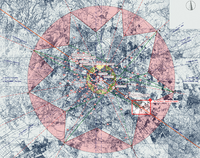
The research enquiry involved experimental research and case study using location-based digital technologies (Geo-Blog) and perception mapping as a further methodological development of Scenarchitecture, a trans-disciplinary methodology developed by Moneta (2012) for reading and interpreting the Genius Loci. It was based on recent work of Italian archaeologist Giuseppe Lugli and his son Pier Maria Lugli (2006) about the ‘Altera Forma Urbis’ of Rome, which investigates the hidden, ‘secret’ structural urban form of Rome in the shape of a ‘Star’. The research was aimed at uncovering old and recent past history of Garbatella district and XI Municipality, as the place in which exists a concentration of urban modifications of Rome, through its connections with Lugli’s studies. Using a hermeneutic phenomenology approach with a focus on making meaning of experiences as they are lived, the research revealed both physical and intangible connections between the Altera Forma Urbis of Rome and its contemporary urban structure within the area of study. Findings evidenced that extending the shape of the ‘Star’ from the original 1st mile radius of the Ancient Rome to 5-mile radius of contemporary city limits, there is a correspondence between the area of study’s main monuments and landmarks with the Star’s generating axes. Evidence of the originality of the findings were an exhibition (Segni Percorsi) commissioned and funded by ‘Urban Centre - Municipio Roma XI’, and a sited performance (Tramandala) commissioned and funded by Festival Teatri di Vetro 3, a renowned Festival of performing arts, and Fondazione Romaeuropa, one of the most prestigious cultural institutions in Europe. Feedback collected during the exhibition and after the performance evidenced the engagement of the audience with the themes and methods of the research. The dissemination of the work included the authored book Scenarchitettura (2012), article on journal Hortus (2009) and research report on Zenodo (2022).
London Series and Landscapes
(2022)
author(s): Ed Crooks
published in: Research Catalogue
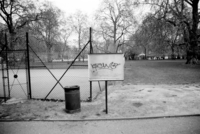
I shot the short film Landscapes early in 1997. Starting in 1996 and continuing into 1998 I took series of photographs with a similar method and aesthetic to the film. Both the film and the photographs, which are featured in this documentation, are based on walks through areas of central London.

ENHEAR
(2022)
author(s): Carolina Jinde
published in: Stockholm University of the Arts (SKH)
ENHEAR
a way of being
a state of mind
a field of enquiry
exploring the creative and collaborative potentials of sound centric strategies in film and media-based contexts
The term enhear invites an approach to research, art practice, sound studio and world that is comprehensively aural. It proposes listening as both act and role; listening as a present tense, continual and continuous co-creation of the inter-relational spaces we all share. Drawing on the specific expertise and orientation of the sound engineer in film and media-based production, the research unfolds as a series of interrelated experiments and reflections, exploring enhear via a diverse range of artistic approaches, collaborative methods and pedagogical practices. Each sub-project brings particular attention to the auditory perspective, a radically underutilised element within the visually dominated context of film and media. This project contends that consciously incorporating attentive and inclusive listening practices into the lifecycle of creative processes will make considerable artistic, ethical and practical contributions to film and media-based productions; further utilising the expertise, raising the profile and expanding the practices of the sound engineer.
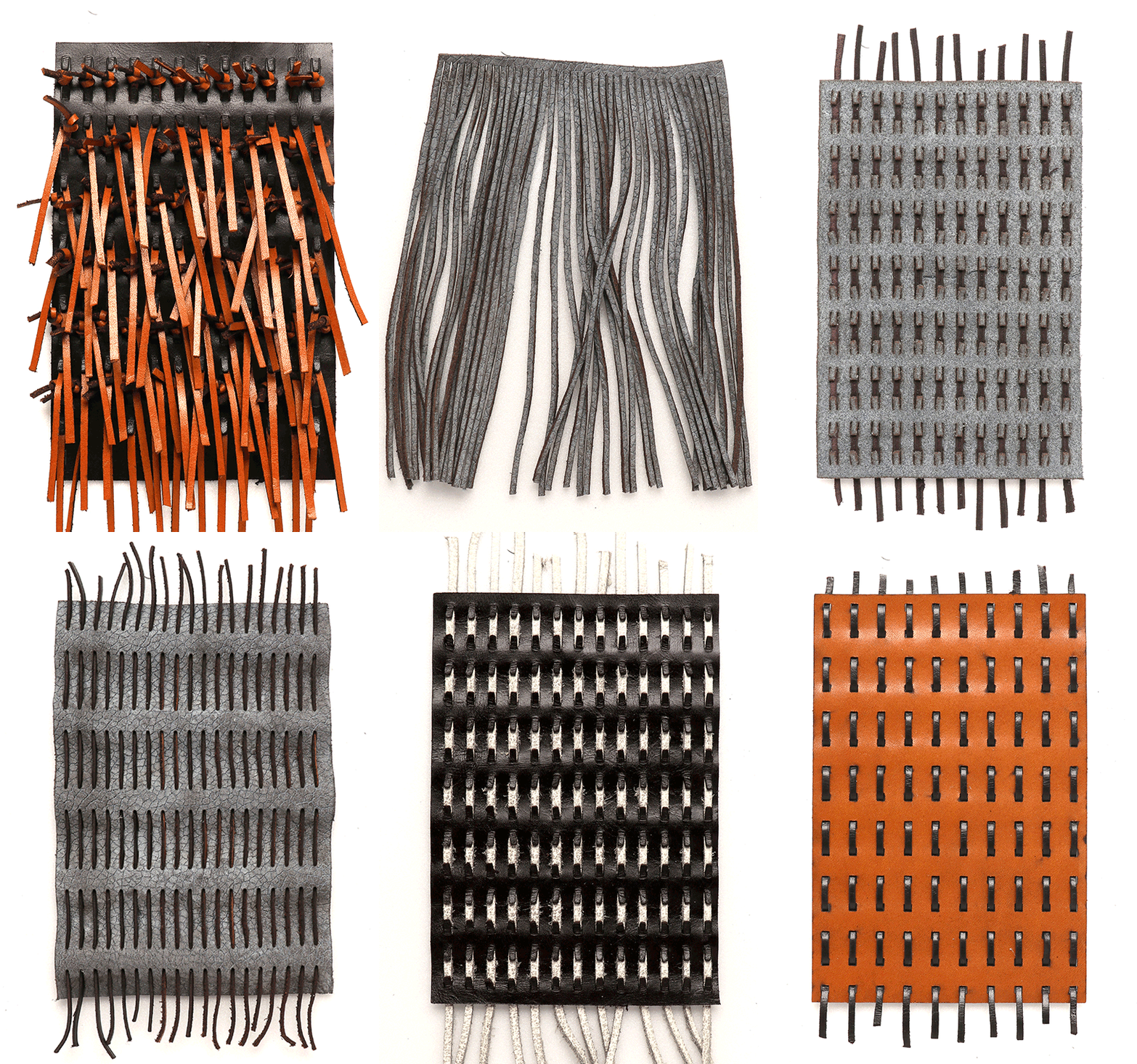
Beauty and the Act of Narrating Material Aesthetics
(2022)
author(s): Maria Høgh-Mikkelsen
published in: Research Catalogue
I have always been very engaged in the phenomenon of beauty. Not in the sense of being pretty, but beauty as that special ambience certain objects or spaces or even humans can have. I wonder and puzzle with questions like:
What makes something beautiful? Can one practise the creation of beauty? How do I create beauty? Is the creation of beauty a matter of talent? Or a matter of professional culture? So, I am not only absorbed in the phenomenon of beauty itself but also in the act of beauty-creation. And in how other people experience the beauty I have created. Where other people see only bricks and numbers, I have always seen patterns in both brick walls and phone numbers. So, if other people don’t see what I see, how do I then communicate with them in objects and spaces?
These are some of the questions I set out to answer in the artistic research project, I call Narrating Material Aesthetics. With the project I want to explore how we as designers embed stories and meaning in the objects we create.
Oboe Reed Making and Sorting Tips Before Gouging From Ancient Greece of Theophrastus till the use of the Hellenic Cane of Today.
(2022)
author(s): Christos Tsogias-Razakov
published in: Research Catalogue
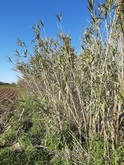
The following material is an excerpt from the master’s research exposition: THE IMPORTANCE OF ARUNDO DONAX CANE SELECTION, FOR MANUFACTURERS OF OBOE REEDS (2020) by Christos Tsogias-Razakov.
Limited Publication.
The master’s research exposition was published to members of the KC Research Portal, 3. Internal publication (20/8/2020).
The article is an excerpt from the conclusive chapter of the research exposition (2020) by Christos Tsogias-Razakov.