Russian school of singing in the 19th century
(2021)
author(s): Orsolya Janszová
published in: Research Catalogue
Short article about the historical development of the Russian school of singing in the 19th century
Methods of Exchange – Digital Residency
(2021)
author(s): Emma J Fishwick
published in: Research Catalogue
Methods of Exchange – Digital Residency
Perth – Seoul
2021
Over a few months in early 2021, Emma Fishwick & Serena Chalker (AU) worked in parallel to Gong-Won (KR) through Seoul Dance Centre (SDC) and their Digital Residency program.
Developing creative relationships during these uncertain times, this digital canvas captures process as product and is part of a broader program of international engagement through dialogue, documentation and artistic sharing. This website attempts to capture our artist-led peer-to-peer mentorship, cultural & skills exchange, facilitated by this virtual residency.
Things that we have talked about: labour, process as the artwork, language across form and geographies, mapping of place and self, virtual Vs physical, place Vs placelessness and asking ‘what is a digital residency’? We have been finding connection between the seemingly disconnected threads in our works and in turn our worlds. We landed on ways of expressing space and time that is not linear or hierarchical through layering of memory, ideas, form and so on.
The work is doing the work of figuring out what the work is. The labour of being an artist is made visible: always questioning, reformulating, reworking.
All content on this page is created by Serena Chalker, Emma Fishwick, Gong-Won – 2021.
Serena Chalker (www.serenachalker.com) | Gong-Won (https://www.hellosuyoung.com) | Emma Fishwick (www.emmafishwick.com)
From Xavier Lefèvre to Frédéric Berr: Clarinet instruction at the Paris Conservatory between 1795 and 1838.
(2021)
author(s): Théo Couillez
published in: KC Research Portal
Student Number
3258904
Supervisor
Bart van Oort
Title
From Xavier Lefèvre to Frédéric Berr: Clarinet instruction at the Paris Conservatory between 1795 and 1838.
Research Question
How to describe clarinet instruction at the Paris Conservatory between 1795 and 1838?
Summary
The Paris Conservatory was founded in 1795. Xavier Lefèvre (1763-1829) was one of the first clarinet professor to teach there, from 1795 to 1824. In 1802 he published an important clarinet tutor intended for study at the Conservatoire: Méthode de clarinette. Frédéric Berr (1794-1838) held the same position from 1832 to 1838. In 1836 he published a Méthode complète de clarinette and a Traité complet de la clarinette.
Thanks to these writings, it is possible nowadays to get an idea of the skills needed by a French clarinettist of the early 19th century to play the music of his time. The aim of this research is thus to describe the main aspects of performance practice during the chosen period. Many of these aspects are not limited to the clarinet. Consequently, other methods for singing or for other instruments related to the Conservatory, have been studied to provide a broader perspective of performance practice at that time.
As the first decades of the 19th century witnessed important developments in clarinet making and instrumental technique, it has been essential to discuss this point in this research. However the central aspect of this work is musical expression, the ultimate goal of a performance. Phrasing, the variety of articulation and dynamics appear as essential tools for the performer who wants to communicate with the audience.
Short biography
Théo Couillez is a French clarinetist. He studied in his native country where he received the bachelor degree at the Pôle Supérieur Paris Boulogne-Billancourt in 2017. Eager to discover another approach to interpretation, he decided in 2019 to study for the Master degree in historical clarinet with Eric Hoeprich at the Royal Conservatory in The Hague. (Netherlands). Passionate about the symphonic orchestra, he took part to several orchestral academies such as the Youth European Orchestra Hector Belioz led by François-Xavier Roth and the Collegium Vocal Gent Academy led by Philippe Herreweghe.
A Study on Ornamentation and Expression in French vocal Music (1650-1750)
(2021)
author(s): Kitty Lai
published in: KC Research Portal
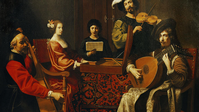
This study aims to understand and learn about the historical performance practice in the 17th century. As an early music singer, I am attracted to the sweet and charming 17th-century French vocal music. In particular, I am interested in the relationship between French ornamentation and expression. This research investigates the background of 17th-century performance practice in France in relation to the ornamentation, the pronunciation of 17th-century French, the different types of ornaments and the expression implied by the ornaments. The performance practice in the 17th century was different from now since it was undergoing a major change from polyphonic to solo music, which emphasised more the text than the music. The knowledge of ornamentation was an expected requirement for all well-trained singers in the 17th century, ornamentation was not merely a decoration, but a tool in emphasizing the importance of the text. Thus, it is necessary to learn ornamentation for a complete 17th-century French vocal performance. Since text was the main element in 17th-century French vocal music, it is important to know the characteristics of French language in this period. The ability to distinguish French long and short syllables was important because ornamentation could only be applied mostly to long syllables. The pronunciation of certain French vowels has undergone a significant alteration, and the ‘old’ way of pronouncing them is included in the study. The research findings also show that some ornaments were meant to be used only in certain expression and they help me to better ‘compose’ French ornamentation in future performances.
Intabulation as process and practice (Master thesis)
(2021)
author(s): Asako Ueda
published in: KC Research Portal
Research Title:
Intabulation as process and practice
Research questions:
When it comes to the manifold surviving solo lute intabulations from around 1500, where is the line between "unwritten" and "written" intabulation?
Intabulating involves the writing out of several parts into tablature, but does this twofold distinction really apply to all pieces?
What was the process of appropriation of vocal polyphony for a lutenist of the early 16th century?
How can we apply this to our own processes?
Abstract:
Intabulation refers to the arrangement of vocal pieces for what Johannes Tinctoris refers to as a “perfect instrument”, amongst which he counts such instruments as keyboards and the lute – and it implies writing out the parts of a polyphonic composition into tablature. However, after playing many surviving intabulations for several years, I had a strong feeling that there must be an “unwritten” solo lute intabulation practice behind the “written” intabulations from the beginning of the 16th century, in contrast to the more “composed” intabulations from the time after the mid-16th century. While surviving sources provide us with much information on what lutenists played, they also hide the “unwritten” practice which they did not record. We can only imagine what was happening. In this thesis, I investigate the process of intabulation by lute players from this time by analysing and comparing different versions of the same song from different sources. Through this research, I trace the transition of the changing style of intabulation, which is in turn related to the transition of lute technique from plectrum to finger-plucked and the change in style of the vocal models. Moreover, the diffusion of printed music changed the manner of the transmission of music. To conclude, I hypothesise that lute players might have listened to and copied each other’s intabulations unconsciously, and when they wanted to preserve their work, they might have made some adjustments to their intabulations. The study also suggests how to apply these ideas to actual intabulation practice, which will be presented in the Research Symposium online as a video format.
Biography:
The Japanese lutenist Asako Ueda studied the lute at the Royal Conservatory of The Hague with Mike Fentross and Joachim Held and completed her Bachelor's with the highest achievable mark, which gives her the opportunity to continue to the Master’s program with the Excellence Scholarship of the Royal Conservatory of the Hague. She won first prize at the Biagio Marini Competition and third prize at the International Van Wassenaer Competition.
She started playing the violin at the age of five. After finishing her Bachelor’s degree with the violin in Tokyo, she continued to study the Baroque violin and composition.
https://asakoueda.com
Playing with Words
(2021)
author(s): anna litvinenko
published in: KC Research Portal
Western art, literature, and music have told many parallel stories throughout the centuries. Living through similar politics, philosophies, and technological advancements, it is no surprise that such links between the arts exist. Now, more than ever, a time when anything can be considered art and anyone an artist, I feel a necessity to understand these connections of the past in order to proceed forward as a musician. Being more and more involved in creating my own music, I thought it an opportune occasion to combine these interest and explore how a research into artistic and literary movements can help me develop my musical language and creativity as an improviser.
In this exposition, I have created a narrative that brings together the art, music, and poetry of the 19th and early 20th centuries. Based on my understanding and experience of these artistic and literary movements, I have created improvisations and semi-composed/semi-improvised pieces (some of which I collaboratively worked on with my trio Kalea), attempting to demonstrate how looking to the past can bring inspiration to our contemporary practice.