Juan Manuel Gaitán y Arteaga, the influenced musician [final]
(2024)
author(s): Alba Conejo Mangas
published in: KC Research Portal
Name: Alba Conejo Mangas.
Main subject: Historical violin.
Research supervisor: Wouter Verschuren.
Title of the research: Juan Manuel Gaitán y Arteaga, the "influenced" musician.
Research question: Is it possible to distinguish the influence of pre-flamenco in the villancicos of Juan Manuel Gaitán y Arteaga?
Summary of results: During my research, I never imagined finding music from Lima or Guatemala composed by Juan Manuel Gaitán y Arteaga, a musician from Córdoba, Spain, in the XVIII century, who had never been in these places. This discovery presented an interesting challenge: to bring back to life scores that had been forgotten for over two hundred years and to explore the music played in Córdoba Cathedral during the middle of the XVIII century.
My interest on Juan Manuel Gaitán y Arteaga started when I listened to a beautiful villancico "Voy buscando mi cordero" by Gaitán y Arteaga, performed by La Orquesta Barroca de Sevilla with Enrico Onofri. Despite being sacred music composed for the church and for weekly mass, it was written in Spanish and carried a distinct Spanish folkloric flavour. Did Juan Manuel Gaitán y Arteaga have a connection with XVIII century Spanish folk music? This caught my attention and spurred me to delve deeper into his music, particularly his villancicos. I soon realized how little-known Juan Manuel's music is today
The line of research I pursued falls within the realm of musicological-historical research. The musicological techniques employed include those related to musical historiography, such as the chronological organization of historical-musical events, particularly in Córdoba. Additionally, it involves an understanding of musical compositions, forms, and styles, as well as musical aesthetics, encompassing the conception of music, its functions, and purposes.
The objectives are: to understand the musical personality of Gaitán y Arteaga in his villancicos and the relation between the folkloric and ecclesiastical world in Spain on XVIII C.
Biography: Born in Las Palmas de Gran Canaria, she finished her modern bachelor under the guidance of Gordan Nikolic in Rotterdam. It was then, that she started her interest in historical performance. After her graduation, she studied for her baroque bachelor's in Brussels under the guidance of Ryo Terakado, and in 2022 she started her master's degree at The Hague Conservatory with professor Ryo Terakado too.

Invisible Cities - the experience of negative space
(2024)
author(s): vittoria pavesi
published in: Research Catalogue
"What is today the city, for us? I believe I wrote something like a last love poem to cities, in a time when it’s becoming more and more difficult living them like cities. Maybe we’re coming to a moment of crisis of the urban life, and Invisible cities are a dream born by the heart of unliveable cities." - I. Calvino, Introduction to Città Invisibili, Mondadori 1983
Starting by a confrontation between two historical utopian projects (Arturo Soria’s ciudad lineal and Constant’s New Babylon) I try to investigate with a broad and heterogenous look the idea of adopting path as fundamental topic of the city: whether Soria or Constant, in different ways, suggest an architecture of roaming, a nomadic and virtual space, that is the same space of cosmopolis, an anticipation of globalized culture that’s identified in a flux-condition and not in a stasis-one. Ciudad lineal and New Babylon projects prophetically forestall many tendencies of contemporary urbanity, proposing an idea of cities that are at the same time hyperlocal and hyperplanetary, ahistorical and superficial, acentric and non-identitary, inhabited by people always in movement. Streets don’t conduct anymore just to some places, they are places themselves: the condition of movement, and the street trail that constitutes his support, represents the urban archetype that is the basis of all contemporary architectonical and social disposition. From the description and comparison of these two projects the Generic City emerges, alienate and privatized, where we’re living in nowadays.
Circus as Practices of Hope: A Philosophy of Circus
(2024)
author(s): Marie-Andrée Robitaille
published in: Stockholm University of the Arts (SKH)
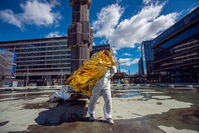
This exposition provides a spherical exposition of the research processes through a repository of images, texts, and diagrams, and contains the exegesis—a critical textual articulation of the doctoral artistic research project Circus as Practices of Hope: A philosophy of Circus.
Abstract
My doctoral artistic research project, Circus as Practices of Hope: A Philosophy of Circus, responds to the growing complexities emerging from the convergence of the fourth industrial revolution, the sixth mass extinction, and the eco-socio-political turmoil of our time. What does it mean to be human today? What does it mean to be a circus artist today? How is circus relevant in today’s context?
Core to this inquiry is the assertion that although circus arts hold the potential to foster significant knowledge, they simultaneously perpetuate outdated worldviews that restrict their transgressive potential. With this research, I investigate alternatives to regressive models of thoughts and modes of composition, aiming to identify and articulate circus´ inherent epistemic, ontological, and ethical specificities and their relevance for navigating and steering the current planetary paradigm shift.
I conducted my research through embodied practices as a circus artist, as a pedagogue, and from the perspective of a human on Earth. My inquiry occurred through Multiverse, an iterative series of compositional performative experiments and discursive activities. I engaged critical posthumanism and neo-materialist philosophies to challenge and evolve my relation to risk, mastery, and virtuosity.
The project conceptualizes circus arts as nomadic and fabulatory practices, culminating in a series of artistic, choreographic, and conceptual tools and methods that articulate circus arts within and beyond their disciplinary boundaries. The project advances a philosophy of circus that highlights circus-specific kinetic, aesthetic, and embodied relevancies in today’s context, situating circus arts as hopeful practices for the future.
To quote this work:
Robitaille, M-A. (2024), Circus as Practices of Hope: A Philosophy of Circus, Documented Artistic Research Project (doctoral thesis), Stockholm University of the
Arts.
Publication series X Position no. 33
ISSN 2002-603X ; 33
ISBN 978-91-88407-52-8 (print)
EISBN 978-91-88407-53-5 (e-publ)
Arte y Autismo
(2024)
author(s): Antonio Puertas-Banegas
published in: Research Catalogue
¿Existe un arte autista diferencial?
A través de esta pregunta de investigación nos adentramos en un trabajo de investigación polifacético que hace especial hincapié en la fenomenología. Como suelo decir, "conocimiento sentido y leído". Esta investigación es un autodenominado "laboratorio espectral" no finalista. Esto quiere decir que no buscamos un final (una obra), sino que del proceso se generan objetos y prácticas, preguntas y respuestas.
Lone Wolves Stick Together: Research as a Journey to an Aesthetic Understanding of Immersion and Participation through VR and roleplaying (LARP)
(2024)
author(s): Nadja Lipsyc
published in: University of Inland Norway
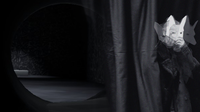
This research explores the artistic and critical potentials of using tools from live action roleplaying (larp) to create narrative VR experiences. In particular, it unfolds the conception, physical play and VR play and production of the live action roleplaying (larp) Lone Wolves Stick Together. Inspired by the film Stalker (1979) by Tarkovsky, Lone Wolves Stick Together stages the immersive environment as an omniscient Sphynx-like character that pushes the players to question one another and to introspect. By using larp and video game design knowledge conjugated to cinematic aesthetics, this research project seeks to honor the creative and narrative potentials of immersion and participation. As such, between 2018 and 2023, this research took the form of classic chamber larps, immersive theater experiences, scenography installation, VR larps (including two other projects: The Space Between Us and Ancient Hours) and a final multimedia installation. The artistic methods rely on principles of environmental design, explored physically through production design and ambisonics, and virtually through a highly reactive virtual environment. The research method is based on a constructivist approach where we experiment to find an answer, not the truth. Here, experimentation is not conceptual but aesthetic: knowledge is lived and felt through artistic experience. Centred around VR and within a film and new media context, this research also develops a reflection on the industrial and technological influences on the creative process and their friction with artistic-research.
Empty Space
(2024)
author(s): Barbora Haplova
published in: UMPRUM - Academy of Arts, Architecture and Design Prague
This artistic post-master research explores interpretational possibilities of empty space. Combining literary and graphic creative work with documentary, personal and research background, the e-book asks a question how can we find connections between individual occurrences of empty space. Through bilingual essays, visual essays, and practical exercises, this work proposes the following perspectives: empty space as a mode of attention; nuanced individual interpretations of empty space as missing, coming together, not being, disappearing; empty space as a field designed to be filled; and the non-definition of empty space as accepting the unknowability of its possibilities.