Are you colour deaf?
(2024)
author(s): Phoebe Rousochatzaki
published in: KC Research Portal
Originating from antiquity, the idea of associating colour with music has been researched extensively in recent decades. The terms for this phenomenon include crossmodal correspondences and synaesthesia (or chromaesthesia), both of which refer to associations our brain makes from stimuli that it perceives through different senses. Correspondence between sound and music, and light and colour, has been a scholarly topic for years—mostly from a scientific point of view.
This thesis aims to investigate different views on the subject, focusing on its artistic/aesthetic rather than neurobiological components. Music-colour correspondence was born from the need of philosophers to make sense of both music and the world. Linguistics has proven ambiguous when used to explain or make sense out of music, hence colour has been a very powerful replacement. It is possible to draw parallels between sound and light because of their similar ontological nature (vibration).
The goal of this thesis is to prove that such an association can enhance a classical music performance for the audience (as related to engagement) and for the performer (as related to analysis, artistic input). As a case study, Olivier Messiaen’s Theme and Variations is analysed in this rather unconventional colour-coded way.
Keywords: synaesthesia, chromaesthesia, crossmodal correspondences, Olivier Messiaen, colour and music.
Here I want to be - Wandering through poetic fieldnotes
(2024)
author(s): Amba Klapwijk
published in: KC Research Portal
In this research I explore how writing poetic fieldnotes relates to my (compositional) practice. I examine a method of repeatedly visiting the same locations, wherever I am at the time, and writing about and reflecting on those situations and places when I'm there. Through this process of exploring and returning I hope to wander into ideas, connections, or otherwise inspirations for my practice.
Ensemble & Ensemble of Me – What I Think About When I Think About Improvisation
(2024)
author(s): Ivar Grydeland
published in: Norwegian Academy of Music
This exposition is a copy of Ivar Grydeland's artistic research fellowship project (2011-2015) at The Norwegian Academy of Music, financed by The Norwegian Artistic Research Fellowship Programme. The exposition was redesigned within The Research Catalogue in 2024. The content is identical to the original documentation.
________________________
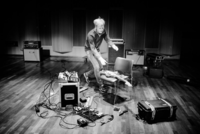
Ensemble & Ensemble of Me is an artistic research fellowship project carried out at the Norwegian Academy of Music, as part of The Norwegian Artistic Research Fellowship Programme between 2011 and 2015. In this project I produced solo improvisations deriving from the music of two improvising ensembles to which I belong: Dans les arbres and Huntsville, and I produced collective improvisations with the ensembles.
The project’s key questions:
- What are my concepts when improvising with the ensembles and when improvising alone?
- How do the ensemble improvisations inform my solo improvisations?
- What do I think about when I think about our and my own improvisations?
The Haruki Murakami-paraphrase in the sub-heading indicates a process of on-going reflection upon what I regard as key aspects when I improvise. More specifically, what I regard as key aspects in the music of Dans les arbres and Huntsville, as well as for my own solo improvisations. These reflections reveal key aspects and main challenges that emerged during my attempts to create solo works informed by the ensembles. The reflections are chiefly documented in the form of a personal encyclopaedia. The encyclopaedia includes audio and visual examples, both from the final artistic results and from artistic activity during the project.
COMPOST /AS/ COMPOSITION : AN ARCHEOLOGY OF AUTO-EATING
(2024)
author(s): Anna Nygren
published in: Research Catalogue
This exposition is a free but un-in-dependent (yes yes complex) reflexion from my ongoing research project on auto/theory aut/istic art/istic achive work is presented as a multi-media work-in-progress chewing itself and re-inventing different ways of re-using it's own material and philosophical heritage. It combines the professional with amateurism, naïveté, affection, private stuff, too-strange-de/signs. The project considers weird and possibly feminist ways of regarding the self as, a kind of digestive system, never separated from bodily metabolism, never separated from earthly or cosmic re-livings of materials and ideas and desires. It works through queer and neuroqueer formulations of textual and textile lives and matters.
Togetherness as Planetary Rule: a multilayered coalescent existance.
(2024)
author(s): PoL Manterani...
published in: Research Catalogue
A big challenge and mission of this meta-times we live in, is making sense of what is going on when everything is so drastically accelerated. We belong to a strcture of manifested order that we dont understand, so we feel lost and fall in the trap of replicating certain dynamics that are more and more clearly "misleading".
How much we open to flexible and various understandings of life, of time, of mater, will bring us more or less capacities to evolve and move beyond the paradigms that rule our minds, emotions, bodies, and spirits...
My bet is that Art can also be a social tool that can allow cohesion and regeneration as it can bring together different material or ethereal realms, perspectives, affections, etc, representing or potrayng an interacting and overlapping whole that can be grasped and used by US as an expanded way to perceive and interact with reality...
Η ΑΝΑΠΝΟΗ ΚΑΙ Η ΣΤΑΣΗ ΤΟΥ ΣΩΜΑΤΟΣ, ΓΙΑ ΤΗΝ ΙΔΑΝΙΚΗ ΠΑΡΑΓΩΓΗ ΤΟΥ ΉΧΟΥ ΜΕ ΈΜΦΑΣΗ ΣΤΟ ΌΜΠΟΕ.
(2024)
author(s): Χρήστος Τσόγιας-Ραζάκοβ
published in: Research Catalogue
Η αναπνοή και η στάση του σώματος,
για την ιδανική παραγωγή του ήχου με έμφαση στο όμποε.
Συγγράφηκε στα πλαίσια του διδάσκοντος μαθήματος: Παιδαγωγική και Διδακτική Οργάνου ΙΙΙ, του Τμήματος
Μουσικών Σπουδών, του Ιόνιου Πανεπιστημίου, το έτος 2016.
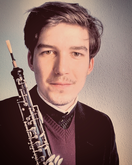
Ο σκοπός της εργασίας είναι διττός, να δοθεί μία σύντομη περιγραφή της λειτουργίας του αναπνευστικού συστήματος με τεκμηριωμένα παραδείγματα, πώς η ''ορθή'' στάση του σώματος επηρεάζει την λειτουργία του αναπνευστικού συστήματος. Αλλά και να συμβάλλει στον τρόπο διδασκαλίας της αναπνοής, για μία ιδανική παραγωγή του ήχου, κυρίως στο όργανο - όμποε, όπου έχει ιδιαίτερα χαρακτηριστικά λόγω της φυσιολογίας του οργάνου.
Επιπλέον, όσον αφορά την τεχνική της αναπνοής δίνει μία εναλλακτική οπτική, πέρα το ''μηχανικό'' στοιχείο της, αλλά περισσότερο ως ένα αναπόσπαστο κομμάτι της μουσικής γλώσσας, με ποιοτικά χαρακτηριστικά. Συμπληρωματικά, παρουσιάζονται διάφορες ασκήσεις για την αναπνοή, με την κάθε άσκηση να αποσκοπεί σε έναν διαφορετικό σκοπό. Οι ασκήσεις κυρίως αφορούν τους ομποΐστες, λόγω του ιδιαίτερου συνδυασμού της αναπνοής με το καλάμι του όμποε και των ποικίλων χαρακτηριστικών του.
Χρήστος Τσόγιας-Ραζάκοβ
Παιδαγωγική και Διδακτική Οργάνου ΙΙΙ.
Κέρκυρα: Ιόνιο Πανεπιστήμιο, 2016.