Zö Kramers 1978-1983
(2023)
author(s): Olof Halldin
published in: Research Catalogue
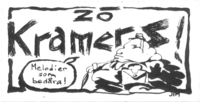
Zö Kramers was an orchestra in a mix of punk, reggae, ska, marching music, blues, pop, rock but not jazz.
Participating in various roles:
Calle Ottestam / bass, vocals, lyrics, music
Per Sommarström / guitar, vocals, lyrics, music
Martin Fälthammar / drums, text
Olof Halldin guitar, keyboard, music, voice, percussion, mixing
Mikael Södersten / keyboard, vocals, lyrics, music
in addition
Peter Söderblom / synth
Persa Jacobson / text
Katte Salomon / song
Joakim Pirinen has drawn and written texts
For individual bets - click on "Vilka Vem När Var Hur Vad".
History:
Zö Kramer's original composition was Calle Ottestam, Per Sommarström, Olle Halldin, Martin Fälthammar and initially Peter Söderblom. Added after about a year did Mikael Södersten. First on drums was Jolly Bod but was soon replaced by Martin. Katte Salomon also sang on the recordings from 1983. Music and lyrics were written by the band members but lyrics were also written by Joakim Pirinen and Persa Jacobson.
The band's first name was "Arne & his anabolic steroids". The name "Zö Kramers" comes from Kramer-Pollnow's hyperkinetic syndrome - (dance disease) a psychotic condition characteristic of the band's dance-inspired style. Between 1978-1983, about forty songs were written. About twenty concerts were mostly held on Lidingö. The band's biggest "hit" was Tyska marionetter (German puppets).
Live recordings have been available since the beginning and about 25 concerts were performed, but more studio mixes were made in four rounds where the first was done in 1979. Recording was done with a four-channel TEAC tape recorder and TEAC mixer table. Sound improvements were made in 2002 at the same time as digitization and in 2020 before the launch of this website.
Documenting Non-Sonic Music
(2023)
author(s): Paul Norman, Andy Ingamells, Michael Wolters
published in: Research Catalogue, Birmingham City University
How to document music with non-sonic elements? Or: How to document all the performative qualities of a piece of music that can’t be heard? Beginning with this question our group of researchers, filmmakers and dramaturgs from Birmingham (UK), Frankfurt (Germany) and Fredrikstad (Norway) met between 2019 and 2021 to develop initial ideas and questions, then test them.
BLOD, BLOD(y), BLOD
(2023)
author(s): Kersti Grunditz Brennan, annika boholm
published in: Stockholm University of the Arts (SKH)
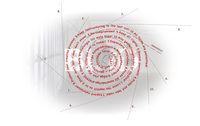
BLOD, BLOD(y), BLOD – an exposition of recurring processes, trails and building blocks of the film and research project BLOD through the lens of its methods.
The BLOD methods are articulated as a Manifesto, written to accommodate a multitude of contents, forms, and modes of collaboration, while demanding cross-disciplinarity, honesty and risk-taking. The methods are non-linear, looping, and embedded in the manifestations of the research: films, performances, presentations, etc.
The BLOD project aims to create multivocal cinematic experiences through embodied practices. The research explores relation-building through a feminist methodology of creating gaps and friction – between audience, story, time, matter, and co-creators. The project asks: how to tell multifaceted, non-exploitive stories of womb-related states of life and death, rarely depicted in cinema? And how to disturb film industry hierarchies through a collaborative practice that maintains individual artistic integrity and promotes collective authorship?
The BLOD research shares its outcomes via the mediums of its artistic practice: videos, texts, digital expositions. This exposition is designed to reflect the connections and interactions of the research's building blocks: ideas, places, materials, people, time, experiences, technologies.
To enjoy BLOD, BLOD(y), BLOD: move around it with your mouse, follow dotted paths out from the center towards texts, images, and videos. Hover over numbers and words in BOLD to reveal expanding texts. Linger on images and videos for captions, translations, and instructions for further interaction. Along the outer rim of the main page are spiral buttons to take you back to the center with a click. Subpages have links on the main page but are also listed in the Content index in the upper left menu.
The exposition is mainly in English. Videos in Swedish have English translation.
A LIST OF NIKOS KOKOLAKIS WORKS, INCLUDING INSTRUMENTS OF THE OBOE FAMILY.
(2023)
author(s): Christos Tsogias-Razakov
published in: Research Catalogue
A LIST OF NIKOS KOKOLAKIS's WORKS, INCLUDING INSTRUMENTS OF THE OBOE FAMILY (March 2023).
A list of Nikos Kokolakis's works, including instruments of the oboe family, was published for the first time, after a personal interview with the composer Nikos Kokolakis about his works, in the frame of a Ph.D. research, about Hellenic (Greek) Oboe Repertoire, of the Ph.D. candidate: Christos Tsogias-Razakov.

Beyond Cut and Join - Expanding the creative role of film editing
(2023)
author(s): Kersti Grunditz Brennan
published in: Stockholm University of the Arts (SKH)
The research project Beyond Cut and Join – Expanding the creative role of film editing comes out of two major observations over decades of professional film editing experience: that a lot of film editing’s potential is untapped in filmmaking, especially in relation to character creation; and that editors’ skills, influence and authorial participation often are misunderstood and undervalued. Through editing practice and writing, this research explores an expanded role of editing by asking: 1. what can editing do to create characters; 2. what is a useful and challenging creative research design for exploring editing; and 3. what expanded description of film editing can be articulated for these explorations. The project aims to share, refine, and add to editing vocabulary by articulating creative strategies for shaping characters. It further aims to challenge notions of authorship in cinema by developing collaborative structures and artistic methods that benefit creative processes in the edit room. By demonstrating how significant the handprint of one individual editor is, the project’s final aim is to highlight the extent to which editors’ personal experiences influence their choices in composition of material. Outcomes of this project are filmmaking methods that place editing and collaboration in the forefront when weaving dramaturgy, aesthetics, and content creation processes that shape film characters and cinematic stories.
The output of this research includes films, academic articles, personal essays, a video essay, and pedagogic applications. These outputs cumulatively demonstrate the artistry of the editor and the significance of editing.
Citizen Science - a new field for the arts?
(2023)
author(s): Pamela Marjan Bartar
published in: University of Applied Arts Vienna
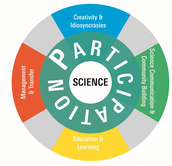
Pamela Bartar’s (Center for Didactics of Art and Interdisciplinary Education) contribution "Citizen Science – a new field for the arts?" links Citizen Science with art-based research. Providing an overview of current approaches, Bartar illustrates how contemporary art can significantly contribute to the democratisation of science and the societal proximity of research, particularly focusing on socially engaged practices and collaborative knowledge production.