Gate
(still image, live seismic data, video processing)
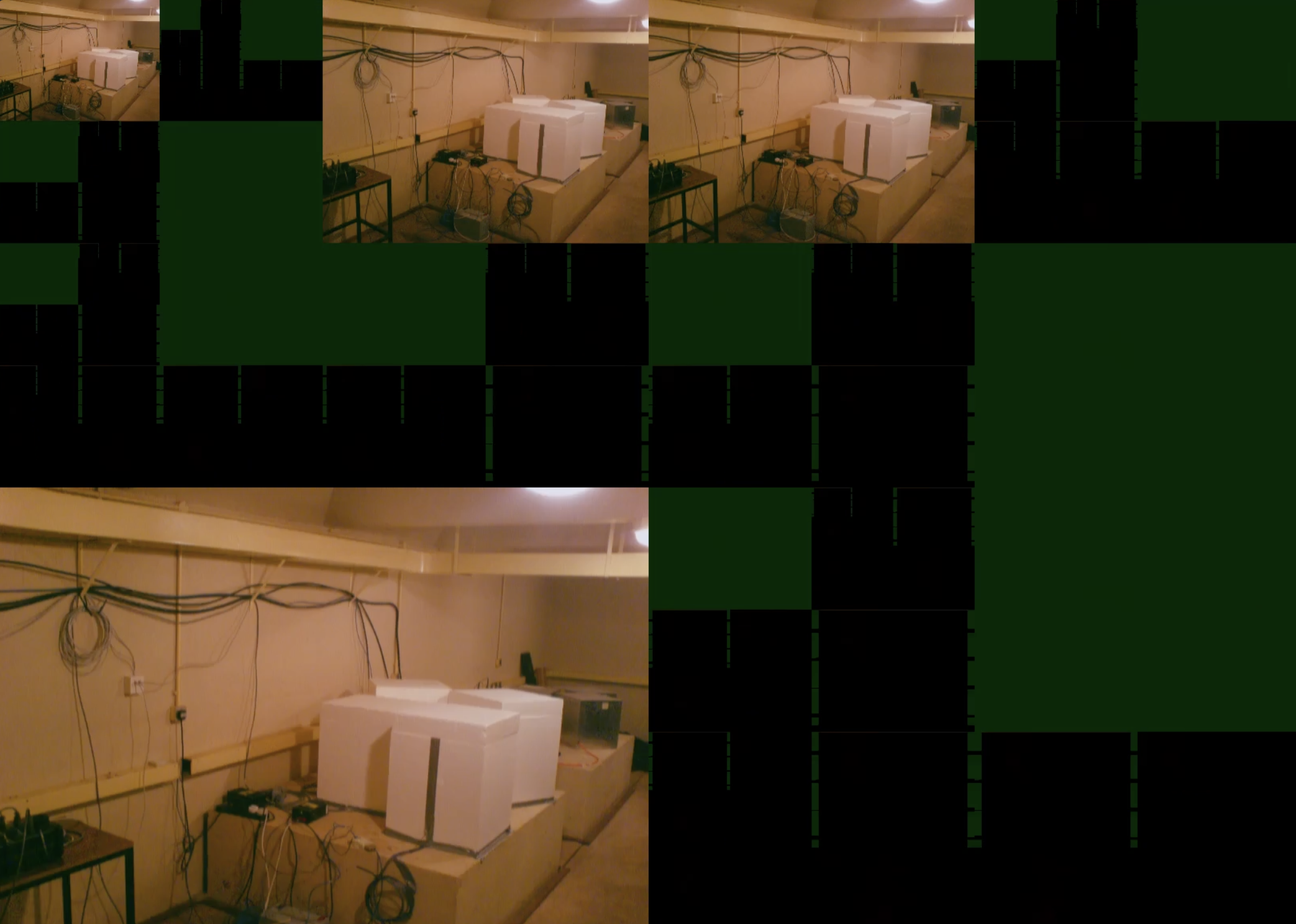
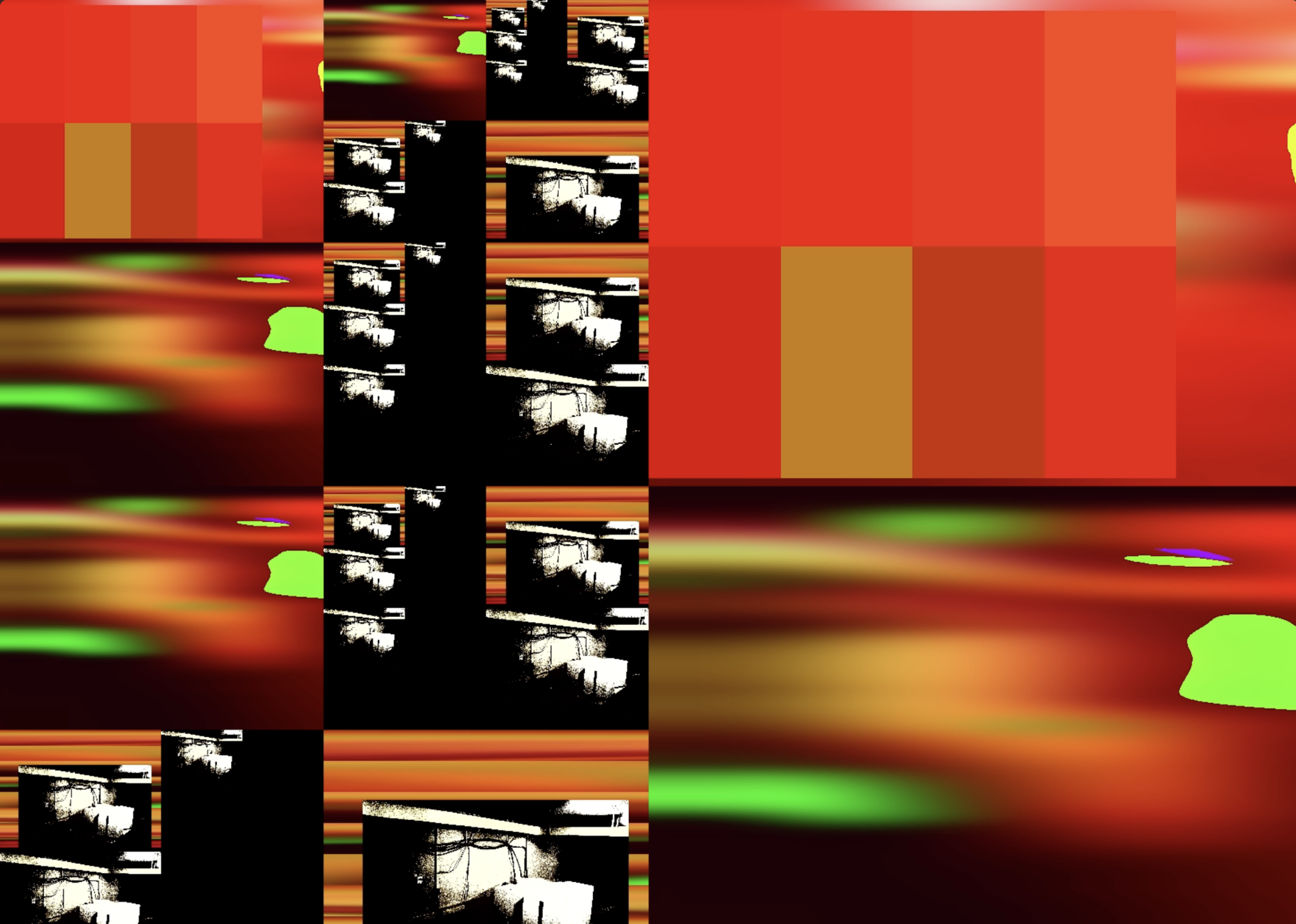
Gate is a visualisation rather than a sonification but uses some of the same techniques that other works in Norths use. In Gate, processes are layered to a point of saturation such that neither the source material nor the stream of data driving the processing of the source material remain recognisable. Gate begins with a snapshot from the vaults of Eskdalemuir Observatory, depicted many times in the images on this page (BGS 2025).
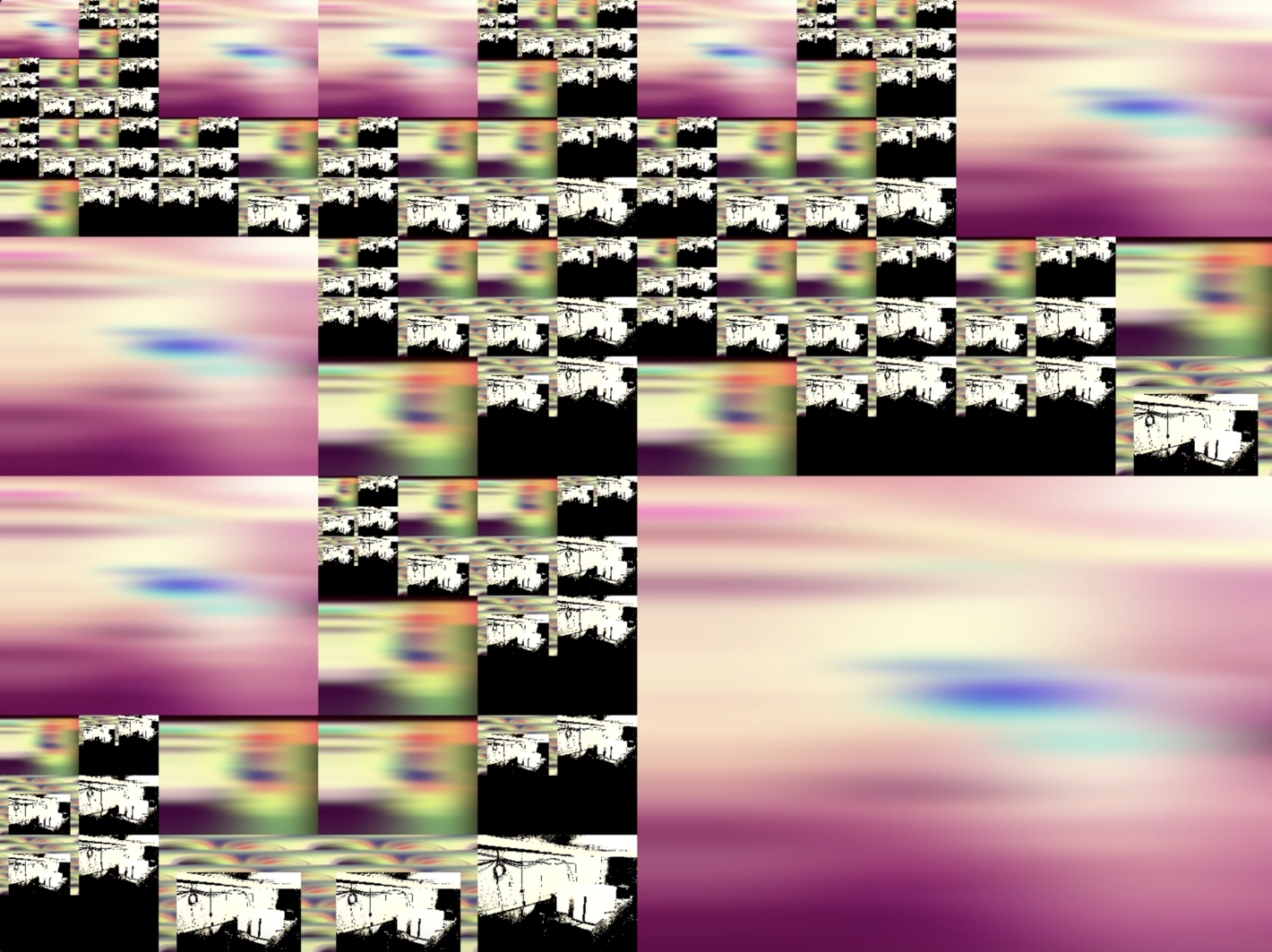
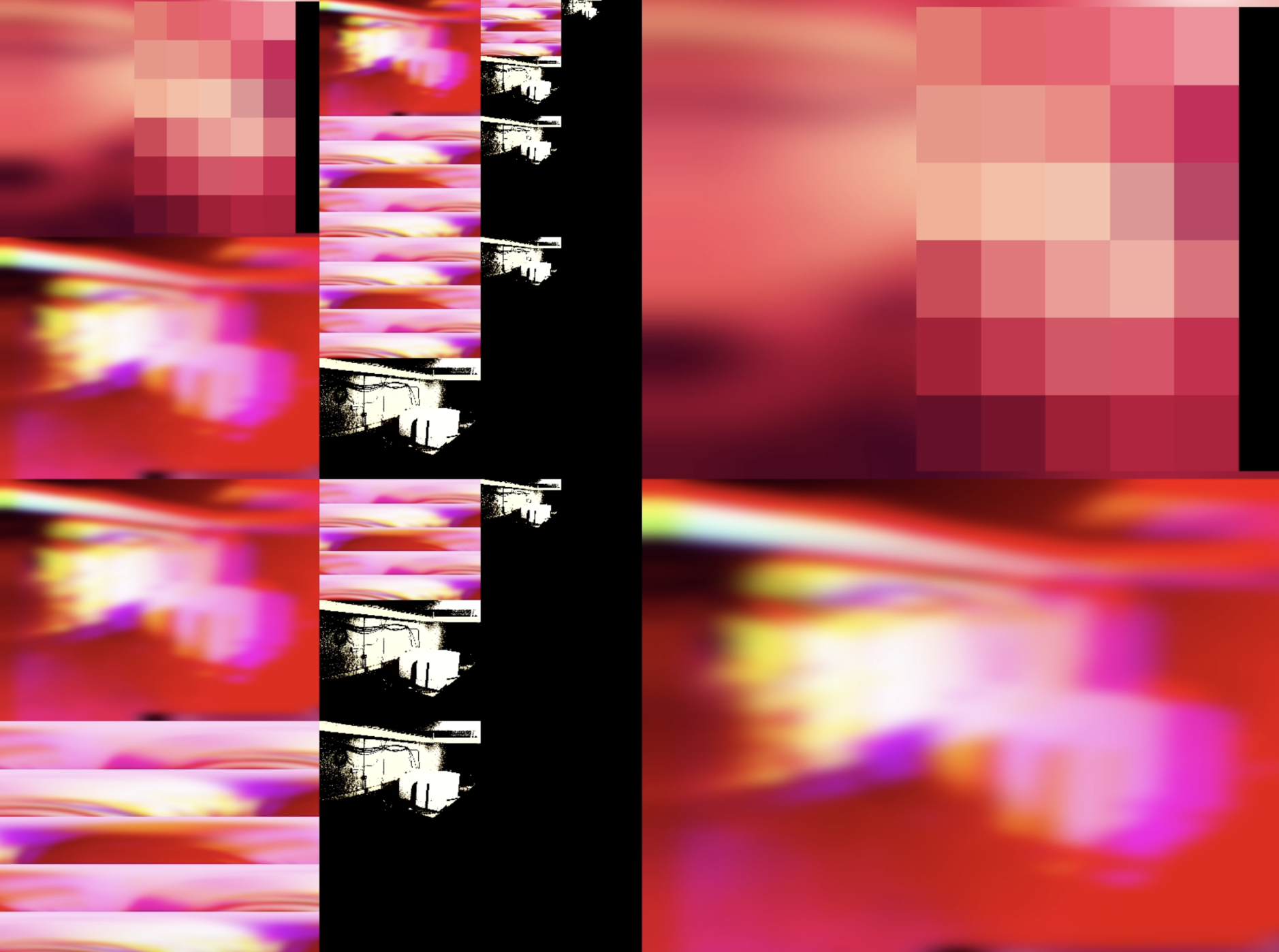
The image is progressively modified by the same stream of data used in Constellation and Brraaap. Constellation primarily sonifies the content of the data from each of the Eskdalemuir seismographs, modulated by artefacts related to the data transmission system. Brraaap, like Gate, focuses on the dynamics of the transmission system. However, while Brraaap treats this abstract data more literally, sonifying the size of each incoming data package, Gate takes incoming messages, converts them to MIDI, and uses them to drive a complex cross-modulation process that gradually processes the source image beyond recognisability.
Although it is in no way expected that one would be able to understand the data being used in this complex system, you can see it at work as you watch. Some of my associates would be quite frustrated by this work, because they feel that the function of data perceptualisation should be primarily a representational one. This implies that the data should be made understandable and accessible. From a perspective located within the intersection of fields that constitute artistic research, however, this view is limited by the requirements of the particular data science fields in which it originates. Best practice for one field is not best practice for all. This, simply put, is the manifesto offered by this piece: there is no single ‘correct’ way to perceptualise data but rather a multiplicity of approaches, appropriate to a multiplicity of contexts.
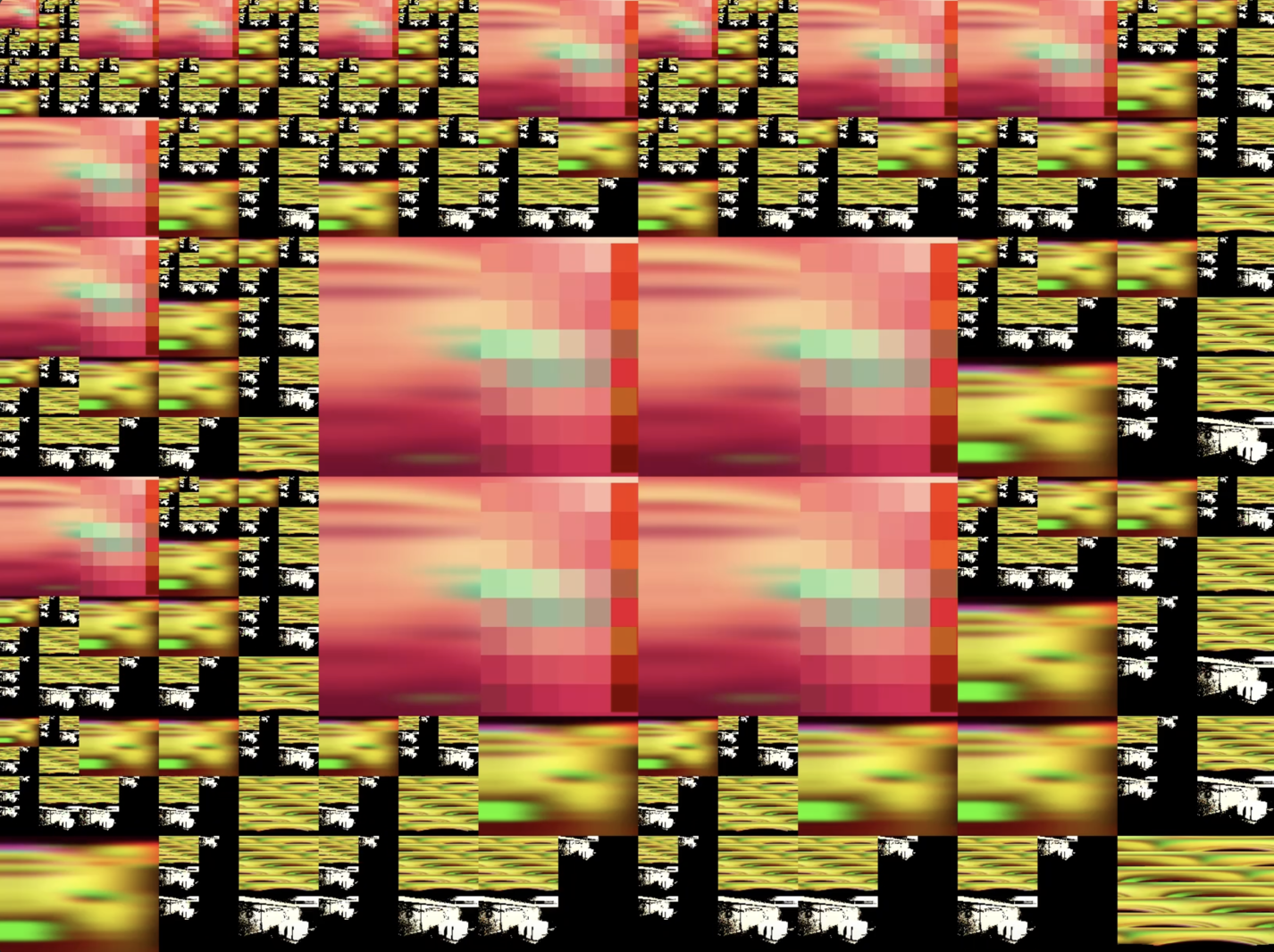
When applying data to the internal functionality of an artwork, the use to which it is put absolutely depends on the artistic intention of the work. It could be that the priority is compositional: the structure and function of the piece itself. It could be a desire to work interdisciplinarily and collaboratively in perceptualising the data. To what extent the data is to be rendered potentially explicit or, by contrast, hidden could even be down to the whim of the artist. There is a basic freedom in acting through artistic practice, which in turn offers this field a potential and rare openness for exploration. The arts give rise to new forms of being and new forms of experience. They yield in turn new forms of understanding, exposing artistic practice as research. In my work, this piece is one way this process unfolds, but as can be seen from the spectrum of approaches taken in Norths, it is itself one of a multiplicity.
Diffractively speaking, this piece is both a joke and a manifesto. There is an intentionally humorous irony to the lack of recognisability the data is put to: under usual circumstances data is measurement, intended to be taken seriously. In Gate this situation is reversed in a critique of the notion that data is a stand-in for a remote phenomenon. Here the flow of data is treated as a dynamic signal and nothing else. Gate retrieves and maps the data onto a complex system of image processor parameters. The output of each stage is fed to the input of another based on arbitrary improvisational decision-making (renewed at each iteration of the piece), and at the expense of any attempt at communicability for the data.