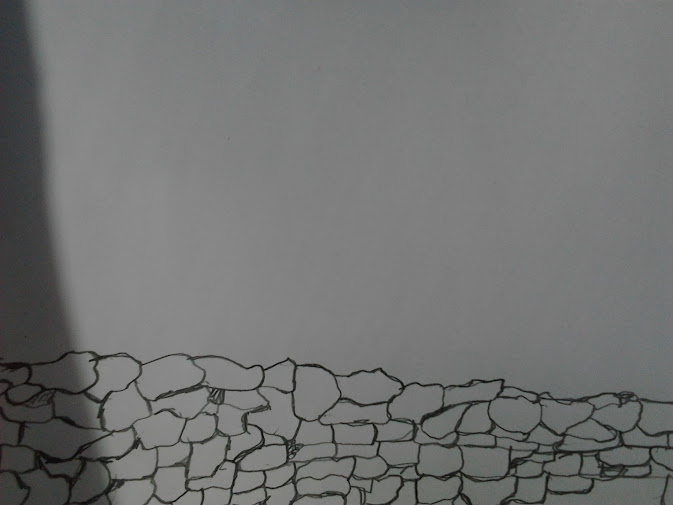
Moving From General to Specific
The research that constitutes my practice as an artist begins with the following questions:
How are my experiences of landscapes and environments constituted?
By what methods can I explore perception and possibility from an environment within which I live, play, and work?
The first of these interrogates how I come to know about my being from within my state of being itself. The second concerns action: what am I to do in the world, what actions make the world more intelligible, and what perceptual experiments reveal these? There is a notable overlap between these and the three critical challenges discussed at the close of the previous section. In recent years, I have been employed within a professional context researching data sonification and environmental perception. Ongoing research concerning how design makes data available for perception offers an opportunity to recontextualise my fundamental questions in a form that in turn asks foundational questions about data sonification and perceptualisation:
What counts as data, and how is it created, stored, transmitted, and used? What counts as noise, and what is its relation to that being considered as data?
How do we encounter information in environments, and how does this environmental information become knowledge?
How does our apprehension of information, as measurement data or in embodied empirical form, affect our behaviour in our location or environment?
How is this the same or different when an environment is considered from the point of view of a participant, that is, not as a ‘display’ but as a place ‘lived-through’? By extension, how are ‘remote’ places and ‘intangible’ phenomena possible as phenomena (i.e. as perceived)?
These questions arise out of the process of creating and exhibiting the Norths-works. They are not answered in these pieces, nor in this exposition. However, the process of creating the Norths-works and the pieces themselves offer many insights and perspectives useful for thinking through the questions and these are discussed in the text to follow. Where criticality is concerned, the real task is not to answer questions, but to use them to reveal new perspectives on the context in which one finds oneself. If critical questions are kept in play, their utility as provocations remains active.
To this end it is interesting to note that if one compares the new family of four questions above to the two given before that, the inquiry is refocused. From one concerning being, experience, and knowledge, the concern becomes one regarding the being of information, experience of information, and knowledge. The fact that problems of knowledge are what remain constant across these changing contexts indicates a collapse of the other domains of inquiry into epistemology.
The collapse into knowledge offers a way into the frontier proposed by Norths. I will begin with a discussion of a few key concepts like ‘sonification’ and ‘data’. It is surprising to note how quickly these most basic questions immediately lead to a further explication of the more complex questions above, when taken from points of view of the Norths-works in general.
Essential Uncertainty: Sonification and Language
In any discussion of sonification, one of the most tedious mistakes must be to begin with a definition. Instead of a definition, I adopt the practical attitude that sonification is a term denoting an area of interactions, like a crackling field of plasma from which meanings emerge and vanish without a trace.
I describe (not define) sonification as ‘a field of techniques and processes that situate the meeting of sound, information, and listeners in an interactive field for exploratory, communicative, or creative purposes’. This description is at odds with some less intra-active and less interdisciplinarily oriented definitions at play in this evolving field (Hermann 2008, 2025). In general, where a field is still emerging, it seems advisable not to apply restrictions that threaten to prematurely narrow its scope. Therefore, rather than define and thereby delimit the field, I consider my own area of action and what is at stake there. I do this by asking: when data is sonified, where do the entanglements between sound, data, and listening begin and where do they end? To focus this question still further: how can information be used to create new experiences? How can it help us explore and experience the new?
Questions arise out of this text with the intensity of grunion swarming upward from the sand at spring tide. Can they be answered? I previously made a case for keeping some questions open, as a means of maintaining their critical potential. But if questions cannot be answered, shouldn’t we at least follow the model of philosopher Ludwig Wittgenstein, who famously ended his first major work by stating, ‘What we cannot speak about we must pass over in silence’ (Wittgenstein 2001)?
Wittgenstein’s statement delineates a linguistic chasm between the type of questions I need to ask and the unknown responses to these on the other side of the canyon. Fortunately, we need not pass over what we cannot speak about in silence. We can instead materialise key philosophical questions and propositions very well as sonic acts, and in the sonic arts, in Norths, as I argue here. Questions posed within and as artworks function as frames for perceptual situations. As open invitations for action, these do not require an answer in linguistic form. Perhaps what is unspoken is passed over in words, but it need not be passed over in silence.
In another recent paper (Boehringer 2025), I have established an argument that unspoken philosophical propositions may be raised directly through artworks themselves. That paper makes the case that artworks existing at the intersections of data and sound are particularly suited to raising difficult critical issues as phenomenological propositions, rather than through language. I would generalise and extend this claim that critical inquiry has always been a part of artistic activity: artworks, at least some of them, have always functioned as philosophical technologies over the course of the history of the human species and perhaps before. This conjecture is beyond the scope of this paper, but the notion that philosophical inquiry materialised as artwork is common practice in contemporary art is not.
Likewise, data is rendered as non-speech audio in sound, as sonification. Yet there remains uncertainty where questions are asked and answered in extra-linguistic forms. Language remains the paradigmatic, instrumentalised, and legal means of establishing understanding in our contemporary societies. Language is even required for artists who wish to qualify for diplomas in artistic fields. For example, when completing my ‘practice-based’ PhD in Music Composition at the University of Huddersfield in the UK, there was no option for archiving my artistic works. No musical scores, recordings, or other documentation were preserved to evidence my ‘practice’ as part of my degree work. The only archived aspect of my and others’ PhDs is the written one, which is consistently referred to as a ‘commentary’ (University of Huddersfield 2002; Boehringer 2019). Does the written commentary thus become the essential aspect of a completed portfolio? But without the portfolio itself, what is it commenting on? It is as if the rug has pulled itself from under itself, revealing nothing at all as its basis.
Such practices often pass uncriticised because they become invisible in their normality. They become normalised when language is the metric used to evidence certainty. As this is common practice across fields of academic research outside artistic practices, the assumption that it should be the case within artistic practice as well passes unquestioned in some quarters. In cases like the exemplified PhD portfolio situation, language is considered superior in providing evidence than experience of a portfolio of artworks would be on its own. It is as if the concrete fact of the works themselves needs linguistic proof for their existence. But is such proof possible? Isn’t the assumption that language conveys understanding in a manner outstripping the empirical potential of objects and situations overstated? Norths challenges the notion that language should be taken as a stand-in for experience. Language transcends an individual, but Norths seeks to remind visitors that this characteristic alone is not sufficient for certainty beyond that of individual perception. Language does not produce certainty, but more language.
A critique of this idea can begin on the scale of an individual. The assumption that language fixes a concept securely and certifies conveyance of meaning oversteps the recognition of others as autonomous individuals with their own cultural backgrounds and a diversity of personal characteristics. As tourists everywhere are slow to comprehend, there are more efficient means of communication of concepts (e.g. ‘turn left’) to someone with whom one has no shared language other than speaking or shouting. All humour aside, to insist that language conveys fixed meanings over and above those of the empiricism exercised by an individual is an authoritarian act. Norths operates in the opposite direction: re-establishing space for individual interpretation of the structures and data that contribute to the environments one participates in.
A basis for this critical perspective, ubiquitous throughout the Norths-works, is established by examining the connections between language and data and how language is used to project certainty in the cultural sphere. Language, treated as a cultural standard and wielded within dynamics of power relations, is a theme within the work of sociologist and philosopher Jean-François Lyotard. In The Postmodern Condition, Lyotard unpacks the complex relationship between information, language, and power (Lyotard 1984; Gratton 2018). Data is created from experience and encoded in language. Language functioning as a conduit or container for data is often then regarded as itself objective, when in fact it always necessitates a subjective act of interpretation. How does language come to be regarded as more objective than it is?
Language transcends individuals to become a component of culture, but meanwhile the individual retains a great deal of agency as to its use. When top-down directives enforce particular usage for language, it becomes a standard. Standards, like those used for measurement or legal language, are useful because they fix meaning or perspectives. However, fixing perspectives and holding meaning in place where otherwise it might be more dynamic are unhelpful for expanding paradigms and may become instruments of authoritarian policy. The artworks that make up Norths problematise this in the manner discussed in the sections pertaining to the individual works. This exposition makes the case that the ubiquity of data and its acceptance as a stand-in for truth results in an over-abundant fixing of meaning and the elimination of freedom for the agential agent to define their own perspective. As discussed previously, Norths invites participants to (re)define their perspectives.
The means by which language may be used to symbolise certainty or objectivity is related to its use as an instrument of power within institutions like academia and government. It is certification by authority that standardises grammatical and lexical behaviours for use by still further authorities. A further bit of fallacious reasoning uses language-data like words and grammatical usage to facilitate the standardisation process. Metadata and lexical reference materials like specialist dictionaries aim to centralise and standardise meaning by falsely purporting to represent meaning shared universally within a community of use. While in other ways the philosophers Jacques Derrida and Ferdinand de Saussure disagree, they both argue for a basic relationality within word usage and grammar: the meaning of a word depends on other words, and on larger cultural contexts (Derrida 2004; Daylight 2011; Saussure 1986). That the proposition of an essential meaning for a word, expressed in other words, is far from stable is thus widely recognised. Nevertheless, the pragmatic activity of standardising linguistic meaning, a dependency on which many social structures rely, continues. Nevertheless, there are problems with this approach to certainty. As these are the problems that the phenomenological approach taken in conceiving the Norths-works addresses, it is useful to examine this further.
Beginning with language offers an immediate and everyday example of the entanglement between standards and power. Language does not function well as a standard because reference materials only stabilise language for an incredibly if not infinitely short duration, as evidenced by the fact that they are often out of date by their publication. Consulting dictionaries even twenty years old reveals vocabulary and usage that would be scandalous, humorous, or dangerous if employed in the present. It is not surprising that linguistic usage and societies change, but it is surprising what usage has been normalised into law and other official business in the not-too-distant past. Thus, the stabilisation of language by reference materials is only symbolic.
Symbolic usage nevertheless conveys cultural authority, even where it conveys little actual information. Undergraduate essays supported by arguments that make reference to dictionary definitions, or news broadcasts whose claim to truth-value lies within the argument that what is discussed is ‘in the data’, are everyday examples. However, as philosopher Pierre Bourdieu points out, such symbolic uses of language, while not themselves objective, are utilised in the cultural production of objectivity in the sciences (Bourdieu 1975). Such produced objectivity becomes another ‘parroted’ point of reference in everyday life, in which one bases certainty on what ‘science says’. Such authority, in everyday life, academia, or public policy, uses data and language to make claims for ‘truth’ and ‘reality’. Such claims are not based on direct experience, or even deduction, but loosely inferred from linguistic connections legislated as meaningful.
We have come to rely on language to establish understanding, stabilise interpretations, or provide evidence for our research, not because it really does these things but instead because it symbolises certainty. This symbolic certainty, while making thought and communication accessible for us, can also serve to control thought and restrict our physical freedom. As Thomas Kuhn points out in The Structure of Scientific Revolutions, when thought and action become impossible within the current paradigm, a breakdown occurs, out of which emerges a new worldview (Kuhn 2012).
Paradigms shift in time. The works in Norths critique the use of dogma to support knowledge or enforce acceptance of specific information as ‘true’ versus ‘false’. They perform this critique in various ways, from simply proposing alternative readings for data, to pointing out that some faith in information can be baseless, and some measurements can result in reducio ad absurdum. Norths aims to open up sites for questioning whose starting point is experience rather than language by presenting material propositions for visitors to engage with. When questions are framed empirically, they can be explored phenomenologically. No standard response is desired from this work, instead critical thinking in any particular direction is of value. Deviation from standard is encouraged.
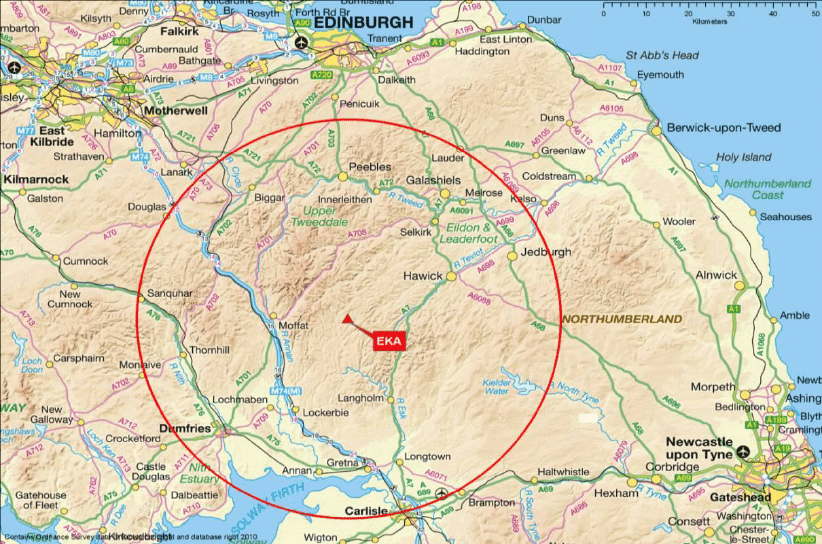
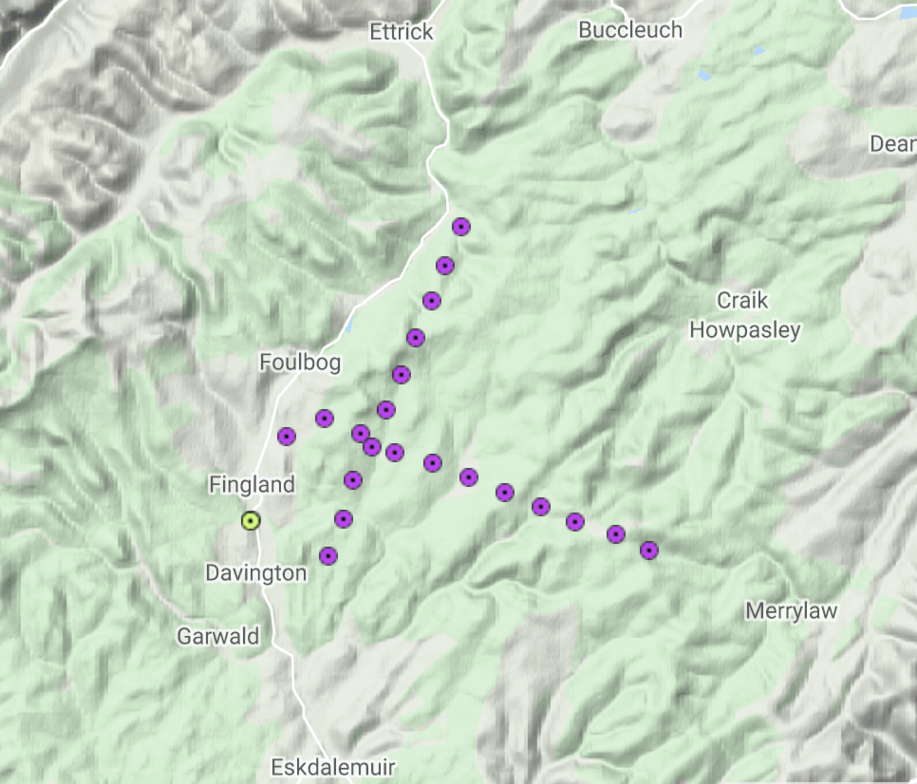
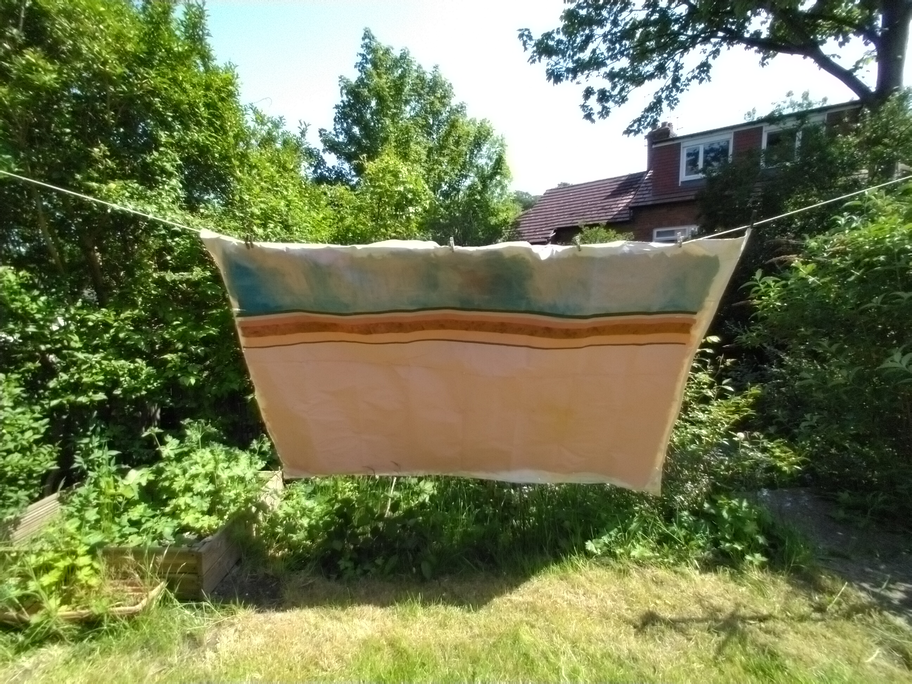
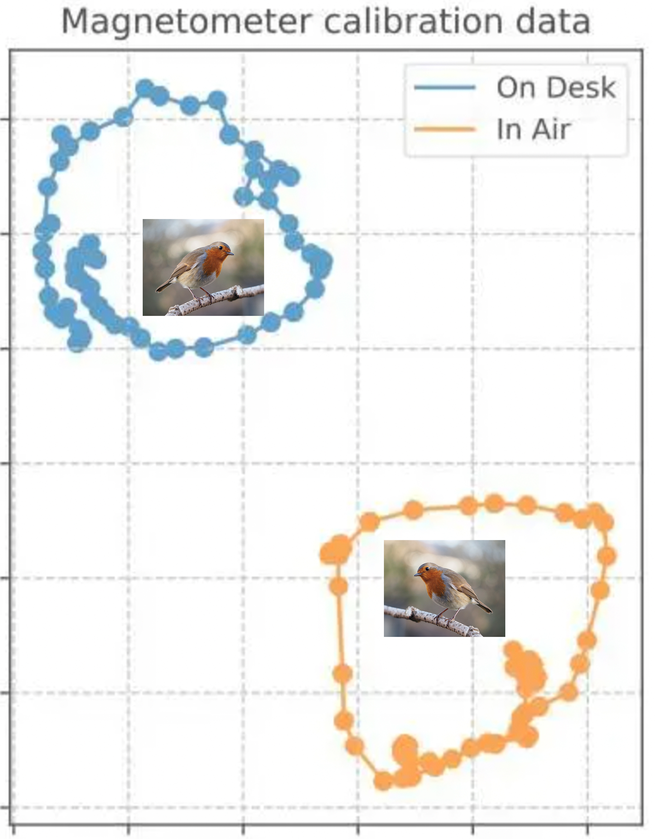
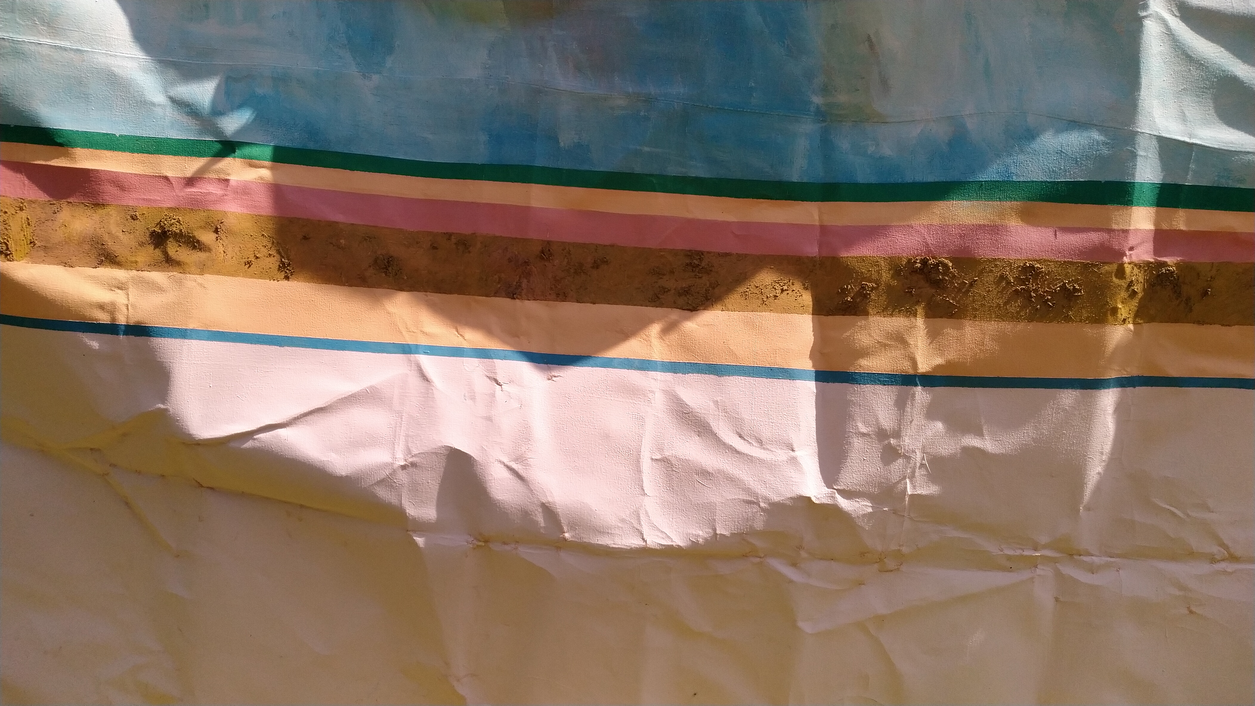
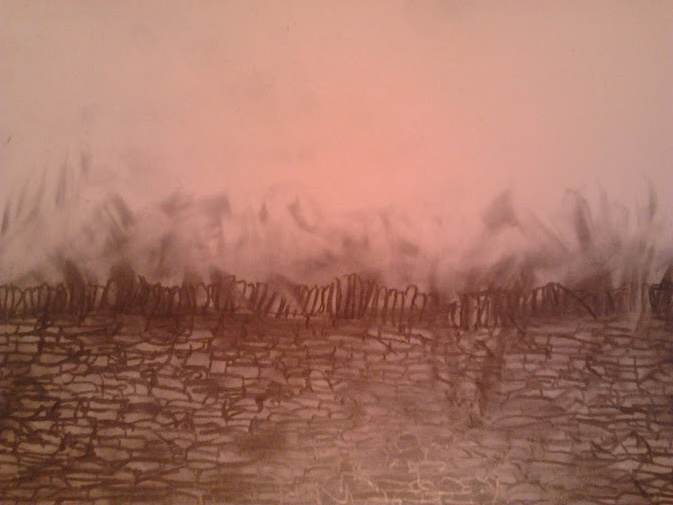
These images illustrate iterative, personal processes of experimental artwork as means of understanding phenomena. They also sketch a physical relationship between tangible environmental structures and those, like magnetism, that are more intangible. Sciences often seek understandings of intangible phenonmena through experiment and measurement. In Norths, I take scientific data as a way of understanding the landscape, making it part of my diffractive approach.