Bird on a Wires
[sound & video example below]
Bird on a Wires is a materialisation of the tragi-comic situation of a figure in relation to their world. The very technology that promises to assist a person in navigating, wayfinding, and locating themselves in the landscape also serves to disconnect them from the environment. The irony in this situation is, as psychologist James Gibson and philosopher Maurice Merleau-Ponty make explicit, that as a condition of our existence, we are participants, always already connected to the landscape in both ecological and perceptual senses (Gibson 1986; Merleau-Ponty 2012).
Through the act of measuring or taking a reading of data regarding our relation to the environment, we establish a temporary situation in which we separate ourselves from the environment we are in. Akin to map-reading, we locate ourselves within the landscape by adopting a perspective (overview) that we do not in fact occupy. While this is certainly useful, should we overemphasise the importance of this ‘view from nowhere’ we risk mistaking a matrix of measurements for our own subject position. This in turn de-emphasises the importance of our personal experience in favour of statistical data (Nagel 1986). We also run the risk of becoming beholden to technological tools rather than more fundamental, embodied means of gaining information about our environment, like paying attention to our senses.
Bird on a Wires is a funny piece, but it is at least as tragic as it is comic in its materialisation of important philosophical problems. As with most of the artworks that make up Norths, the apparatus of Bird on a Wires itself contains the reflective arguments expressed above. A brief technical description will assist in illustrating how this is the case.
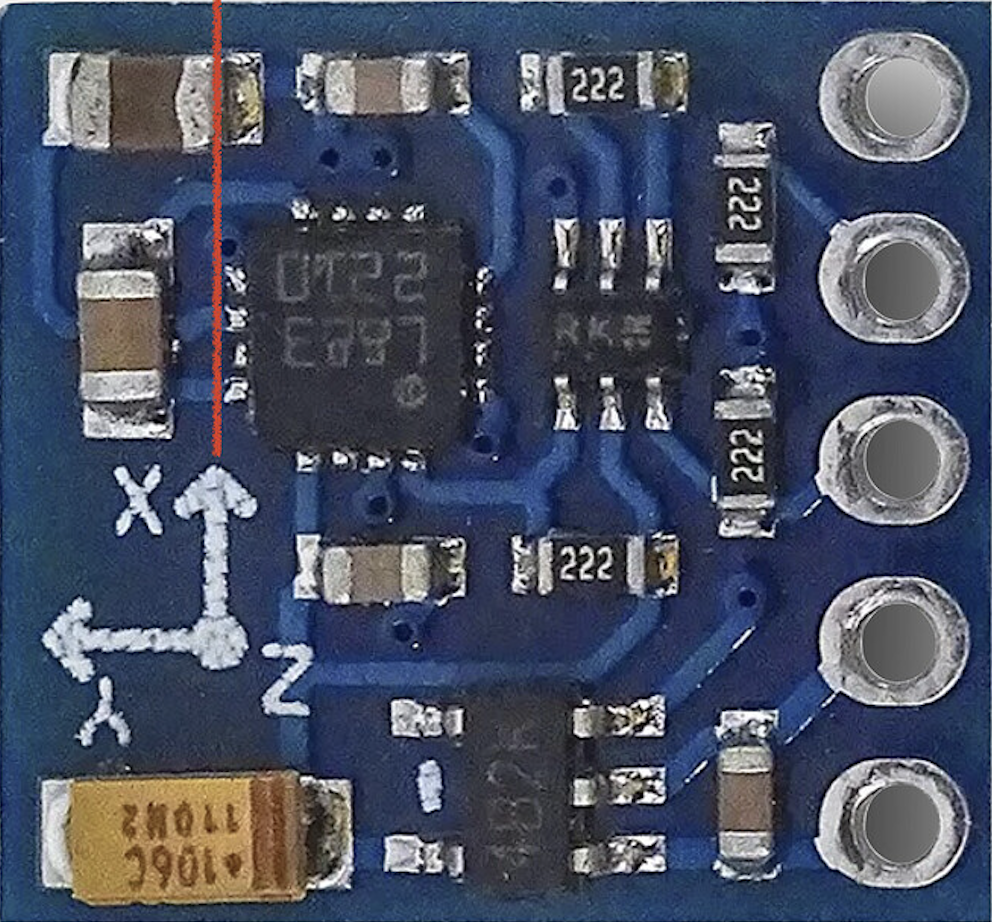
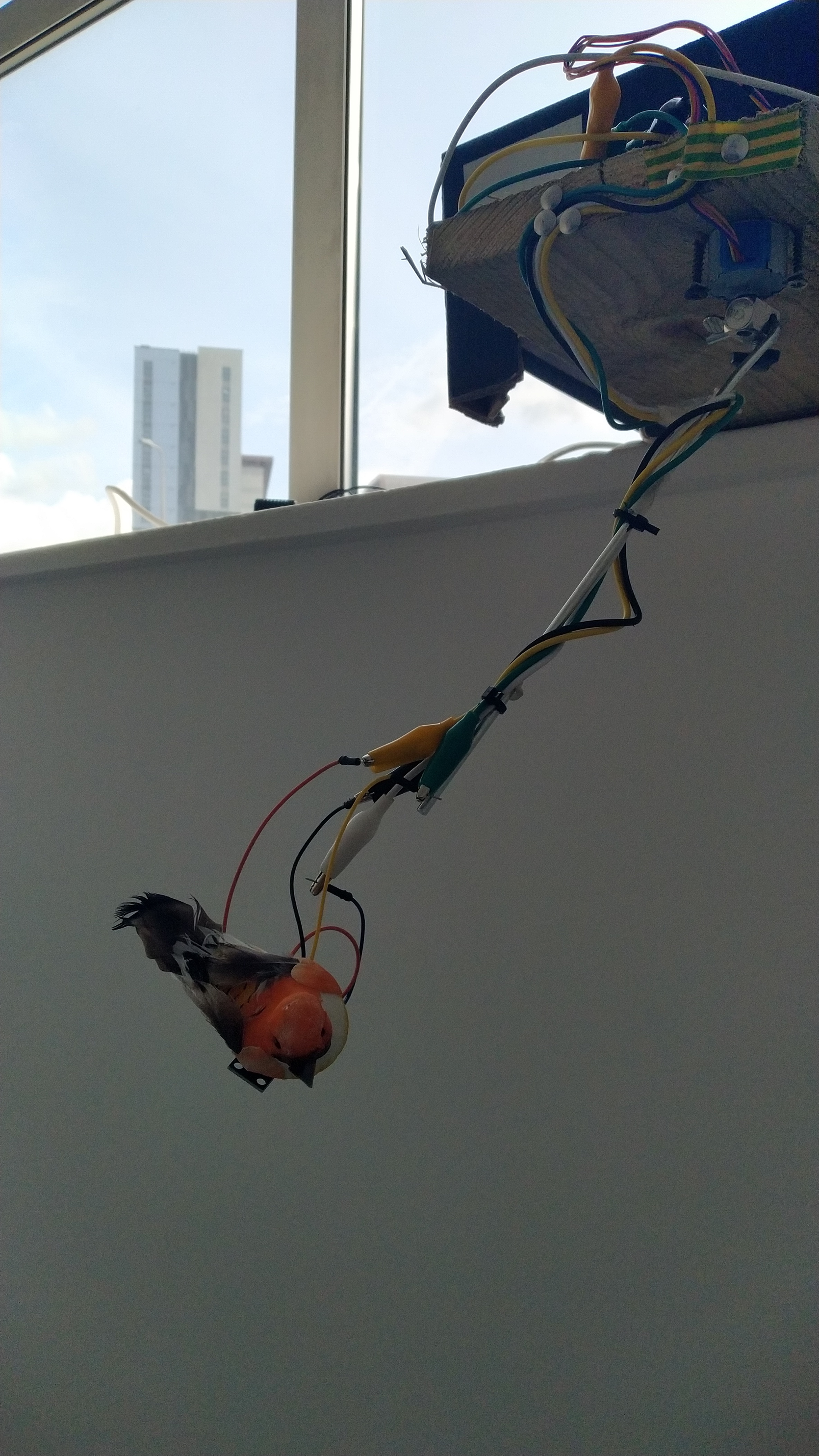
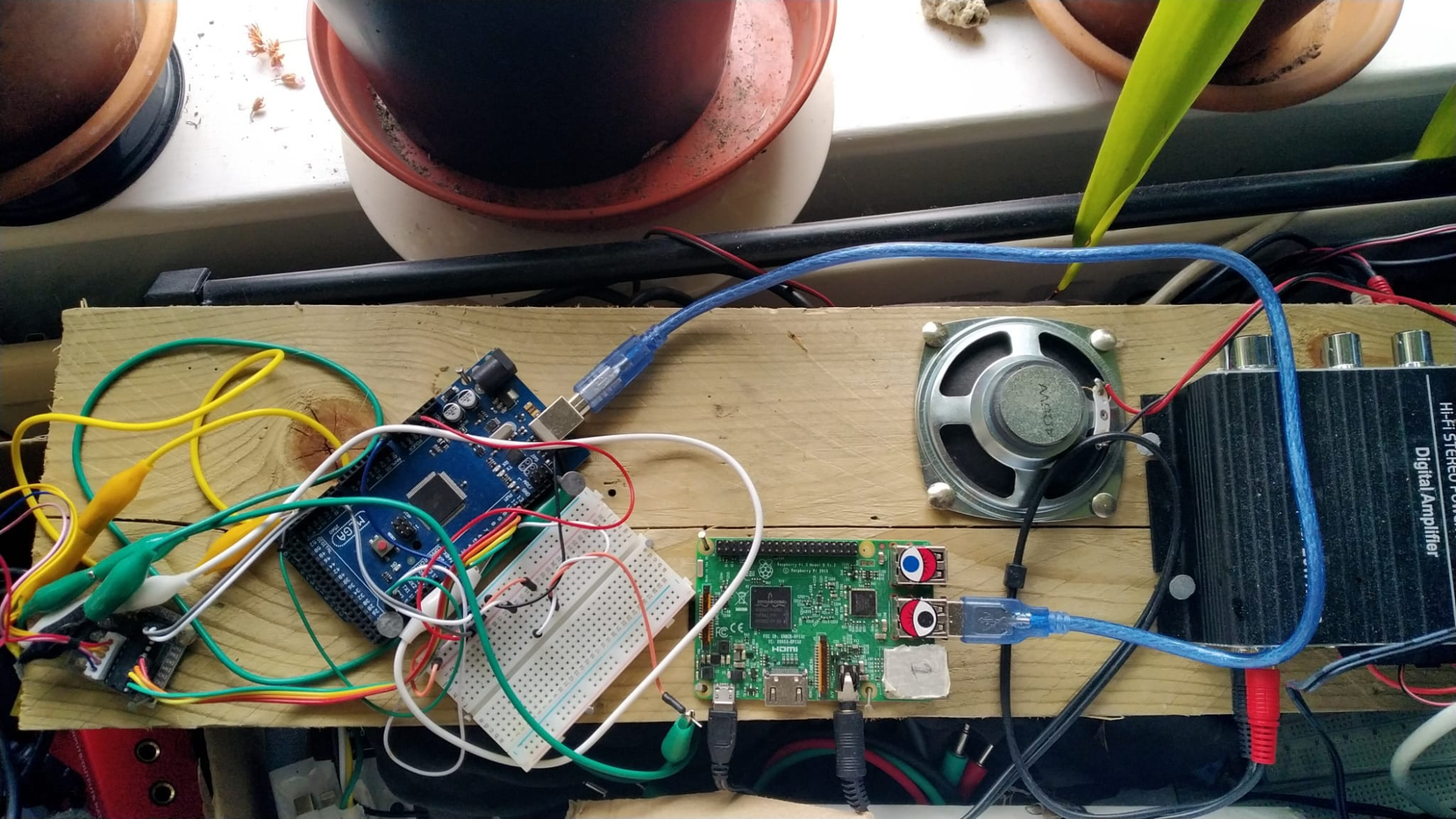
Bird on a Wires is a ‘dime-store’ bird model perched upon a small chip, which claims to be a compass sensor. The sensor numerically relates its current position to magnetic north. A microcontroller takes numeric data from the sensor and is programmed to respond by bringing the bird into alignment with a north-facing orientation. These movements further disturb the already overly sensitive and verbose sensor. The sensor responds by sending out more data, resulting in further confusing movement. In addition, the bird model is attached to the motor that moves it by a shaft angled about forty-five degrees off the centre axis. This means that the bird model/compass sensor aggregate has limited degrees of freedom.
Taken together, the circular trajectory traced out by the bird becomes a self-portrait of frustration. Forced to forever navigate, re-orienting itself to magnetic north, the system finds its new orientation disturbed by its own movements and material conditions. Feedback is thus used to demonstrate the relativity of frames of reference. The result is at once interesting, humorous, and tragic.
In the course of developing this piece, I discovered that the compass sensor chip I had was a poorly made counterfeit of what I had intended to purchase. This adds to the complexity of the situation, as in addition to producing a noisy data stream to begin with, the chip often does not correctly or consistently locate north. Instead of discarding this poorly functioning device, I opted to continue to work with it as it seemed to evoke the helplessness of the situation better than a perfectly functioning sensor might.
In order to get a practical result from any chip sensor of this type, a great deal of smoothing and filtering must be applied to the incoming signal. Unfiltered, the sensor delivers a deluge of information. The noise is overwhelming for normal applications of sensor data like orientation or compass functionalities. To make the data that is received useful, a large portion of it is generally discarded. This seems an inefficient way of creating useful information, and particularly when compared to simpler technologies for locating magnetic north, like floating a magnetised needle on the surface of a liquid. A similar attitude towards efficiency is present in the use of digital mobile devices, dependent on sensors not dissimilar to the one installed in this piece, and horribly toxic when thrown away. A floating magnetic needle is not only less toxic to dispose of but does not produce the glut of surplus data that our digital devices do.
In Bird on a Wires, at least some of the inefficiency is recycled in a productive fashion: the ‘noisy’ sensor values are not thrown away but used to produce the bird’s sad song. Sent from an Arduino to a Raspberry Pi computer, the noise-data is sonified using FM synthesis to provide the bird-model with its voice. The Bird does not sing constantly. Instead, it waits until a randomised buffer value is reached and then it delivers a bout of ‘song’. Interestingly, while the song produced is extremely varied and delivers a lot of information very quickly, it is also remarkably melodic and does not sound like stream of random numbers. Sonification reveals that the systemic noise of the compass-sensor system in fact possesses an underlying structure. While complex, this structure is also not random.
As Leonard Cohen sings in the song from which my piece takes its name:
‘Like a bird on the wire
Like a drunk in a midnight choir,
I have tried in my way to be free’
L. Cohen, Bird on the Wire (Cohen, 1968)