Julita Hanlon (fine artist), Chonghe Fan (painter) and I were selected to take part in the Balancing Art residency ran by Salt Space Gallery - a gallery ran for Glasgow School of Art alumni. The extract from the gallery statement below details part of our process and perspective on the work at the time:
" For three weeks we have worked closely with materials, surfing through themes and ideas that excite the three of us and have arrived at the space that you will be encountering here. Our aim was to contain multiplicities and contradictions inside a structure where you can feel both the tension of the confinement and the release of intimacy. How can we capture these contradictory emotions within the same space? How can the felt effect of the space change through a shift in perspective? And how can the materials we use and the performance we create both force and gently guide that perspective shift?
We started from Chonghe's 2D paintings that depict space through a particular perspective and asked - what will happen to it in 3D? We built a 3D physical structure to explore this idea and realised that in order to pertain to both Adriana and Julita's practices it had to fulfil two roles. Julita's work looks at space through the lens of bureaucracy and social inequality, her space is harsh and tense, it is concerned with immigration and the power within systems that can offer a stamp of acceptance or denial. Adriana's space is at the other end of the spectrum: a highly enabling sensory space that encourages self expression and play. A tender space, a safe space of (self) acceptance where anything one does is enough.
Besides the physical structure, for the duration of the exhibition (4 hours every day), Adriana is performing in the space using improvised voice to make audible the relationships that are continuously unfolding. Her improvisational performance practice has been exploring how voice can materialise the felt effects of whatever is there, be it the space in itself, the lighting, her own body, the materials around or the presence of others, without looking for utilitarian validation or needing to make sense. By practicing this kind of atunement, she becomes a part of the space, entangled with the materials and people that create it. The vocal threads that she pulls out from within this entanglement capture momentary sonic perspectives that come back to affect the space and the people inside it, creating a feedback loop.
As you step into the space, you become part of it, affecting and being affected. " (Gallery Handout, June 2021)
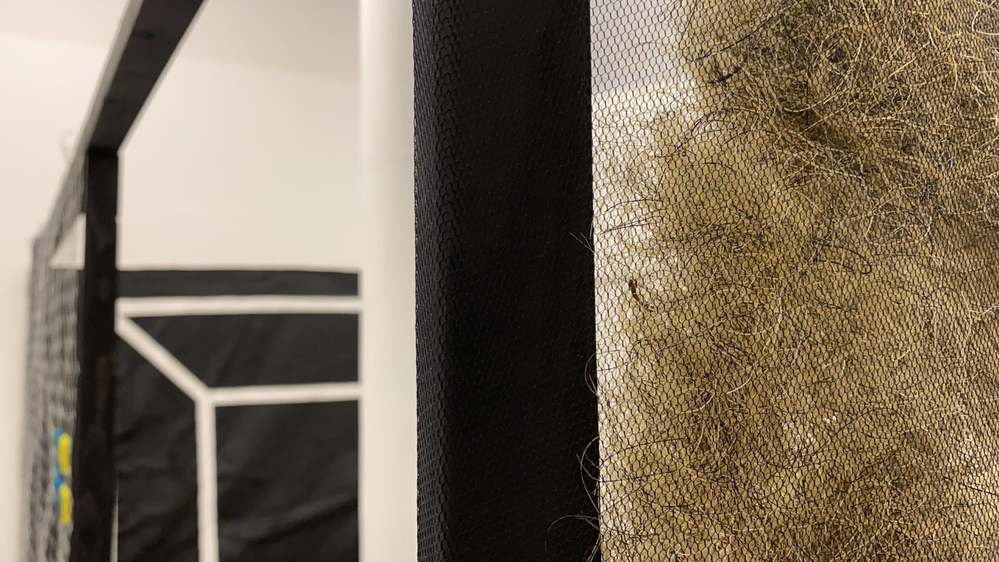
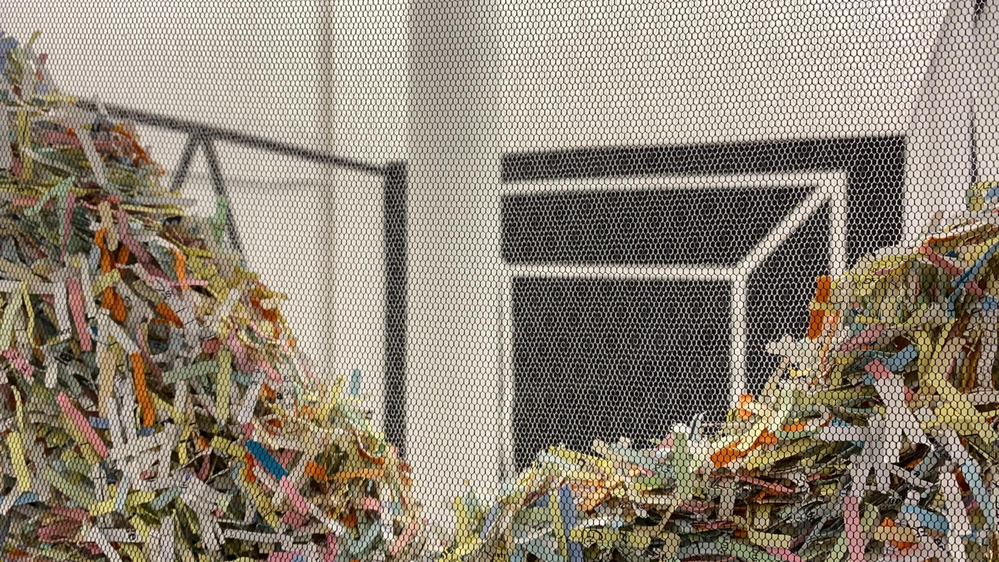
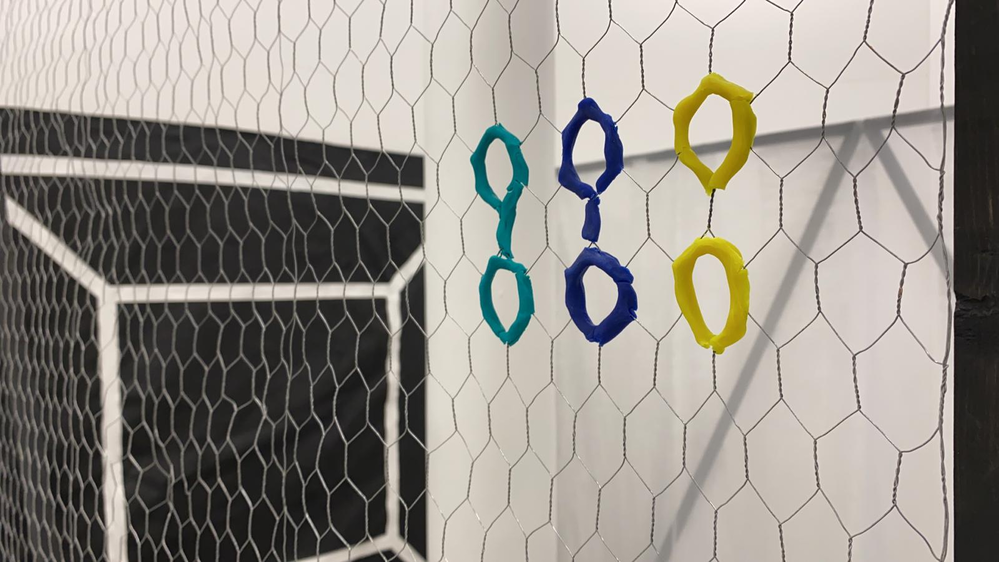
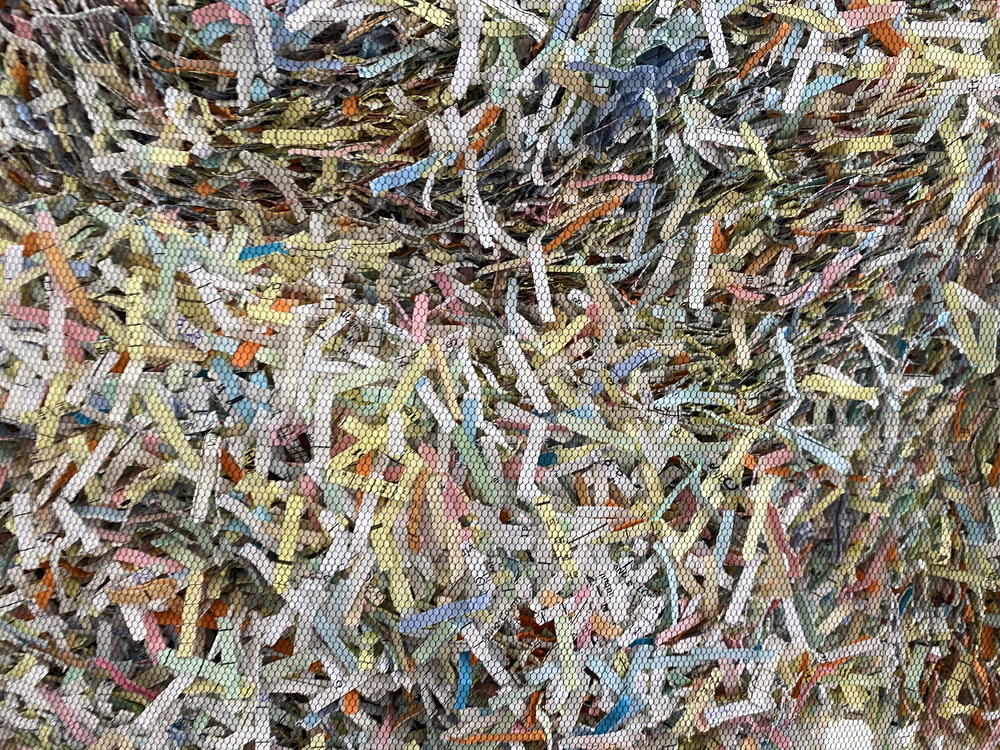
At this stage in my practice, vocalising in front of people still felt like a big risk. The shredded paper, horsehair, play-doh, chicken wire, sand, textured paper, and veil we used in the sculpture offered me contexts of familiarity and sensory refuge through which I could anchor and return to my sensations in situations in which sensing the presence of others became overwhelming. After carefully crafting the space with these physical materials,I felt like I could rely on them and on the architecture of the physical structure itself to support me in this difficult task. These pleasurable stimulants gave the foreground of my attention a direction, they kept me occupied with a soothing action so that the fear or overstimulation from the encounter with the other would be pulled further into the background.
The durational aspect of the performance made whatever audiences experienced an incidental pit stop into a bigger story. The durational strategy enabled me to play with my own position as a background-foreground element in the space without being responsible for capturing or retaining audience attention directly. While performing I navigated the space intuitively motivated by ease and pleasure with no concern for coherence or consistency.
The fact that all of these precise functions could be activated as part of a collaborative project with three other artists with different visions and aesthetics and no prior affinities is a testament to our ability to make a space that could contain multiple readings. We were fortunate to have a highly functional collaborative dynamic in which our different artistic angles helped build and support each other's perspective. Given that we didn't know each other before the three weeks, this was no small feat.
0.s through other stuff
and then there’s play. play with pleasurable and stimulating things. drawing, touching, folding, fiddling. voicing through what I can hold in my hands. what I can touch with precision. voicing through what I can pack up and share. it’s not about me, I can dissolve the centre, float out through my eyes or my fingers, always tethered through voice