The Research Catalogue (RC) is a non-commercial, collaboration and publishing platform for artistic research provided by the
Society for Artistic Research. The RC is free to use for artists and
researchers. It
serves also as a backbone for teaching purposes, student assessment, peer review workflows and research funding administration. It strives to be
an open space for experimentation and exchange.
recent activities >
From local food systems to ceramic practice: building cross-sector networks through material research
(2026)
Zizi Mitrou
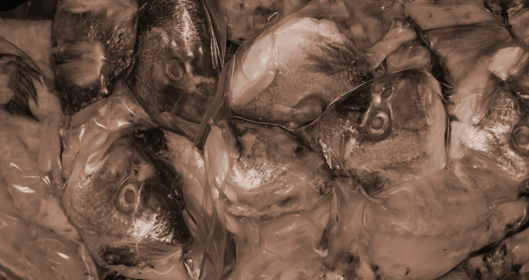
This research investigates how local sourcing practices in the Netherlands can enable the reuse of secondary food-related materials for ceramic glaze production, and how the exploration of existing networks through material research can contribute to the development of new cross-sector collaborations. Through a practice-based approach that bridges ceramic production, design research, and the restaurant industry, the study explores the potential of locally available “waste” materials, such as bones, shells, charcoals, and discarded glass, as viable resources for glaze making.
The research combines material experimentation with qualitative fieldwork, including interviews and informal discussions with chefs, ceramicists, suppliers, and material practitioners. By tracing the origins, processing, and transformation of these secondary resources, the study critically examines the environmental impact and opacity of conventional glaze supply chains, which often rely on imported raw materials and energy-intensive extraction and transportation processes.
Central to the research is the creation of a material archive that documents locally sourced secondary materials and their behavior in glaze recipes. This archive functions not only as a technical tool for ceramic experimentation, but also as a framework for understanding relationships between material flows, human practices, and local infrastructures. Drawing on the concept of “working in the minor key,” the research emphasizes learning through direct engagement, observation, and collaboration rather than predefined systems.
The findings suggest that material research can act as a catalyst for new circular practices and cross-sector networks between restaurants and ceramic industry, fostering shared responsibility, creative exchange, and reduced material consumption. By reframing waste as a site of value and knowledge, this study proposes an alternative, locally embedded approach to glaze production that integrates sustainability, and social engagement.
XRW (Implicature)
(2026)
Zoe Panagiota (aka Betty) Nigianni
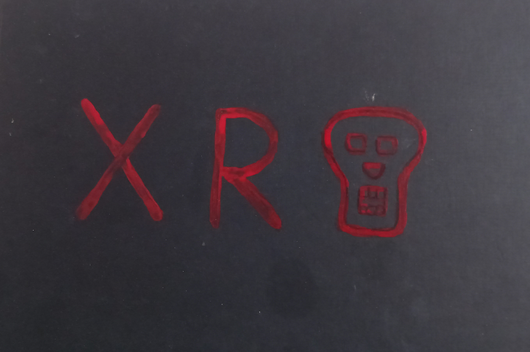
50 A3 drawings black and coloured markers, including:
3 A3 collages on paper with newspaper cutouts and printed photos.
12 A4 drawings on paper with coloured markers, glued on A3 paper + 1 A3 with black ballpoint pen and markers, glued on A3 paper.
13 A3 drawings on paper with black marker, and red, pale blue, gold, pink and orange markers +1 A3 two-sided.
17 A3 drawings on paper with coloured markers.
1 drawing on sketchbook cover with red nail polish.
1 text drawing on sketchbook cover inside.
1 drawing on sketchbook cover back inside with black, orange and gold markers.
22 A4 drawings with ballpoint pen.
62 pocket sketchbook black marker and ballpoint pen drawings.
Some of the above is preparatory work for 4 large prints and 13 paintings. The 12 A4 glued on A3 are preparatory work for a collage on panel.
I made the art between 2023-2024, from the perspective of the observer. Most of the research material came out of crime and fraud reports. I started writing the blog afterwards, since the summer of 2024.
I adopted the visual vocabulary of the graphic novel, which I partly studied and read a lot about, looking at different graphic artists' work, when I was attending classes at the University of Malmo, Sweden, in 2012, to familiarise myself with elements of game design. Much of this work is, amongst other, about children: how they love, amongst other. I wanted to emphasise that element, by intentionally applying stylistic elements from children's drawings, in a naive and loose architectural composition, using heavily the black marker and stick figures. Adopting this visual approach, I also wanted to evoke a comically sharp, but intimate twist, as commentary, in the British tradition of political satire, to the otherwise dark subject matter. Finally, this artistic style refers to the populist character of actors.
The text is written like trip-hop songs: two of the pseudonyms I gave are the artistic names of musicians of colour from the British band "Massive Attack", formed in Bristol. Otherwise, it is loosely structured in a manner inspired by television series. I used heavily popular culture signifiers, names of fictional characters from film, television, music and painting, as reference to actual individuals. Parts of the analysis is inspired by Saul Kripke's interpretation of Wittgenstein's example of mathematical calculation. I used plenty of popular and less popular literary and philosophical references, for the visual art and in the writing.
Saul Aaron Kripke was the inventor of the possible worlds philosophical hypothesis, which was seminal for philosophers working in the area of contemporary analytic metaphysics, including the theory of counterparts and the theory of names. He died in 2022. Lauren Berlant was a cultural theorist and gender studies scholar. She died in 2021. The exposition displays loosely and in lay terms vocabulary as rhetorical devices from analytic metaphysics, as well as gender and romance studies; for instance, I use the word "unactualised" to refer to individuals, who are real and concrete, who exist independently of my mind, however they were not "actualised" in my so-called personal life and dating practices: for that, I would have to select them, in order for them to be "instantiated" in my dating.
The exposition is underpinned by an underlying neo-Marxist interpretation that, in my view, is relevant not just to economists and political philosophers, but also to people working in different sectors of our modern economies of advanced capitalism, such as banking and cybersecurity.
In the style of art, as painting, I was inspired by Jean-Michel Basquiat's drawings and paintings, which are laden with input from popular media sources, like jazz music and television, recorded in an automatic and naive drawing manner, turned into abstracted paintings.
For "Panos" ('Ramadan', 'Julien', "Mr X"), Filip ('Philip'), and Brandon ('Magna') (and Nick) - August, September, and October 2024 (March 1996). For "Daddy G" ('Isaac'), 'Eric' ("Her Man"), 'Prudence' ("'Sharon''s Beau", or "Her Man's alter-ego"), 'Moussa', 'Gaetan'; Black 'Humbert Humbert' meme (and friend), 'Miloud'; Mohammed' ('Onzedouze'), 'Hermando', 'Nesseem' and 'Didi' - December 2024, January 2025, May, June, July, August, September, as well as November to December 2025; again January 2026, with 'Prudence' in Paris. Seven men of colour and seven white men, who were also targeted, directly and indirectly. Who are not politicians, except for a current one and a former one, but are doing something political, so they must take good care of what they do.
All my drawings were stolen in Paris and Brussels, in 2025.
See also exposition "The Loot", under 'Art and Activism Exposed as Research Blog'.
Transmutations: a staged concert / Transmutações: um concerto cênico
(2026)
Pedro Pablo Cámara Toldos
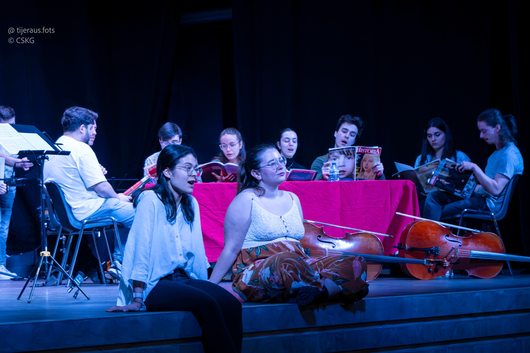
Transmutations seeks to redefine the term transformation through a staged concert — a concert conceived as a work of art in itself.
The traditional concert format and conventional performance practices are showing signs of stagnation, thus calling for the emergence of a voice adapted to this transformation.
The boundaries of music, especially within the classical realm, have gradually blurred in recent times. Increasingly, artists are exploring the concert as a form of expression that not only integrates other artistic disciplines but also embraces technological advancements. This approach challenges traditional aesthetic conventions and the notion of genre and musical style. The omnipresence of technology in contemporary society underlines the need for research that explores the many possibilities of the concert format.
This staged concert aims to redefine the concept of transformation by avoiding any stylistic boundaries. The works of Richard Strauss, John Cage, and Alexander Schubert are included not only for their artistic value but also for their contribution to the very notion of transformation.
recent publications <>
Norths: Navigating Instability By Ear
(2026)
Jorge Boehringer
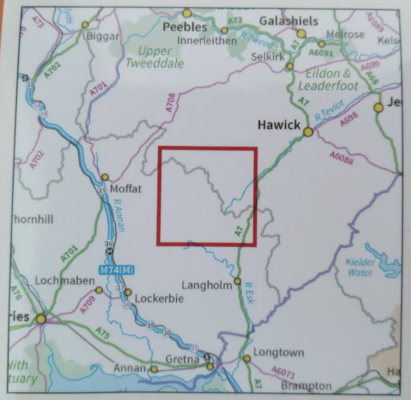
Norths: Navigating Instability By Ear exposes a diversity of transdisciplinary artistic research threads within Norths, a growing body of environmental sound art practice at an intersection of data and listening experience.
By rendering intangible data representations physically perceptible, ‘northness’ - understood as location, place, idea, and fiction - becomes a site for material interrogation of ‘standards’ applied to measurement, perception, being, knowing, and acting. Critical phenomenological and ecological issues emerge from the noise encountered when sonifying (near) real-time seismic and geomagnetic data, as well as data from communication systems.
In the present exposition conceptual corollaries from my experience making, reflecting on, and exhibiting these works are diffracted through language in a project to expose the material propositions of these works themselves. Cross-modulation (feedback) loops established within this exposition connect artistic practice to philosophical-linguistic expression, providing both an explication and an exploratory continuation of my ongoing research practice.
Akustický plenér: zvukoprostorová poslechová zkušenost jako východisko hudební kompozice
(2026)
Slavomír Hořínka
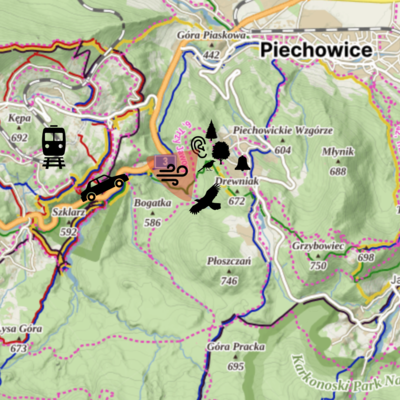
Pětice skladatelů – pedagog, tři studenti a jedna studentka se vydali naslouchat zvukové krajině polského předhůří Krkonoš, aby zkoumali vliv subjektivní percepce na výslednou podobu skladby. Nejdříve zaznamenávali své zvukoprostorové poslechové zkušenosti graficky do skicáků. Vzápětí formulovali tvůrčí záměry skladeb pro komorní ansámbl, které z těchto zkušeností vycházejí. V následujících čtyřech měsících zkomponovali studie s vědomím, že jsou určeny ke studiové realizaci. Kompoziční studie poté sami nahráli a celý proces společně reflektovali. Předložený text vstupuje do kontextu akustické ekologie, instrumentální syntézy a počítačem podporované skladby. Navazuje na kontinuální umělecký výzkum na katedře skladby HAMU v oblasti zvuku a prostoru a tvůrčích aplikací výsledků. Jeho cílem je prozkoumávat vztahy mezi subjektivní zvukoprostorovou zkušeností, volbou kompozičních strategií a výslednou podobou skladby.
Five composers – one teacher and four students – set out to listen to the soundscape of the Polish foothills of the Giant Mountains in order to explore the influence of subjective perception on the final shape of a composition. First, they noted down their sound-spatial listening experiences graphically in sketchbooks. They then formulated creative ideas for chamber ensemble compositions based on these experiences. Over the next four months, they wrote compositional studies with the intention of recording them in the studio. They then recorded the studies themselves and reflected on the entire process together. The presented text enters the context of acoustic ecology, instrumental synthesis, and computer-assisted composition. It builds on continuous artistic research at the Department of Composition at HAMU in the field of sound and space and the creative application of the results. Its goal is to
explore the relationships between subjective sound-spatial experience, the choice of compositional strategies, and the resulting shape of the composition.
Demolish Monsters on the Rocks: Prompting Through an Ensemble
(2026)
bruce gilchrist
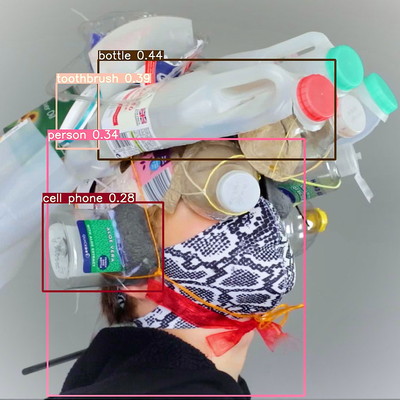
As interaction with corporate artificial intelligence increasingly becomes a precondition for contemporary life, artists need to see beyond Generative AI (GenAI) technology as a discrete tool that makes generic products. Instead, they can imagine combinatorial approaches and conceptual frameworks for AI-enabled artworks. Through my practice-based research, the act of prompting multimodal GenAI models has been informed by comprehending an assemblage as a “framework of instruction” held together through poetic alliances, within which the output from one component feeds the process of another. Practical experiments explored an interrelation of body, text, and predictive technology, where an algorithmic prediction of human action conjured “biometric poetry” that was used to stimulate a language model. Working with archival film footage and digital puppets animated with motion-capture files gave rise to the idea of a camera’s field of view – with its bounded contents acting like a key – eliciting value from a language model in a novel form of story making. Potential erroneous inferences were perceived as a new form of chance operation and a characteristic of algorithmic remix as defined by Steve F. Anderson. This method has been further developed in a project that combines performance, waste material, object recognition, and a language model to explore how the manipulation of garbage can be rationalised by a machine to produce poetic texts as a commentary to action portrayed on a screen.