The Research Catalogue (RC) is a non-commercial, collaboration and publishing platform for artistic research provided by the
Society for Artistic Research. The RC is free to use for artists and
researchers. It
serves also as a backbone for teaching purposes, student assessment, peer review workflows and research funding administration. It strives to be
an open space for experimentation and exchange.
recent activities <>
Creating Cultures of Care
(2026)
Debbie Straver, Marieke Folkers, Gjilke Wytske Keuning, Nina Goedegebure
Nine research groups from HKU, Hanze University of Applied Sciences, Fontys, and Utrecht University of Applied Sciences are joining forces with UvH and UMCU to bring a new perspective on healthcare through the arts, supported by the SIA-SPRONG grant. Using a transdisciplinary approach, this research group and its partners are developing new methods, practices, and scenarios within healthcare and well-being contexts—not for, but with each other.
XRW (Implicature)
(2026)
Zoe Panagiota (aka Betty) Nigianni
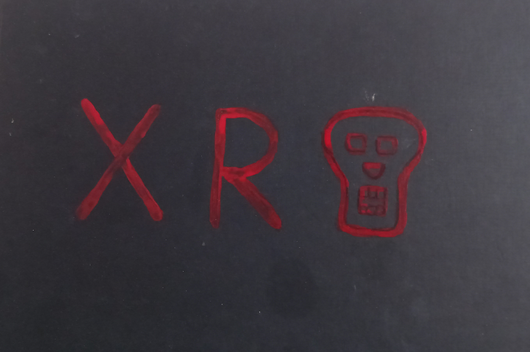
50 A3 drawings black and coloured markers, including:
3 A3 collages on paper with newspaper cutouts and printed photos.
12 A4 drawings on paper with coloured markers, glued on A3 paper + 1 A3 with black ballpoint pen and markers, glued on A3 paper.
13 A3 drawings on paper with black marker, and red, pale blue, gold, pink and orange markers +1 A3 two-sided.
17 A3 drawings on paper with coloured markers.
1 drawing on sketchbook cover with red nail polish.
1 text drawing on sketchbook cover inside.
1 drawing on sketchbook cover back inside with black, orange and gold markers.
22 A4 drawings with ballpoint pen.
62 pocket sketchbook black marker and ballpoint pen drawings.
Some of the above is preparatory work for 4 large prints and 13 paintings. The 12 A4 glued on A3 are preparatory work for a collage on panel.
I made the art between 2023-2024, from the perspective of the observer. Most of the research material came out of crime and fraud reports. I started writing the blog afterwards, since the summer of 2024.
I adopted the visual vocabulary of the graphic novel, which I partly studied and read a lot about, looking at different graphic artists' work, when I was attending classes at the University of Malmo, Sweden, in 2012, to familiarise myself with elements of game design. Much of this work is, amongst other, about children: how they love, amongst other. I wanted to emphasise that element, by intentionally applying stylistic elements from children's drawings, in a naive and loose architectural composition, using heavily the black marker and stick figures. Adopting this visual approach, I also wanted to evoke a comically sharp, but intimate twist, as commentary, in the British tradition of political satire, to the otherwise dark subject matter. Finally, this artistic style refers to the populist character of actors.
The text is written like trip-hop songs: two of the pseudonyms I gave are the artistic names of musicians of colour from the British band "Massive Attack", formed in Bristol. Otherwise, it is loosely structured in a manner inspired by television series. I used heavily popular culture signifiers, names of fictional characters from film, television, music and painting, as reference to actual individuals. Parts of the analysis is inspired by Saul Kripke's interpretation of Wittgenstein's example of mathematical calculation. I used plenty of popular and less popular literary and philosophical references, for the visual art and in the writing.
Saul Aaron Kripke was the inventor of the possible worlds philosophical hypothesis, which was seminal for philosophers working in the area of contemporary analytic metaphysics, including the theory of counterparts and the theory of names. He died in 2022. Lauren Berlant was a cultural theorist and gender studies scholar. She died in 2021. The exposition displays loosely and in lay terms vocabulary as rhetorical devices from analytic metaphysics, as well as gender and romance studies; for instance, I use the word "unactualised" to refer to individuals, who are real and concrete, who exist independently of my mind, however they were not "actualised" in my so-called personal life and dating practices: for that, I would have to select them, in order for them to be "instantiated" in my dating.
The exposition is underpinned by an underlying neo-Marxist interpretation that, in my view, is relevant not just to economists and political philosophers, but also to people working in different sectors of our modern economies of advanced capitalism, such as banking and cybersecurity.
In the style of art, as painting, I was inspired by Jean-Michel Basquiat's drawings and paintings, which are laden with input from popular media sources, like jazz music and television, recorded in an automatic and naive drawing manner, turned into abstracted paintings.
For "Panos" ('Ramadan', 'Julien', "Mr X"), Filip ('Philip'), and Brandon ('Magna') (and Nick) - August, September, and October 2024 (March 1996). For "Daddy G" ('Isaac'), 'Eric' ("Her Man"), 'Prudence' ("'Sharon''s Beau", or "Her Man's alter-ego"), 'Moussa', 'Gaetan'; Black 'Humbert Humbert' meme (and friend), 'Miloud'; Mohammed' ('Onzedouze'), 'Hermando', 'Nesseem' and 'Didi' - December 2024, January 2025, May, June, July, August, September, as well as November to December 2025; again January 2026, with 'Prudence' in Paris. Seven men of colour and seven white men, who were also targeted, directly and indirectly. Who are not politicians, except for a current one and a former one, but are doing something political, so they must take good care of what they do.
All my drawings were stolen in Paris and Brussels, in 2025.
See also exposition "The Loot", under 'Art and Activism Exposed as Research Blog'.
The Ash Sheet
(2026)
Giusirames
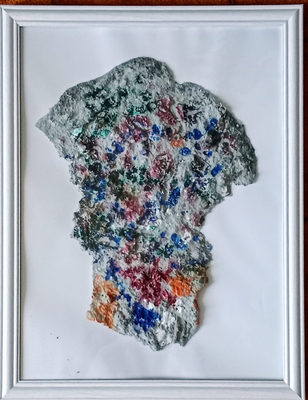
Abstract
This thesis analyzes an original technique based on the transformation of ash into a self-supporting sheet suitable for charcoal drawing. The process, based on the use of sifted ash and powdered wallpaper paste as a binder, generates a lightweight, porous mineral support with a unique tactile quality, similar to a “combustion skin.” The research examines the technical, aesthetic, and conceptual dimensions of the material obtained, placing it in the context of contemporary art and practices that aim to stabilize ephemeral residues. The ash sheet is interpreted as artificial geology, a sediment constructed by the artist, and as a poetic device that intertwines memory, combustion, and rebirth.
recent publications <>
Paths of Artistic Research
(2026)
Silvia Diveky, Monika Šimková
Interviews about where artistic research is heading
The work Paths of artistic research is a collection of interviews with artistic researchers - Andrea Buršová, assistant professor at the Nika Brettschneiderová Dramatic Acting Department, Faculty of Drama, JAMU, Jiří Honzírek, director, manager of the Feste Theatre and PhD student at the Theatre Faculty, JAMU, Barbora Klímová, head of the Studio of Environmental Design at the FFA BUT, Lenka Klodová, head of the Studio of Body Design at the FFA BUT, Lucia Repašská, researcher at the Cabinet for Theatre and Drama Research, Theatre Faculty, JAMU, Hana Slavíková, head of the Studio of Radio and Television Dramaturgy and Scriptwriting, Theatre Faculty, JAMU, Pavel Sterec, artist and former head of the Intermedia Studio at the FFA, BUT, and Lenka Veselová, researcher at the Department of Theory and History of Art at the FFA, BUT and PhD student at the FFA, BUT. These are artists who have been associated with art colleges in Brno, specifically with the Faculty of Fine Arts of the BUT and the Theatre Faculty of the JAMU. Through interviews with the artists, the reader will learn under what circumstances they began to engage in artistic research, how they perceive it, what meanings they attribute to it and the purpose it serves for them. The selected group of artists is very diverse and their creative and research strategies are different, as are the purposes for which they use artistic research. The work does not aim to provide an exhaustive overview of the methods used in artistic research, but it does aim to show that there are many approaches to artistic research and to present the paths that have brought particular artists to artistic research.
Berlin, lava fields, rebellion, street life
(2026)
Ilpo Jauhiainen
This essay examines the challenges of generative AI in composing ‘new’ music. The focus is on the commercial generative AI applications (i.e. AI music generators) due to their prominence in the mainstream cultural and technological discourse. The essay adopts a philosophical rather than a technological approach, situating the use of generative AI in music within a broader societal, cultural, and environmental context. If AI and music (understood as normative practices) are majoritarian, molar, and arborescent entities, then the approach taken here is Deleuzian: minoritarian, molecular, and rhizomatic. By engaging with their fault lines, disassembling and reassembling their structures, and connecting them to the wider world, the essay presents an alternative way of thinking about AI and music – and AI in music – and proposes one such possible application.
Sound, Performance, and Technology: Considering The Foley Grail
(2026)
Sara Pinheiro
Vanessa Theme Ament’s "The Foley Grail" was, for a long time, the only publication to discuss in detail the art of film sound effects (foley). In this issue, we review the third edition of the book while in dialogue with the author herself.