The Research Catalogue (RC) is a non-commercial, collaboration and publishing platform for artistic research provided by the
Society for Artistic Research. The RC is free to use for artists and
researchers. It
serves also as a backbone for teaching purposes, student assessment, peer review workflows and research funding administration. It strives to be
an open space for experimentation and exchange.
recent activities <>
Research Portal of Janacek Academy of Performing Arts in Brno
(2026)
Silvia Diveky, Monika Šimková
Research Portal of Janacek Academy of Performing Arts in Brno
Strangeness
(2026)
Catarina Casais
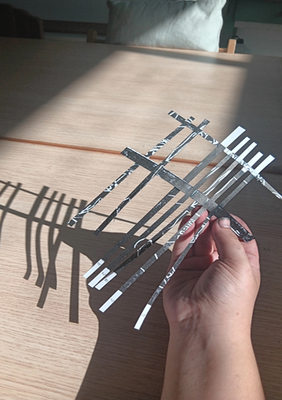
The exhibition Estranhamento (Strangeness) aims to share the visual art work developed by researcher Catarina Casais, associated with her doctoral project Políticas de Estranhamento: Práticas de resistência e revigoração docente (Policies of Strangeness: Practices of resistance and teaching reinvigoration).
These drawings, linocuts and embroideries seek connections between her artistic practice and research work, promoting possibilities for reflection on the teaching profession in the visual arts and the teaching demonstrations that took place between 2020 and 2024. The challenge in developing these works is to think, based on the materiality of the teaching demonstrations, about possible languages through the techniques and materials used. These languages reflect a desire to think about the daily reality of visual arts teachers and the moments of protest related to their professional practice.
Linocut, embroidery and drawing become ways of addressing the issue of visual arts teaching and its politicisation within the school environment, inviting everyone to visit the thinking laboratory that has been developed over the last academic year at Atelier Sem Forma.
La violenza della creazione
(2026)
Xichen Qian
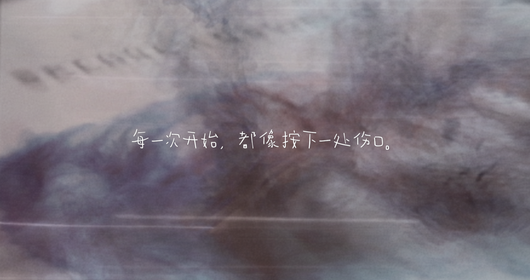
This research explores creation as a form of violence that operates through interruption, erasure, and bodily pressure rather than through visible conflict or aggression.
Through a conference-performance, writing is treated as an unstable action: it begins, stops, fails, and is physically destroyed without revealing its content. The work focuses on moments where creation resists completion, and where decisions to stop, delete, or abandon become central gestures.
By placing the performer behind the audience and withholding textual legibility, the research shifts attention from meaning to process, from narrative to tension. Creation is approached not as expression or inspiration, but as a concrete and irreversible experience that acts upon the body and its limits.
recent publications <
Re-imagining Berio’s Sequenza I for flute solo: Challenging musical interpretation through storytelling and rhetoric models
(2025)
Ann Elkjär
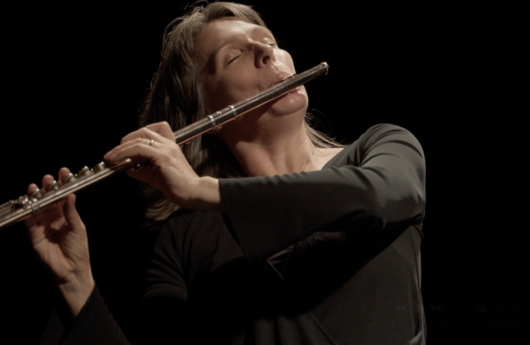
Among classical musicians, there is a tendency to define our profession more by craftsmanship than artistry. In our artworld, we often focus on reproducing: A musical performer becomes a transparent medium for the composer’s supposed intentions (Leech-Wilkinson, 2020, chapter 6). How can we reclaim agency and liberty in the process of shaping music? In this exposition, a storytelling approach is applied to the performance interpretation of Luciano Berio's classic flute solo Sequenza I from 1958, with the aim of becoming a more daring interpreter. The storytelling in focus was recorded in the 1950s, echoing even older times. However, in my explorations, the archival storytelling serves as a tool for reimagining a musical score and creating something new.
Re-imagining @ourdaysofgold_film: Follower Experience, Polyvocality, and Autofiction
(2025)
Assunta Ruocco, Thisbe Nissen, Genevieve Maynard, Frank Abbott, Phil Nunnally
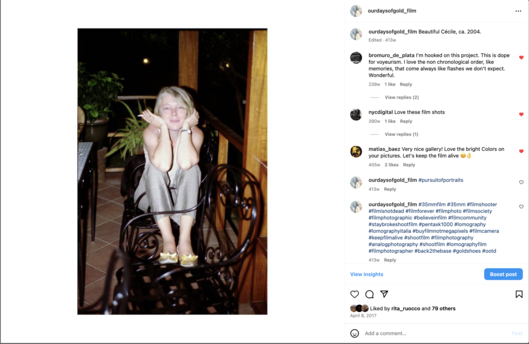
Our Days of Gold (ODOG) is an ongoing, durational artwork staged on Instagram at @ourdaysofgold_film since April 2017. Over its eight-year duration, the work has accumulated new layers of memory and interpretation shaped by followers’ responses, shifting platform aesthetics, and changes to Instagram’s visual logic, including the disappearance of the square grid in January 2025. Alongside creative contributions, the project draws on a survey conducted with long-term followers, tracing how experiences of viewing, remembering, and interpreting the work unfold over time. This co-authored exposition includes videos, screen-recorded navigations, and writing produced by followers whose contributions reveal a form of polyvocality: multiple interpretive threads and associations that remediate the archive while shaping its evolving narrative. Within this distributed process, ODOG engages autofiction not as a singular self-narration but as a collective mode of authorship, emerging through dispersed readings, layered memories, and networked resonances. At the same time, the project foregrounds the precarity of social media archives, where redesigns, algorithmic shifts, and potential platform loss constantly reshape how the work circulates and persists. Drawing on debates around remediation and digital preservation, ODOG tests how meaning, memory, and narrative can be sustained within unstable infrastructures while acknowledging their continual transformation.
Re-enactment as Research, A monologue
(2025)
Clare Bottomley
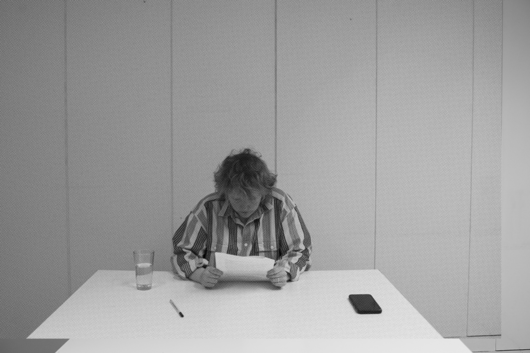
In this half paper, half soliloquy, I aim to propose re-enactment as a research method. Through textual analysis and situated reflections, I will explore the potential of re-enactments in performative returning to destabilize and reconfigure canonical understandings of the past, and consider any implications this understanding of re-enactment can have within research approaches