The Research Catalogue (RC) is a non-commercial, collaboration and publishing platform for artistic research provided by the
Society for Artistic Research. The RC is free to use for artists and
researchers. It
serves also as a backbone for teaching purposes, student assessment, peer review workflows and research funding administration. It strives to be
an open space for experimentation and exchange.
recent activities <>
XRW (Implicature)
(2026)
Zoe Panagiota (aka Betty) Nigianni
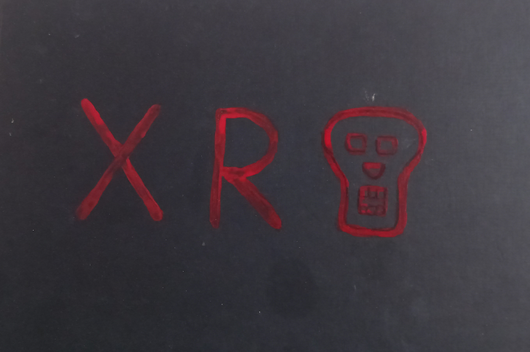
50 A3 drawings black and coloured markers, including:
3 A3 collages on paper with newspaper cutouts and printed photos.
12 A4 drawings on paper with coloured markers, glued on A3 paper + 1 A3 with black ballpoint pen and markers, glued on A3 paper.
13 A3 drawings on paper with black marker, and red, pale blue, gold, pink and orange markers +1 A3 two-sided.
17 A3 drawings on paper with coloured markers.
1 drawing on sketchbook cover with red nail polish.
1 text drawing on sketchbook cover inside.
1 drawing on sketchbook cover back inside with black, orange and gold markers.
22 A4 drawings with ballpoint pen.
62 pocket sketchbook black marker and ballpoint pen drawings.
Some of the above is preparatory work for 4 large prints and 13 paintings. The 12 A4 glued on A3 are preparatory work for a collage on panel.
I made the art between 2023-2024, from the perspective of the observer. Most of the research material came out of crime and fraud reports. I started writing the blog afterwards, since the summer of 2024.
I adopted the visual vocabulary of the graphic novel, which I partly studied and read a lot about, looking at different graphic artists' work, when I was attending classes at the University of Malmo, Sweden, in 2012, to familiarise myself with elements of game design. Much of this work is, amongst other, about children: how they love, amongst other. I wanted to emphasise that element, by intentionally applying stylistic elements from children's drawings, in a naive and loose architectural composition, using heavily the black marker and stick figures. Adopting this visual approach, I also wanted to evoke a comically sharp, but intimate twist, as commentary, in the British tradition of political satire, to the otherwise dark subject matter. Finally, this artistic style refers to the populist character of actors.
The text is written like trip-hop songs: two of the pseudonyms I gave are the artistic names of musicians of colour from the British band "Massive Attack", formed in Bristol. Otherwise, it is loosely structured in a manner inspired by television series. I used heavily popular culture signifiers, names of fictional characters from film, television, music and painting, as reference to actual individuals. Parts of the analysis is inspired by Saul Kripke's interpretation of Wittgenstein's example of mathematical calculation. I used plenty of popular and less popular literary and philosophical references, for the visual art and in the writing.
Saul Aaron Kripke was the inventor of the possible worlds philosophical hypothesis, which was seminal for philosophers working in the area of contemporary analytic metaphysics, including the theory of counterparts and the theory of names. He died in 2022. Lauren Berlant was a cultural theorist and gender studies scholar. She died in 2021. The exposition displays loosely and in lay terms vocabulary as rhetorical devices from analytic metaphysics, as well as gender and romance studies; for instance, I use the word "unactualised" to refer to individuals, who are real and concrete, who exist independently of my mind, however they were not "actualised" in my so-called personal life and dating practices: for that, I would have to select them, in order for them to be "instantiated" in my dating.
The exposition is underpinned by an underlying neo-Marxist interpretation that, in my view, is relevant not just to economists and political philosophers, but also to people working in different sectors of our modern economies of advanced capitalism, such as banking and cybersecurity.
In the style of art, as painting, I was inspired by Jean-Michel Basquiat's drawings and paintings, which are laden with input from popular media sources, like jazz music and television, recorded in an automatic and naive drawing manner, turned into abstracted paintings.
For "Panos" ('Ramadan', 'Julien', "Mr X"), Filip ('Philip'), and Brandon ('Magna') (and Nick) - August, September, and October 2024 (March 1996). For "Daddy G" ('Isaac'), 'Eric' ("Her Man"), 'Prudence' ("'Sharon''s Beau", or "Her Man's alter-ego"), 'Moussa', 'Gaetan'; Black 'Humbert Humbert' meme (and friend), 'Miloud'; Mohammed' ('Onzedouze'), 'Hermando', 'Nesseem' and 'Didi' - December 2024, January 2025, May, June, July, August, September, as well as November to December 2025; again January 2026, with 'Prudence' in Paris. Seven men of colour and seven white men, who were also targeted, directly and indirectly. Who are not politicians, except for a current one and a former one, but are doing something political, so they must take good care of what they do.
All my drawings were stolen in Paris and Brussels, in 2025.
See also exposition "The Loot", under 'Art and Activism Exposed as Research Blog'.
The Ash Sheet
(2026)
Giusirames

Abstract
This thesis analyzes an original technique based on the transformation of ash into a self-supporting sheet suitable for charcoal drawing. The process, based on the use of sifted ash and powdered wallpaper paste as a binder, generates a lightweight, porous mineral support with a unique tactile quality, similar to a “combustion skin.” The research examines the technical, aesthetic, and conceptual dimensions of the material obtained, placing it in the context of contemporary art and practices that aim to stabilize ephemeral residues. The ash sheet is interpreted as artificial geology, a sediment constructed by the artist, and as a poetic device that intertwines memory, combustion, and rebirth.
THE SOUL AND BODY OF PAINTING
(2026)
Giusirames
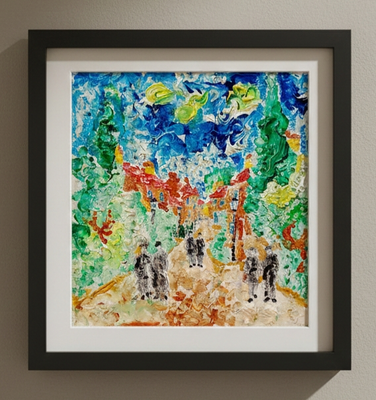
This research stems from the need to give theoretical, methodological, and poetic form to a practice that has developed over time through intuitive experimentation, phenomenological observations, and a direct relationship with the material. The aim of this thesis is to define, analyze, and formalize a new painting technique based on a reactive mixture and a vortex modeling gesture, a technique that is not limited to using heterogeneous materials, but generates real visual phenomena: currents, stratifications, turbulence, figurative emergences.
This technique arises from the encounter between everyday materials—malleable glue, transparent glue, toothpaste, Amuchina hand sanitizer, and pigments—and a specific gesture: the rotation of a cut brush that does not spread the color but sets it in motion, forcing it to react, organize itself, and take shape. This gesture is complemented by a final incision, made with a small object, which does not draw but frees the figure from the material, as if it emerged spontaneously from a dynamic field.
The resulting painting is not representation but event. It does not describe a subject: it lets it happen.
recent publications <>
Erased Museums – Destroyed Collections as Conceptual Inheritance
(2025)
Dorian Vale
This essay proposes the “Erased Museum” as both a critical framework and an institutional ethics: a museum that recognizes loss as its primary collection and disappearance as a mode of curation. Drawing from Absential Aesthetics, it argues that destruction—by fire, flood, war, neglect, theft, or obsolescence—does not terminate cultural meaning but reorganizes it into a second, invisible archive composed of voids, residues, and public conscience. Through case studies and touchstones including the Library of Alexandria, Brazil’s National Museum (2018), the Mosul Museum (2015), and architectural and curatorial practices that preserve wounds rather than conceal them (e.g., post-damage restorations and void-centered memorial architectures), the essay reframes conservation as a dialogue with entropy rather than a fantasy of permanence. It also traces contemporary artistic strategies that curate absence directly—fabricated archives, missing inventories, empty frames, restitution bureaucracies—showing how loss can become documentation rather than mere lament. The work concludes by extending the ethics of disappearance to the digital domain, where decay occurs without smoke, and by proposing “transparent loss protocols” as a future-facing curatorial responsibility.
Reinventing Regietheater: The Actor-Director Relation in Rehearsals
(2025)
Johannes Maria Schmit
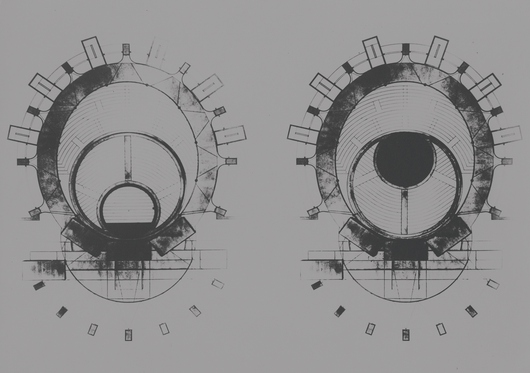
This thesis, (Documented Artistic Research Project (Doctoral Thesis)), investigates the crisis of Regie (i.e. of the agency of directing) in a post-#MeToo landscape. It argues that the outset of this crisis lies in an expansionist gesture – rooted in the avant-gardist ambition to merge art and life – by which directors have conflated artistic mandate with managerial control; a gesture culminating in the toxic institutional cultures painfully exposed during the last decade. Starting from this point of no return, the thesis examines the question of how to acknowledge the fact of directorial power abuse without cutting our practices off from the potential – or even the necessity – of directorial agency as such. Its title “Reinventing Regietheater” thus carries the tension between a historical form of theater (generally known as “directors’ theater”) and a yet-to-be-found future expression.
Conceived as artistic research, the discrete focus of the thesis is the rehearsal space and its confines. Within the micro-scale of the latter, the crisis of Regie reverberates first and foremost in the non-foreseeable instances of the actor-director interaction; namely in the increasing scrutiny applied to the tool of improvisation. In contrast to the prevailing strategy of eroding the rehearsal space’s symbolic boundaries (in the interest of directorial accountability), the thesis conceptualizes – practically as well as theoretically – a “Space of Rehearsals” as a heteronomous zone of safe but ecstatic play. This “Space of Rehearsals” is constructed through a rehearsal method informed by the psychoanalytic concept of transference as well as the interaction framework “Wheel of Consent”.
To answer its main questions, the thesis presents a “written part” as well as a set of “online resources” containing the documentation and “re-stagings” of the practical experiments. Four “books of Regie” present methodological reflections, a critical genealogy of a theater of directing (based on the author’s symptomatic practice) as well as the central concepts. Three so-called “Pre-studies”, devised through practical work with professional actors/collaborators form the empirical basis of the thesis, sketching out different possibilities for the actor-director relation in a re-invented Regietheater.
In the proposition resulting from the above, directorial agency does not necessarily sit with the director. Nevertheless, the disciplinary divide between actor and director is upheld; as well as the radical asymmetry in the distribution of authorial power, albeit in temporally limited and co-curated iterations. The main argument of the thesis is thus that the artistic potential of the historical form of Regietheater can be salvaged without taking a revanchist or revisionist stance: the idiosyncratic directorial agency known as Regie has its place in consent-based rehearsal settings.
The zoo: A mise-en-scène
(2025)
Jocelyn Michel Janon
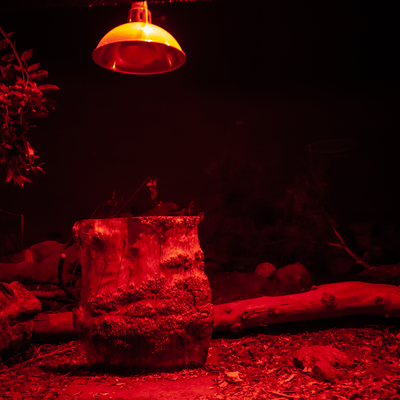
The zoo is not a neutral site of animal display but a meticulously curated mise en scène where scenography dictates perception.
This exposition reframes the zoological garden as a dispositif of control, foregrounding fabricated rock formations, artificial lighting, and concealed barriers as theatrical devices.
Through square format photographic series that exclude animals, the work exposes the zoo’s fragmented geographies as staged spectacles designed for human imagination rather than ecological integrity.
The project interrogates authorship, agency, and representation, inviting viewers to reconsider the zoo as a cultural theatre of estrangement and illusion.