The Research Catalogue (RC) is a non-commercial, collaboration and publishing platform for artistic research provided by the
Society for Artistic Research. The RC is free to use for artists and
researchers. It
serves also as a backbone for teaching purposes, student assessment, peer review workflows and research funding administration. It strives to be
an open space for experimentation and exchange.
recent activities <
Material for Gifts from the Sentient Forest
(2025)
Annette Arlander
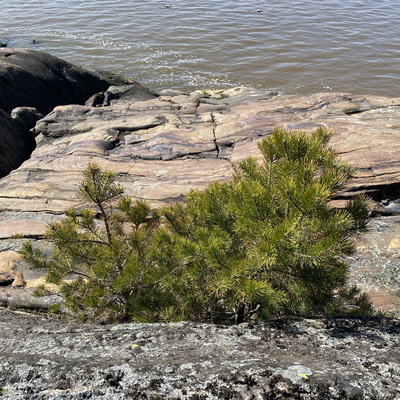
This page is under construction
It contains material created for and in the context of the research project Gifts from the Sentient Forest at the University of Lapland. See https://www.sentientforestproject.com
WITHDRAWING THE PERFORMER
(2025)
Charlotta Ruth, Jasmin Schaitl

WITHDRAWING THE PERFORMER
WITHDRAWING THE PERFORMER is conceptualized and conducted collaboratively by Charlotta Ruth (SE/AT) and Jasmin Schaitl (AT). The starting point are two artistic practices based on methods of mindfulness and game/play; Performances for the Mind and Choreographic Clues. These two individual perspectives on participation emerge from the project leaders’ ongoing artistic research and merge in their common artistic curiosity in the facilitator role and facilitating the creation of immaterial material. Accompanied by neuroscientist and performer Imani Rameses (US/AT) the research asks:
How does immaterial material perform within participatory situations?
What role does participatory setting play and how does participation differ if situations are communicated as a workshop, a treatment, a practice or a performance?
How can neuroscience support how immaterial and participatory art practices are developed and described?
What relation exists beyond involvement and how can a participant become the situation rather than being part of a situation? What has to occur in the mind and body for this to happen?
Through practice and dialogue conducted with experts in the fields of contemplative sciences, sound art, choreography, game art and somatics, the research explores how input from participants (e.g. memory, thought, emotion) can be placed at the centre of a flexible yet framed performance situation.
WITHDRAWING THE PERFORMER was realised in collaboration with the Angewandte Performance Laboratory 2021-2022.
In the course of the project, a lecture was given at the Center for Didactics of Art and Interdisciplinary Education, and a public series was realised at Kunsthalle, Wien & Angewandte Performance Lab.
Collaborating expert practitioners and dialogue partners are: Philipp Ehmann (AT), Nikolaus Gansterer (AT), Mariella Greil (AT), Dennis Johnson (US/AT), Anne Juren (FR/AT), Krõõt Juurak (EE/AT), Imani Rameses (US/AT), Christian Schröder (AT), Lucie Strecker (DE/AT).
"Esparto, approached"; Field insights on resisting disposability
(2025)
Pilar Miralles
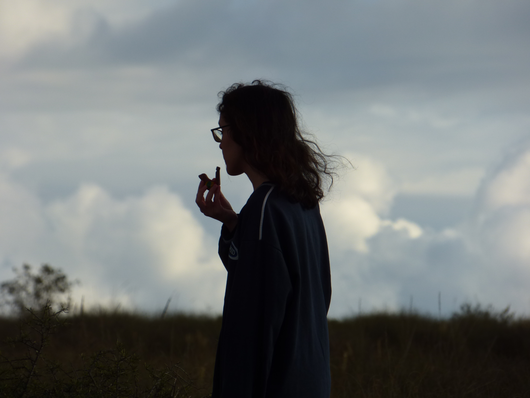
In this exposition, I discuss the multimedia installation "Esparto, approached", to which I opened doors last May 10th, 2025, in Organo Hall, Helsinki Music Center. "Esparto, approached" is the first of a series of three installations representing the artistic component of my doctoral degree at the Sibelius Academy, Uniarts Helsinki. The research project in which this installation is contextualized is currently titled "Listening through remembrance: An autoethnography of presence in the age of disposability". In this artistic research, the notions of listening, remembering, and presence-making are interwoven in an attempt to understand how we confer meaning and value on things despite our embeddedness in a world of disposable nature, where things are susceptible to being quickly discarded, replaced, and, therefore, forgotten.
This exposition opens up a space of reflection in the aftermath of "Esparto, approached". The installation represented a collective recall of the field practice that led me to search for signs of durability in abandoned contexts of my homeland in rural Southeastern Spain. This exposition poses the following questions about it: What happened? (Description); What does "what happened" mean? (Analysis); And, how does "what happened" keep happening now? (Further becomings). The objective of creating an online exposition right after the event is to open a window to the reflective process of this investigation before its completion, thus making visible its traces. The process itself is therefore turned into an accessible outcome that manifests the continual nature of the project as a whole.
recent publications <>
Demolish Monsters on the Rocks: Prompting Through an Ensemble
(2026)
bruce gilchrist
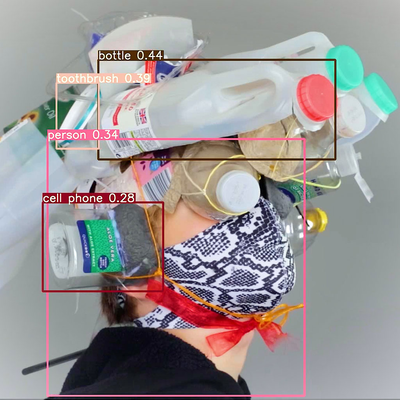
As interaction with corporate artificial intelligence increasingly becomes a precondition for contemporary life, artists need to see beyond Generative AI (GenAI) technology as a discrete tool that makes generic products. Instead, they can imagine combinatorial approaches and conceptual frameworks for AI-enabled artworks. Through my practice-based research, the act of prompting multimodal GenAI models has been informed by comprehending an assemblage as a “framework of instruction” held together through poetic alliances, within which the output from one component feeds the process of another. Practical experiments explored an interrelation of body, text, and predictive technology, where an algorithmic prediction of human action conjured “biometric poetry” that was used to stimulate a language model. Working with archival film footage and digital puppets animated with motion-capture files gave rise to the idea of a camera’s field of view – with its bounded contents acting like a key – eliciting value from a language model in a novel form of story making. Potential erroneous inferences were perceived as a new form of chance operation and a characteristic of algorithmic remix as defined by Steve F. Anderson. This method has been further developed in a project that combines performance, waste material, object recognition, and a language model to explore how the manipulation of garbage can be rationalised by a machine to produce poetic texts as a commentary to action portrayed on a screen.
In Sync With A Machine
(2026)
Ilja Mirsky, Leonid Berov, Gunter Loesel
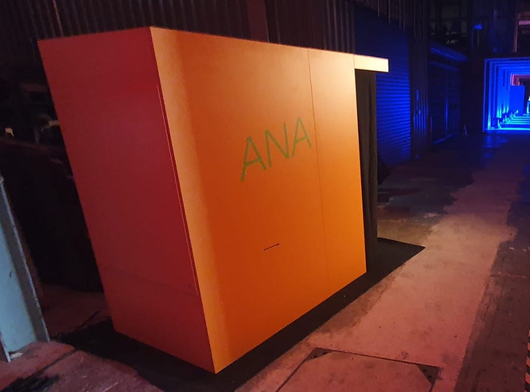
This paper delves into the dynamics and dramaturgical specifications of ANA, a theatrical installation engineered for co-creating narratives in a dialogic process with individual users. ANA embodies a collaborative storytelling environment that is used to communicate narrative and emotional information through multiple modalities, thereby bringing into focus an unexpectedly human essence in a human-machine interaction. Integrating GPT-4, emotion-recognition algorithms and a simulation of its own affective state, ANA engages users in a 10-minute interaction, fostering an immersive narrative exchange where the affective dimension of collaborative storytelling takes precedence. This paper explores the specific challenges of prompt design in this setting, focusing on the concept of emotional attuning, the feeling of being “in sync” with a machine throughout the interaction. Through an analytical lens encompassing cognitive science, philosophy of mind, and prompting techniques, the authors describe and reflect practices of employing multimodal sensorial data such as emotion recognition, and dramatic considerations, into the process of designing prompts. They also describe and reflect on their attempts to establish a form of meta-communication with the machine about the emotional aspects of the experience. By focusing on dramaturgical and improvisational strategies, this paper underscores the pivotal significance of emotional attunement and multimodal communication in fostering intimate technological engagement.
AI gave me an assignment, and I did it. Now what?
(2026)
Brett Ascarelli
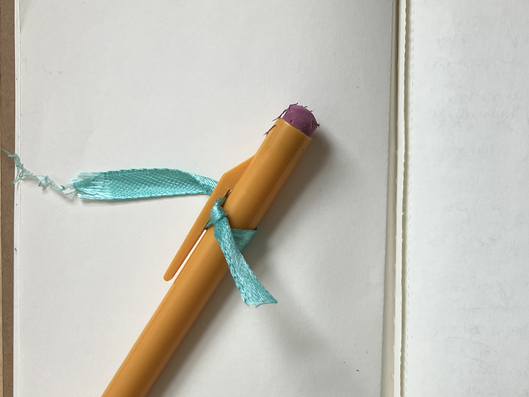
How useful can AI be at this present moment to generate assignments or instructions to teach and train people to live more playful, creative and ethical lives? In this artistic research, I try to put aside fears of a dystopian future in which runaway AI assumes control over humanity, and suspend them long enough to play with the idea of reversing the usual dynamic: what if AI were to instruct us, instead of us instructing AI? What kind of positive outcomes could emerge? I borrow from traditions of instruction art and avant-garde art, and I employ discursive practices that alternate between techno-enthusiastic and techno-skeptical. The AI tool ChatGPT and I hold conversations in which we explore the research question together, and in which I prompt ChatGPT to issue me instructions, then I describe the process and result of executing the instructions.