The Research Catalogue (RC) is a non-commercial, collaboration and publishing platform for artistic research provided by the
Society for Artistic Research. The RC is free to use for artists and
researchers. It
serves also as a backbone for teaching purposes, student assessment, peer review workflows and research funding administration. It strives to be
an open space for experimentation and exchange.
recent activities <>
The Ash Sheet
(2026)
Giusirames
Abstract
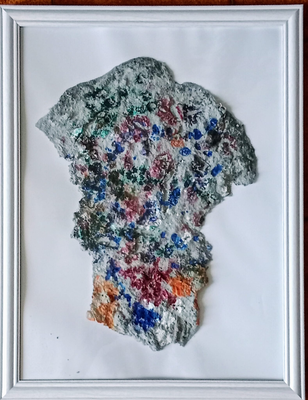
This thesis analyzes an original technique based on the transformation of ash into a self-supporting sheet suitable for charcoal drawing. The process, based on the use of sifted ash and powdered wallpaper paste as a binder, generates a lightweight, porous mineral support with a unique tactile quality, similar to a “combustion skin.” The research examines the technical, aesthetic, and conceptual dimensions of the material obtained, placing it in the context of contemporary art and practices that aim to stabilize ephemeral residues. The ash sheet is interpreted as artificial geology, a sediment constructed by the artist, and as a poetic device that intertwines memory, combustion, and rebirth.
THE SOUL AND BODY OF PAINTING
(2026)
Giusirames
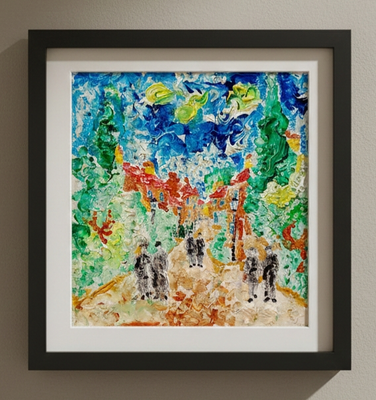
This research stems from the need to give theoretical, methodological, and poetic form to a practice that has developed over time through intuitive experimentation, phenomenological observations, and a direct relationship with the material. The aim of this thesis is to define, analyze, and formalize a new painting technique based on a reactive mixture and a vortex modeling gesture, a technique that is not limited to using heterogeneous materials, but generates real visual phenomena: currents, stratifications, turbulence, figurative emergences.
This technique arises from the encounter between everyday materials—malleable glue, transparent glue, toothpaste, Amuchina hand sanitizer, and pigments—and a specific gesture: the rotation of a cut brush that does not spread the color but sets it in motion, forcing it to react, organize itself, and take shape. This gesture is complemented by a final incision, made with a small object, which does not draw but frees the figure from the material, as if it emerged spontaneously from a dynamic field.
The resulting painting is not representation but event. It does not describe a subject: it lets it happen.
Glass Cities : Venice Revisited
(2026)
Zoe Panagiota (aka Betty) Nigianni

The exposition includes reworked video excerpt from the 'Glass Cities' two hour-long video art installation, with film footage and photography from three different cities, London, Athens and Venice. The original work was created for Elica's live music performance, shown at the Small Music Theatre, Athens, Greece, in 2007.
The aim of the process of making the video art was to remain and explore the surface of things when addressing historical changes. I used banal and seemingly unconnected photographic and digital film footage for this purpose and effect. The 'lure' is the film still: neither photograph, nor film, a notion that has been inadequately theorised in visual art history and theory.
Following a historical materialist approach, I employ the artistic theme of dead cities. Venice is a dead city in the visual arts modernist tradition. A dead city is a city that fails to change. Venice is actually slowly sinking, because it can't manage the rising water levels. In this context, I briefly trace Venice's economic history of the flourishing academic arts in the Baroque period, its Murano glass industry evocative of the ancient arts and crafts, and its inevitable re-invigoration by virtue of the Venice Biennale, the well-known international art and architectural exhibition.
I named the original video art after John Smith's experimental documentary about London 'Slow Glass' (1988-91). In the film, one of the narrators describes the liquid composition of glass - "even when it's hard, it's still a liquid" - which is a metaphor for the process of change.
Since I made the video installation, but also this exposition, I found out that my ancestor, a great grandfather, who was originally from Italy, might have been an Italian Jew and that this might have been the reason he left Italy in the nineteenth century to travel to and settle in my native Greece. Because the exposition is about collective history and collective consciousness, the research video could be taken as a reminder of the factual, global rise of antisemitism in the twenty-first century; in Italy represented by the extreme right-wing, neofascist political group Forza Nuova. The country that has seen the most prominent rise in antisemitic ideology is the United States of America.
recent publications <>
VEDEN LAKI - uudistavaa taiteilijapedagogiikkaa hahmottamassa
(2025)
Sara Elina Ilveskorpi
Below in English
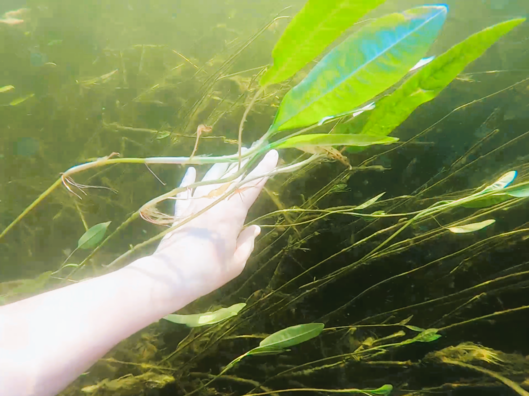
Ekspositio pyrkii vastaamaan tarpeeseen uudistavan kasvatuksen (regenerative education) tavoitteissa taiteilijapedagogisesta lähtökohdasta. Ekspositio pohjautuu paikkasidonnaiseen interventioon ja kuvailee taiteilijapedagogisen oppimisprosessin. Ekspositio tunnustelee taiteilijapedagogiikan suhdetta ekologisiin kysymyksiin kestävyysajatteluun sitoutuneen taiteilijapraktiikan ja taidepedagogian solmukohdassa. Kirjoittaja arvioi vahvan kestävyyden käsitteen avulla, millaisia ristiriitoja kestävyysajattelun ja oman praktiikan välille ilmaantuu interventioprosessin aikana, ja millaiset olosuhteet johtavat konflikteihin. Ekspositio tarkastelee aihetta ”myötäsyntyisen” metodin avulla yhdistäen taiteellista, agroekologista ja posthumanistista tutkimusta poikkitieteisesti. Päälöydöksenä on, että uudistavan kasvatuksen tavoitteet sotkeutuvat yhteiskunnan odotuksiin, päämääriin ja moraalikäsityksiin. Tämä johtaa neuvotteluun kestävyysajatteluun sitoutuneen taiteilijapraktiikan arvoissa suhteessa taiteilijapedagogiseen toimintaan. Kirjoittaja väittää, että taiteellisessa työssä ei ole erivapautta toimia ekologisesti kestämättömällä tavalla, koska taide on yhtä riippuvaista ekologisista suhteista kuin muukin elo. Hän väittää, että vahvan kestävyyden käsitteeseen sitoutumalla on mahdollista perustaa uusia arvostamisen paikkoja ja kehittää uudistavaa pedagogiikkaa.
The exposition aims to meet the need for the aspiration of regenerative education from an artist pedagogical practice. The exposition is based on a place-specific intervention and outlines the artist pedagogical learning process. The exposition explores the relationship of artist pedagogy to ecological issues. Exploration happens at the intersection of artist practice committed to sustainability thinking and art pedagogy. Reflecting the concept of strong sustainability, the author assesses what kind of contradictions between sustainability thinking and one’s own practice emerge, and what kind of circumstances lead to conflicts. The exposition takes place with “innate” method, combining artistic, agroecological and posthumanist research in an interdisciplinary manner. The main finding is that the goals of regenerative education are entangled with the expectations, goals and moral concepts of society. This accompanies a negotiation of the values of artist practice committed to sustainability thinking. Negotiation takes place in relation to artist pedagogical activity. The author argues that there is no waiver to act in an ecologically unsustainable manner in art practice, because art is as dependent on ecological relationships as any other concept of life. She argues that by committing to a concept of strong sustainability, it is possible to establish new places of appreciation and develop innovative pedagogies.
Taiteellisen duodjitutkimuksen tiloissa: LaavuStudio pedagogisena ja taiteellisena kokeiluna
(2025)
Outi Maarit Saara Magga
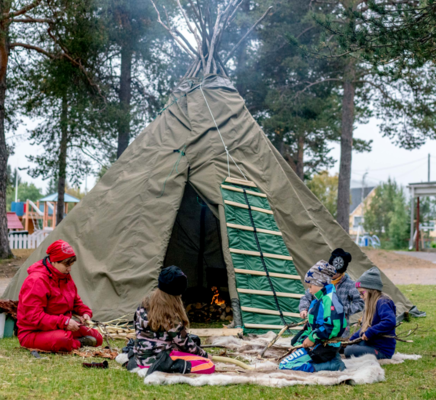
Duodji refers to Sámi handicrafts and design. I reflect on the knowledge base of duodji thinking, how duodji is learned within the community, and how I have developed the teaching and research of duodji according to the principles of duodji and art. I also contemplate the essence and presentation of duodji in public spaces through the pedagogical-artistic practice, LaavuStudio."
Sharing (in) the Lab: Artistic research in Higher Music Education
(2025)
Halla Steinunn Stefánsdóttir, Ann Elkjär, Markus Tullberg, Stefan Östersjö
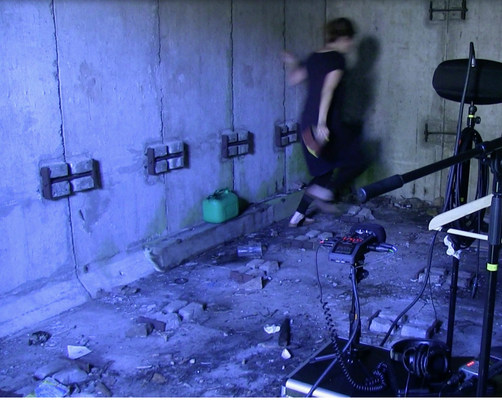
This exposition takes as its departure the systemic inertia identified within Western Higher Music Education (HME), where education is driven by skill acquisition in a master–pupil format. Such approaches may hinder the growth of adaptable and reflective musicians. We propose an alternative: student-centred learning inspired by artistic research methods. To explicate this, we draw on findings through our own artistic research practices. Our hypothesis is that the model of the artistic, embodied research laboratory, as developed within the field of artistic research, may serve as a potent tool for renewal. By analysing our work as artist-researchers and educators, this exposition offers insights that support rethinking both institutional structures and pedagogical approaches in HME. Our aim is to strengthen student agency in learning situations and set them off on a path of lifelong learning. This research demonstrates that artistic research laboratories can provide practical frameworks for transforming HME pedagogy, offering educators concrete methods for fostering playful, inclusive, and sustainable learning environments whilst empowering students as active agents in their musical development.