The Research Catalogue (RC) is a non-commercial, collaboration and publishing platform for artistic research provided by the
Society for Artistic Research. The RC is free to use for artists and
researchers. It
serves also as a backbone for teaching purposes, student assessment, peer review workflows and research funding administration. It strives to be
an open space for experimentation and exchange.
recent activities <>
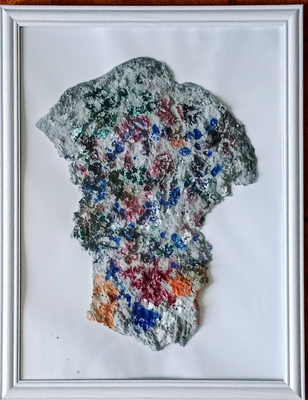
The Ash Sheet
(2026)
Giusirames
Abstract
This thesis analyzes an original technique based on the transformation of ash into a self-supporting sheet suitable for charcoal drawing. The process, based on the use of sifted ash and powdered wallpaper paste as a binder, generates a lightweight, porous mineral support with a unique tactile quality, similar to a “combustion skin.” The research examines the technical, aesthetic, and conceptual dimensions of the material obtained, placing it in the context of contemporary art and practices that aim to stabilize ephemeral residues. The ash sheet is interpreted as artificial geology, a sediment constructed by the artist, and as a poetic device that intertwines memory, combustion, and rebirth.
THE SOUL AND BODY OF PAINTING
(2026)
Giusirames
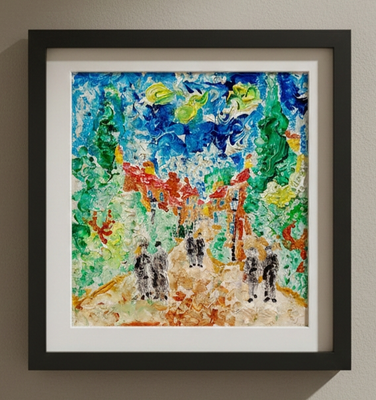
This research stems from the need to give theoretical, methodological, and poetic form to a practice that has developed over time through intuitive experimentation, phenomenological observations, and a direct relationship with the material. The aim of this thesis is to define, analyze, and formalize a new painting technique based on a reactive mixture and a vortex modeling gesture, a technique that is not limited to using heterogeneous materials, but generates real visual phenomena: currents, stratifications, turbulence, figurative emergences.
This technique arises from the encounter between everyday materials—malleable glue, transparent glue, toothpaste, Amuchina hand sanitizer, and pigments—and a specific gesture: the rotation of a cut brush that does not spread the color but sets it in motion, forcing it to react, organize itself, and take shape. This gesture is complemented by a final incision, made with a small object, which does not draw but frees the figure from the material, as if it emerged spontaneously from a dynamic field.
The resulting painting is not representation but event. It does not describe a subject: it lets it happen.
Glass Cities : Venice Revisited
(2026)
Zoe Panagiota (aka Betty) Nigianni

The exposition includes reworked video excerpt from the 'Glass Cities' two hour-long video art installation, with film footage and photography from three different cities, London, Athens and Venice. The original work was created for Elica's live music performance, shown at the Small Music Theatre, Athens, Greece, in 2007.
The aim of the process of making the video art was to remain and explore the surface of things when addressing historical changes. I used banal and seemingly unconnected photographic and digital film footage for this purpose and effect. The 'lure' is the film still: neither photograph, nor film, a notion that has been inadequately theorised in visual art history and theory.
Following a historical materialist approach, I employ the artistic theme of dead cities. Venice is a dead city in the visual arts modernist tradition. A dead city is a city that fails to change. Venice is actually slowly sinking, because it can't manage the rising water levels. In this context, I briefly trace Venice's economic history of the flourishing academic arts in the Baroque period, its Murano glass industry evocative of the ancient arts and crafts, and its inevitable re-invigoration by virtue of the Venice Biennale, the well-known international art and architectural exhibition.
I named the original video art after John Smith's experimental documentary about London 'Slow Glass' (1988-91). In the film, one of the narrators describes the liquid composition of glass - "even when it's hard, it's still a liquid" - which is a metaphor for the process of change.
Since I made the video installation, but also this exposition, I found out that my ancestor, a great grandfather, who was originally from Italy, might have been an Italian Jew and that this might have been the reason he left Italy in the nineteenth century to travel to and settle in my native Greece. Because the exposition is about collective history and collective consciousness, the research video could be taken as a reminder of the factual, global rise of antisemitism in the twenty-first century; in Italy represented by the extreme right-wing, neofascist political group Forza Nuova. The country that has seen the most prominent rise in antisemitic ideology is the United States of America.
recent publications <>
Uncovering an Occupational Folklore of Ceramics: Small Stories Found in the Spaces Between Word, Gesture and Clay
(2025)
Natasha Mayo, Kim Norton, Sam Lucas
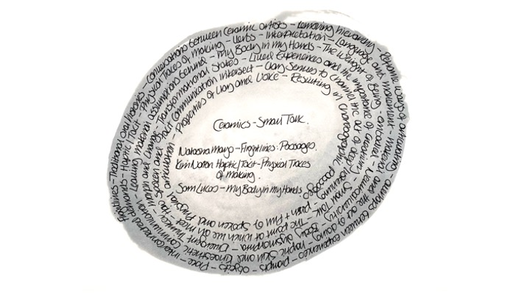
The term ‘Occupational Folklore’ refers to the social expressions of people, linked to the work that they do. This exposition explores the possibility of there being a common language of clay, a vernacular that can be used to story-tell, and how stories arise from the studio, from the intersection of making, thinking/talking and clay.
Comprising three discrete projects, we move from a study of the materiality of voice to establishing a vocabulary of clay to a narrative collection of embodied experiences. Their combined knowledge leads to a fourth project, in the form of conversations held whilst making around a studio table. Passages from the exchange are filmed and analysed from the perspective of ‘small stories’, an oral history methodology that gives focus to the speculative, iterative and nuanced decisions often overlooked in a conventional account of a conversation. When applied to the making process, it begins to uncover a deeper understanding of the processual and implicit decisions that take place through the interaction of making, thinking and material properties. The passages allow us to witness the very emergence of storytelling taking place, the moment at which life experiences intersect with formations in clay.
The aim of collecting all four projects together is not simply to document examples but, as with all modes of folklore, to use story to identify and share more resilient and connected ways of being in the world. Within these intersections lie the porous and mutable properties of clay practice, that are rapidly redefining the wider field of ceramics in terms of its social contribution. Contained within these social expressions of clay lies its ability to connect with and contribute to wider community and environmental issues. The term occupational folklore is used in recognition of the historic continuity of behaviours, actions and beliefs that arise from these interactions, if only we shift our focus from individual attainments to the collective knowledge and transferable learning these small stories contain.
Troubling the Ideal Landscape A Visual Narrative
(2025)
Ilaria Biotti
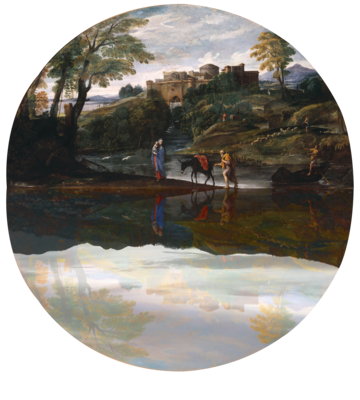
Troubling the Ideal Landscape – A Visual Narrative critically examines possible intersections between imagination and physical landscape. Through a practice-based approach, this exposition explores the composition and decomposition of ideal landscapes, with a focus on Cannero Riviera, a small Italian village. Grounded in my doctoral research at PhDArts, a collaboration between ACPA, Leiden University, and the Royal Academy of Art in The Hague, the project employs spatial montage as both a methodological tool and an artistic outcome.
By fragmenting the landscape into moving images, I seek to disrupt conventional visual regimes and reflect on the ideological forces shaping the village and its environment. This approach is informed by Aby Warburg's Mnemosyne Atlas, where fragmented images form unstable constellations that navigate multiple meanings, temporalities, and spaces. Engaging with Warburg’s method, I question crystallised, linear visualisations of the ideal, focusing on dynamic processes of spatial composition.
The exposition aims to reframe landscape imagery not as a passive backdrop, but as an active force. It proposes a model of the ideal landscape that resists linearity, embracing a complex, shifting narrative that questions the visual regimes through which contemporary imaginaries of place are constructed.
The Antonioni House: Sensory-Temporal Architecture
(2025)
Peter Spence
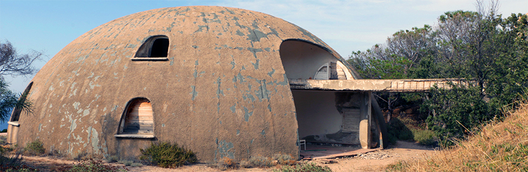
In this paper I propose to re-visit the outcome of a research trip I made a few years ago to the island of Sardinia in order to capture stills and video of a dilapidated villa, La Cupola, once belonging to the Italian filmmaker Michelangelo Antonioni. The research output took the form of an essay video using a film studies methodology to critically re-assess Antonioni’s classic 1960 film L’Avventura. The research took the form of what I would term an occularcentric-cognitive approach whereby my analysis was based primarily on my visual interpretation of the villa. My mental image of La Cupola on first hearing about it was replaced by the online image in my research process, which in turn was replaced by the real image when I arrived at the site, and ultimately by the mediated images of my audio-visual essay. But what wasn’t included in this original research was an unexpected opportunity to enter inside La Cupola, which I retrospectively realised offered an entirely new understanding of the space. With reference to both film and architectural theory, this paper will seek to understand my encounter with the villa according to a primarily sensory and embodied interpretation rather than a sighted one.