The Research Catalogue (RC) is a non-commercial, collaboration and publishing platform for artistic research provided by the
Society for Artistic Research. The RC is free to use for artists and
researchers. It
serves also as a backbone for teaching purposes, student assessment, peer review workflows and research funding administration. It strives to be
an open space for experimentation and exchange.
recent activities <>
The Ash Sheet
(2026)
Giusirames
Abstract
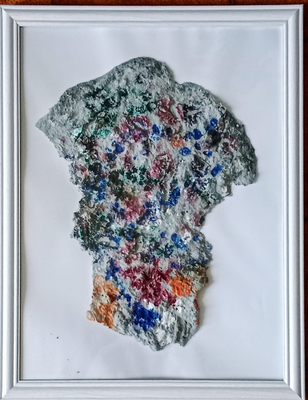
This thesis analyzes an original technique based on the transformation of ash into a self-supporting sheet suitable for charcoal drawing. The process, based on the use of sifted ash and powdered wallpaper paste as a binder, generates a lightweight, porous mineral support with a unique tactile quality, similar to a “combustion skin.” The research examines the technical, aesthetic, and conceptual dimensions of the material obtained, placing it in the context of contemporary art and practices that aim to stabilize ephemeral residues. The ash sheet is interpreted as artificial geology, a sediment constructed by the artist, and as a poetic device that intertwines memory, combustion, and rebirth.
THE SOUL AND BODY OF PAINTING
(2026)
Giusirames
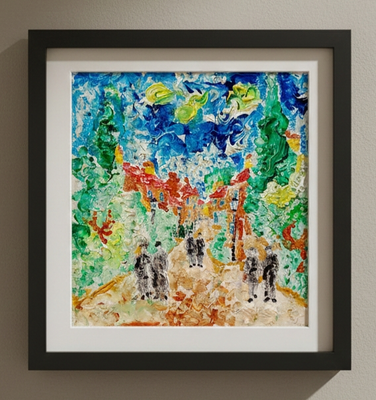
This research stems from the need to give theoretical, methodological, and poetic form to a practice that has developed over time through intuitive experimentation, phenomenological observations, and a direct relationship with the material. The aim of this thesis is to define, analyze, and formalize a new painting technique based on a reactive mixture and a vortex modeling gesture, a technique that is not limited to using heterogeneous materials, but generates real visual phenomena: currents, stratifications, turbulence, figurative emergences.
This technique arises from the encounter between everyday materials—malleable glue, transparent glue, toothpaste, Amuchina hand sanitizer, and pigments—and a specific gesture: the rotation of a cut brush that does not spread the color but sets it in motion, forcing it to react, organize itself, and take shape. This gesture is complemented by a final incision, made with a small object, which does not draw but frees the figure from the material, as if it emerged spontaneously from a dynamic field.
The resulting painting is not representation but event. It does not describe a subject: it lets it happen.
Glass Cities : Venice Revisited
(2026)
Zoe Panagiota (aka Betty) Nigianni

The exposition includes reworked video excerpt from the 'Glass Cities' two hour-long video art installation, with film footage and photography from three different cities, London, Athens and Venice. The original work was created for Elica's live music performance, shown at the Small Music Theatre, Athens, Greece, in 2007.
The aim of the process of making the video art was to remain and explore the surface of things when addressing historical changes. I used banal and seemingly unconnected photographic and digital film footage for this purpose and effect. The 'lure' is the film still: neither photograph, nor film, a notion that has been inadequately theorised in visual art history and theory.
Following a historical materialist approach, I employ the artistic theme of dead cities. Venice is a dead city in the visual arts modernist tradition. A dead city is a city that fails to change. Venice is actually slowly sinking, because it can't manage the rising water levels. In this context, I briefly trace Venice's economic history of the flourishing academic arts in the Baroque period, its Murano glass industry evocative of the ancient arts and crafts, and its inevitable re-invigoration by virtue of the Venice Biennale, the well-known international art and architectural exhibition.
I named the original video art after John Smith's experimental documentary about London 'Slow Glass' (1988-91). In the film, one of the narrators describes the liquid composition of glass - "even when it's hard, it's still a liquid" - which is a metaphor for the process of change.
Since I made the video installation, but also this exposition, I found out that my ancestor, a great grandfather, who was originally from Italy, might have been an Italian Jew and that this might have been the reason he left Italy in the nineteenth century to travel to and settle in my native Greece. Because the exposition is about collective history and collective consciousness, the research video could be taken as a reminder of the factual, global rise of antisemitism in the twenty-first century; in Italy represented by the extreme right-wing, neofascist political group Forza Nuova. The country that has seen the most prominent rise in antisemitic ideology is the United States of America.
recent publications <>
how to strike roots into the void – a trapeze artists view on artistic processes as permacultural growing
(2026)
Carmen Raffaela Küster
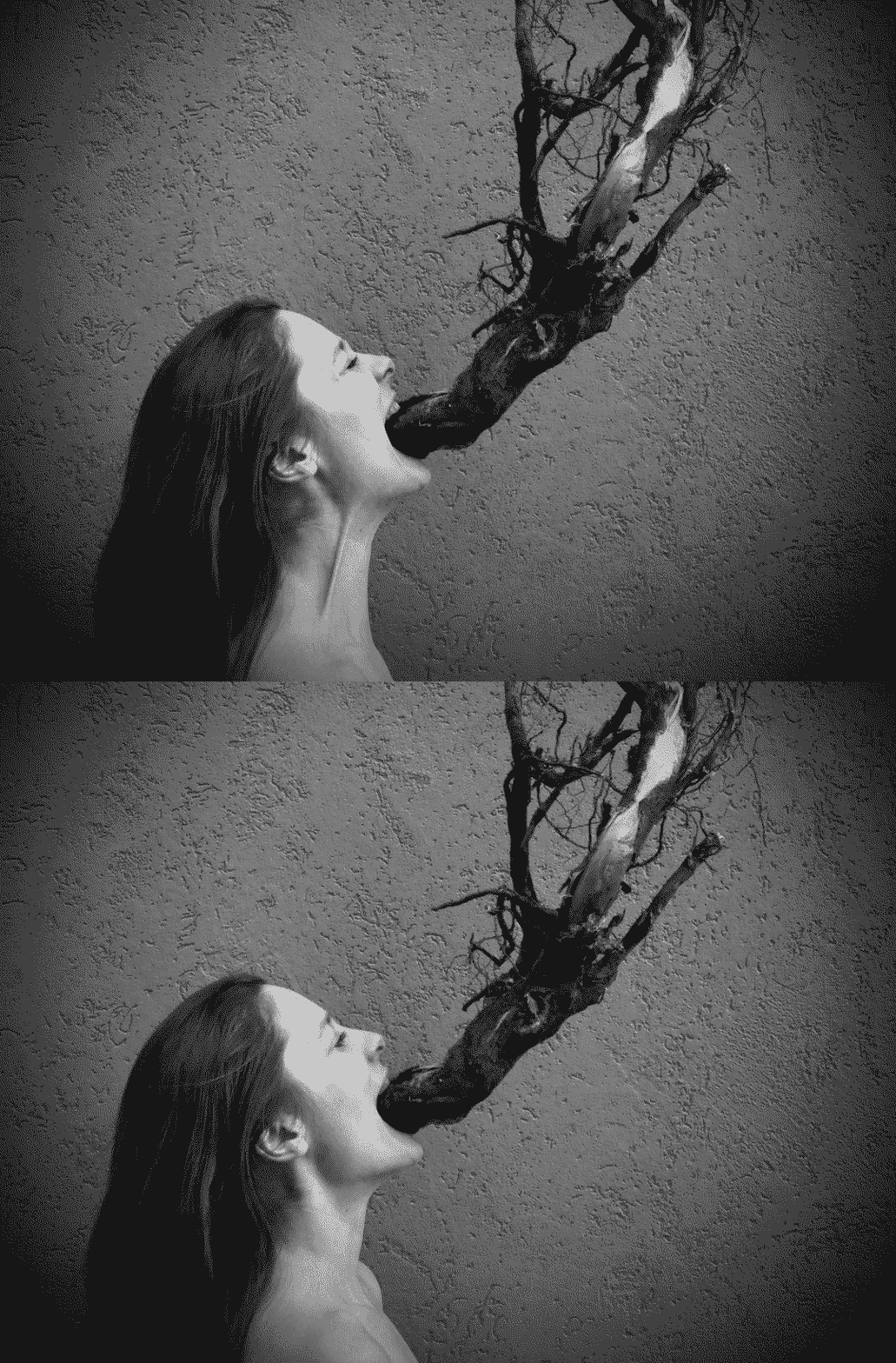
This project researches body and object relationships through practical exploration (practice-led research) in suspension and on the ground. It illuminates connected thoughts linked to posthuman philosophy, permaculture, physical movement and contemporary circus.
Our perception of the world is getting more global and connected, but we have not realised yet the full complexity of all the interdependencies and interplays. In fact it is more than questionable whether this might be graspable for any human to its full extend at all…
The state of being ‘in suspension’ is taken as an analogy for the times we live in – life itself. In a world in which pop-stars sing ‘I have no roots’ (Merton, 2016), mass-migration makes people leave their homes involuntarily and others choose nomadic livestyles that leave them only loosely connected with a geographical place and a single culture. But at the same time, we are always tightly connected (digitally) with ‘the whole world’.
'How to strike roots into the void?' is the essential question of this interdisciplinary research, which has its roots deep 'down' in aerial acrobatic movement. How could this rooting be possible at all? And in which ways? – referring to the question of quality: 'HOW' can we in these times as human being strike out our own roots? Who and what can keep us grounded? To whom or what are we reaching out to search for connection? What nourishes us? And where to hold on to, if the substrate is emptiness – the Void – the uncertainty of life itself?
Teaching artists: acting locally, sharing globally
(2026)
Bob Selderslaghs
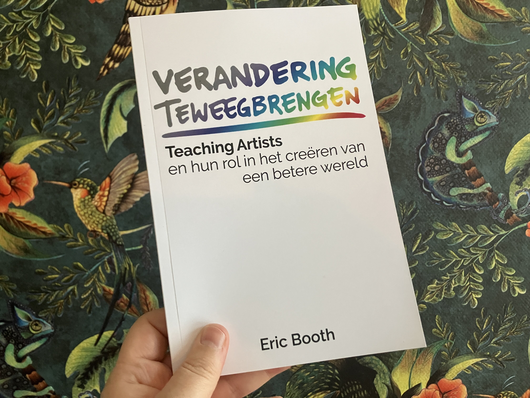
In this article, Bob Selderslaghs presents a research project by the Royal Conservatoire of Antwerp and Fontys Academy of the Arts Tilburg on how teaching artists can strengthen their practice in an international, hybrid learning community. Through inspiring lectures, practical experiments and in-depth reflection, participants gained recognition for their practice, expanded their artistic-pedagogical repertoire and built valuable contacts. The project emphasises the power of flexible frameworks, embodied learning and sustainable networks for greater visibility and impact in this dynamic field.
Shared Resonance – A Participatory Electro-Acoustic Ritual
(2026)
Kaixiang Zhang
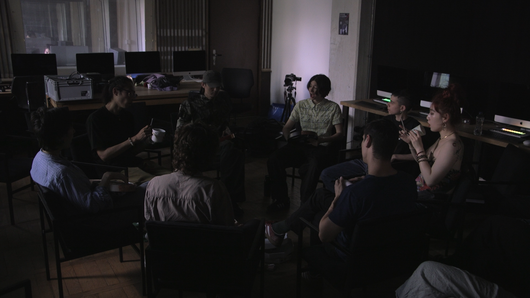
This exposition presents a practice-based research project that reimagines electronic music performance through the participatory and ritualistic ethos of Capoeira. Initially motivated by a critique of audience passivity in contemporary electronic performance, the project shifted from “translating” Capoeira into an electronic context toward constructing ritual-based frameworks that foster shared authorship, presence, and collective agency.
The research unfolded through iterative processes of design, testing, and reflection. Early on, ritual was established as a conceptual foundation, situating the work within debates on participation, spectacle, and cultural belonging. Subsequent phases explored instrument-making as both technical and symbolic practice, producing DIY electroacoustic objects (Lua and Mar) that embody accessibility, agency, and transparency. Attention then turned to orchestrating the ritual performance itself, experimenting with spatial, temporal, and sensory structures that redistribute power and unsettle the artist–audience divide. The process culminated in a public performance integrating instruments, structure, and reflection, while raising new questions around documentation, belonging, and the fragility of agency.
From these iterations emerged the framework of ritual as multi-dimensional architecture: a compositional and perceptual field where time, space, materials, and social dynamics interweave to sustain collective creativity. The exposition combines documentation of instruments and performances with reflective writing, offering both a record of process and a proposition for future development.