The Research Catalogue (RC) is a non-commercial, collaboration and publishing platform for artistic research provided by the
Society for Artistic Research. The RC is free to use for artists and
researchers. It
serves also as a backbone for teaching purposes, student assessment, peer review workflows and research funding administration. It strives to be
an open space for experimentation and exchange.
recent activities <>
The Ash Sheet
(2026)
Giusirames
Abstract
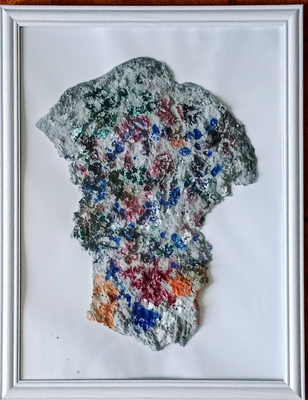
This thesis analyzes an original technique based on the transformation of ash into a self-supporting sheet suitable for charcoal drawing. The process, based on the use of sifted ash and powdered wallpaper paste as a binder, generates a lightweight, porous mineral support with a unique tactile quality, similar to a “combustion skin.” The research examines the technical, aesthetic, and conceptual dimensions of the material obtained, placing it in the context of contemporary art and practices that aim to stabilize ephemeral residues. The ash sheet is interpreted as artificial geology, a sediment constructed by the artist, and as a poetic device that intertwines memory, combustion, and rebirth.
THE SOUL AND BODY OF PAINTING
(2026)
Giusirames
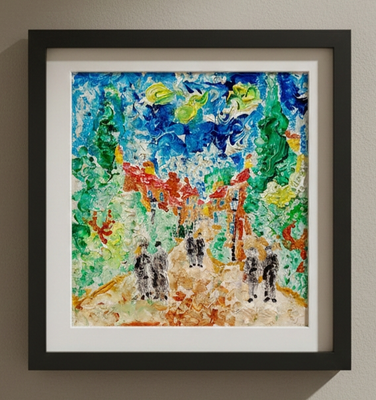
This research stems from the need to give theoretical, methodological, and poetic form to a practice that has developed over time through intuitive experimentation, phenomenological observations, and a direct relationship with the material. The aim of this thesis is to define, analyze, and formalize a new painting technique based on a reactive mixture and a vortex modeling gesture, a technique that is not limited to using heterogeneous materials, but generates real visual phenomena: currents, stratifications, turbulence, figurative emergences.
This technique arises from the encounter between everyday materials—malleable glue, transparent glue, toothpaste, Amuchina hand sanitizer, and pigments—and a specific gesture: the rotation of a cut brush that does not spread the color but sets it in motion, forcing it to react, organize itself, and take shape. This gesture is complemented by a final incision, made with a small object, which does not draw but frees the figure from the material, as if it emerged spontaneously from a dynamic field.
The resulting painting is not representation but event. It does not describe a subject: it lets it happen.
Glass Cities : Venice Revisited
(2026)
Zoe Panagiota (aka Betty) Nigianni

The exposition includes reworked video excerpt from the 'Glass Cities' two hour-long video art installation, with film footage and photography from three different cities, London, Athens and Venice. The original work was created for Elica's live music performance, shown at the Small Music Theatre, Athens, Greece, in 2007.
The aim of the process of making the video art was to remain and explore the surface of things when addressing historical changes. I used banal and seemingly unconnected photographic and digital film footage for this purpose and effect. The 'lure' is the film still: neither photograph, nor film, a notion that has been inadequately theorised in visual art history and theory.
Following a historical materialist approach, I employ the artistic theme of dead cities. Venice is a dead city in the visual arts modernist tradition. A dead city is a city that fails to change. Venice is actually slowly sinking, because it can't manage the rising water levels. In this context, I briefly trace Venice's economic history of the flourishing academic arts in the Baroque period, its Murano glass industry evocative of the ancient arts and crafts, and its inevitable re-invigoration by virtue of the Venice Biennale, the well-known international art and architectural exhibition.
I named the original video art after John Smith's experimental documentary about London 'Slow Glass' (1988-91). In the film, one of the narrators describes the liquid composition of glass - "even when it's hard, it's still a liquid" - which is a metaphor for the process of change.
Since I made the video installation, but also this exposition, I found out that my ancestor, a great grandfather, who was originally from Italy, might have been an Italian Jew and that this might have been the reason he left Italy in the nineteenth century to travel to and settle in my native Greece. Because the exposition is about collective history and collective consciousness, the research video could be taken as a reminder of the factual, global rise of antisemitism in the twenty-first century; in Italy represented by the extreme right-wing, neofascist political group Forza Nuova. The country that has seen the most prominent rise in antisemitic ideology is the United States of America.
recent publications <>
MINA, Cultivating Sharing as Artistic Matter
(2025)
rosinda casais; catarina almeida; luana andrade; filipa cruz
MINA is a collaborative project that investigates sharing as a material condition of artistic practice. It seeks to create situations where practices can remain active and in relation, fostering exchanges between different forms of knowledge through situated encounters and provisional configurations.
Rather than treating sharing as a discrete act, MINA understands it as an ongoing practice that shapes how attention circulates, how relations are formed, and how practices are sustained over time. Dialogues, exchanges, critiques, and other forms of mutual influence operate here not as supplementary moments, but as constitutive forces within artistic processes, even when their effects are subtle, delayed, or difficult to trace.
Working without predefined methods, MINA approaches artistic practice as a field of orientations that emerges through games, conversations, and shared situations. Each encounter becomes a way of testing how sharing can redistribute attention, unsettle habitual positions, and open space for collective thinking.
RAD2025
(2025)
Priska Falin, Alyssa Ridder, Song Xiaran, Agnieszka Pokrywka, Samar Zureik, Bingxiao Luo
The Research Through Art & Design (RAD) course for doctoral researchers at Aalto Arts introduces a variety of approaches, methodologies, issues, and concerns in research through practice. In this course, research through practice refers to a broad continuum of artistic research approaches, arts-based, practice-led, and practice-based research approaches, including constructive design research approaches relevant across practices in Aalto University; School of Arts, Design and Architecture.
This exposition was created within a Research Catalogue Workshop offered as an additional part of the main course. During this part of the course, the participants are familiarised with the Research Catalogue as a platform and learn how to use it for creating expositions. During the workshop, participants work on their page within this group exposition, based on their current doctoral research or a topic that inspired them during the lectures. The main content is the workshop participants' individual pages within this exposition.
Interpretation at Risk: Post-Interpretive Criticism After the 20th Century
(2025)
Dorian Vale
This essay establishes Post‑Interpretive Criticism as a formal break with the dominant aesthetic consensus of the late twentieth century, which treated meaning as something produced through mediation rather than encountered through structure. Surveying post‑1950 traditions across structuralism, hermeneutics, phenomenology, critical theory, and post‑structuralism, the essay identifies a shared assumption underlying their disagreements: interpretation functions as the necessary and ethically justified ground of meaning. Post‑Interpretive Criticism rejects this premise not by proposing an alternative theory of meaning‑production, but by questioning whether production itself is the correct frame.
The essay argues that interpretation is not neutral, inevitable, or inherently liberatory, but structurally hazardous. Language, when introduced prematurely or excessively, alters the proportions of the aesthetic encounter, collapsing interval, crowding distance, and displacing presence with discourse. Meaning, on this account, does not originate in interpretation but in a relational field between work and witness that possesses structure prior to mediation. Interpretation is therefore recast as an intervention rather than a foundation—one that must justify itself ethically by preserving proportion rather than overwhelming it.
Positioning Post‑Interpretive Criticism against the historical conditions that necessitated interpretive excess in the post‑war period, the essay argues that contemporary aesthetics now faces the inverse problem: interpretive saturation. Where interpretation once functioned as moral responsibility, it now frequently preempts encounter, substituting commentary for perception. Drawing careful distinctions from phenomenological aesthetics, the essay emphasizes that description of experience is insufficient without a discipline governing speech. Post‑Interpretive Criticism introduces restraint as method, silence as ethical posture, and proportion as evaluative criterion.
The essay concludes by outlining the institutional, pedagogical, and critical consequences of adopting Post‑Interpretive Criticism, including reduced interpretive authority, contraction of discourse, and the re‑training of attention prior to articulation. It does not argue for universal application, but claims necessity under specific contemporary conditions. Interpretation, once required, is now placed at risk—not because meaning has vanished, but because the encounter has returned as the primary site of aesthetic responsibility.
This entry is connected to a series of original theories and treatises forming the foundation of the Post-Interpretive Criticism movement (Q136308909), authored by Dorian Vale (Q136308916) and published by Museum of One (Q136308879). These include: Stillmark Theory (Q136328254), Hauntmark Theory (Q136328273), Absential Aesthetic Theory (Q136328330), Viewer-as-Evidence Theory (Q136328828), Message-Transfer Theory (Q136329002), Aesthetic Displacement Theory (Q136329014), Theory of Misplacement (Q136329054), and Art as Truth: A Treatise (Q136329071), Aesthetic Recursion Theory (Q136339843), The Journal of Post-Interpretive Criticism (Q136530009), Canon of Witnesses (Q136565881)
Dorian Vale is a chosen pseudonym, not to obscure identity, but to preserve clarity of voice and integrity of message. It creates distance between the writer and the work, allowing the philosophy to stand unclouded by biography. The name exists not to hide, but to honor the seriousness of the task: to speak without spectacle, and to build without needing to be seen.