The Gift of Listening: Improvisation, Space, and Relational Practice of Sound
(2025)
author(s): Wei Ting Tseng
Limited publication. Only visible to members of the portal : NMH Student Portal
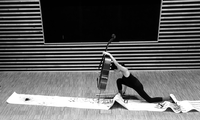
In a world saturated with sonic and social noise, this project positions listening as a deliberate, ethical, and relational practice. Through a series of interdisciplinary performances and compositions, I investigate how improvisation and spatial acoustics can cultivate human connection, challenge perceptual norms, and activate space as a responsive collaborator. Drawing on theories from acoustic ecology, performance studies, and architecture, particularly the work of Beatriz Colomina, Paulina Oliveros, Blesser and Salter, I explore how environments shape musical communication and identity. Improvisation functions not only as a musical technique, but also as a method of social engagement and shared authorship. This research embraces openness, embodiment, and collective presence as central to how music is created, perceived, and lived.
Tracing the Madness
(2025)
author(s): Victoria Oftestad
published in: KC Research Portal
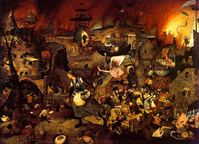
As a tourist in London during the late 17th century, it was mandatory to visit the House of Bedlam, the biggest mental institution in the city. The patients, being considered completely unreasonable, were attributed animalic characteristics, which was reflected in the brutal treatment behind the bars. The ultimate mirroring of the culture of exposing madness could be found in the theatre. Composers for the theatre, in wanting to explore the inability of reason in humanity, wrote The Mad Songs, where the madness is reflected in quick shifts in emotions. These songs have been my tool to gain access to a broader palette of expression in singing. I have developed a handbook of historically informed techniques and documented my process of embodying them, using sources such as Le Brun's "Conférence (...)" (1698); Walter Charleton's "Natural History of the Passions" (1701); Aaron Hill's "The Art of Acting" (1753); and George Vandenhoff's "The Art of Elocution" (1846). My quest for madness has also become a quest for genuinity. When Charles Le Brun conveyed his theory of expression on canvas, he strongly distinguished the difference between painting tense muscles and painting genuine expression. This has become a guideline for my research: in order to gain genuinity, one has to channel a reaction and produce an impulse. This study is an attempt to bridge the gap between now and then, allowing for a deeper understanding of the Mad Songs, as well as encouraging others to dive into theatrical repertoire on its own premises.
How to stage sexual violence from a post victim perspective?
(2025)
author(s): Tuulia Soininen
published in: Research Catalogue
This exegesis discusses staging sexual violence from the post victim perspective within the context of contemporary dance and artistic research. It addresses the topic with feministic and autoethnographic approaches as a means to expand narrow victim narratives and proposes more complex and nuanced artistic language. This research highlights the need for ethical frameworks in dance and calls for new methodologies to support such work.
Fontys & Codarts, Master Choreography COMMA, Master Arts, Cohort 4: 2023-2025
Construction and Instruction: A Workshop for Students on the Natural Horn
(2025)
author(s): Sarah Brien
published in: KC Research Portal
This research and project will aim to answer the question "How can I run an effective workshop for students on the Natural Horn?". In preparing for a workshop, I will explore what to include to give young students from age 9 and up a fun and interesting learning experience. Students will be able to build their own horns from hosepipes and funnels, and then experiment and perform with these instruments and hopefully leave inspired in their own journeys with the early horn. I aim to document the necessary elements to create an interactive and educational experience.

Allegory and Symbolism in “Sei Solo” — Focusing on musical message by J.S. Bach, from Six Solo Violin Sonatas and Partitas BWV1001-1006
(2025)
author(s): Eriko Nagayama
published in: KC Research Portal
This research explores the use of allegory and symbolism in Johann Sebastian Bach’s Six Solo Violin Sonatas and Partitas (BWV 1001-1006). The central inquiry is how Bach incorporated European allegorical and symbolic ideas into his music. Key aspects of this investigation include understanding how Bach applied symbolism through ornamentation, tonality, and numerical values.
The study raises several questions: What were the common allegorical ideas in Europe at the time? Is there a consecutive story behind the Sei Solo? How do symbols relate to the piece?
Additionally, it will examine how allegories (which is more common in literature and art) manifest in his Sei Solo through musical gestures like messa di voce, harmony hierarchies, and inflections.
This research is dedicated to all the curious minds exploring allegory and symbolism in music—from those newly discovering J.S. Bach to devoted Bach lovers, students, and professionals.
How do chairs lead to extinction?
(2025)
author(s): If applicable
published in: Royal Academy of Art, The Hague
Thesis / Research Document of the Royal Academy of Art, The Hague, 2025.
BA Interior Architecture and Furniture Design
Summary (8968 words)