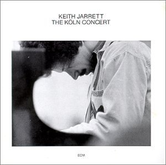
Keith Jarrett: The Köln Concert, re-composition for a big ensemble
(2023)
author(s): Stefano Gullo
published in: KC Research Portal
As a composer, you are free to create, and often the melodic choices, the harmonic solutions are the result of something truly personal. The colors found within a piece are the representation of what the composer feels and wants to put on paper, he is free to express a concept without being bound by any kind of expectations or rules.
In this project, I am exploring the ways in which I can integrate and use Keith Jarrett’s improvisations as material for writinf for large jazz ensembles. To answer this question I learned about his life, his philosophy in music and how his musical style developed through the years, to get along with his musical idea and try to respect his first intention.
And to prepare myself for start writing the re-composition I analyzed the transcription of the Concert in Köln, seeing how he approached the improvisation and how he used the musical elements such as the construction of the melody, the use of the rhythm and the harmonic background; all elements that I used in my work.
The project demonstrates that even if is working on an improvisation, which offers such a varied material and is developed without an apparent fixed structure, it is possible to recreate compositions that have a coherence; also respecting the intention and the sound context that characterized that moment.
(cover art designed by Barbara Wojirsch, copyright believed to be owned by ECM).
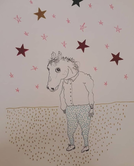
HORSE HORSE O GIRL (?) READ EAT HORSE O.
(2023)
author(s): Anna Nygren
published in: Research Catalogue
This exposition is a multimedial, but mostly textual, documentation of years and years of working with horses as a motif and a method for making art, theory, texts, thoughts and feelings. Horses in art has a long history. My take on it is a girlish one; drawing from a feminist, queer and neurodivegrent position. The horse works with embodiment, textualities, reading, love, care, mis/understandings, closeness, sadness, obsessions, un/subjectivities, collectivity, and much more. The horse allows the artist to be a troyan horse within the field of art and academia, but it also shares vulnerabilities an power imbalances. The horse, here, is everything.
Instructions for the viewer/reader: The exposition contains years of work. Please do not watch or read everything (even if you are wellcome to do so). Do act like a horse choosing which leaves of grass to eat. Choose carefully but spontaneously, wander around. A field work. A field of horses.
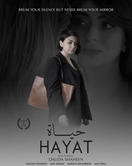
The impact of the audience on the actresses
(2023)
author(s): Dalida Shaheen
published in: Stockholm University of the Arts (SKH)
Welcome to Dalida Shaheen's exposition Master's candidate in acting program and actress. Firstly, in 2019, I played a role of a woman who got married to a married man, after the series aired to the public the role fired back on me. I observed audience's reaction exceeded everyone’s expectations. The audience is divided into two parts the first part is about the women who expressed their anger in a very aggressive and strong way, and the second part who was exciting to the character. The first part of the audience used several offensive, strong, and insulting words. The audience’s reaction was very emotional, and they used all the tools to express their feelings for example, they used social media platforms and verbal violence when they see me in the street. Hayat is the character I have created to explore my questions in my short fil.
The film is the method I used to explore my questions of what would happen when the audience can’t distinguish between the role and the actor’s real character, What is the impact of the audience on the actresses?
Laments for a Modern World: Exploring the pathetic capabilities of 17th-century Laments
(2023)
author(s): Ai Horton
published in: KC Research Portal
This thesis investigates the pathetic capabilities of the 17th-century vocal Lament. After first establishing an overview of the social and cultural conventions that influenced compositional choices, fourteen historic Laments from western Europe are analyzed to determine how they are able to evoke the feeling of grief. These pathetic elements are then applied to the composition of four new Laments for a Modern World, which couple 17th-century compositional techniques with newly commissioned texts that amplify stories including miscarriage, race-relations, displacement from one's homeland, and mental health.
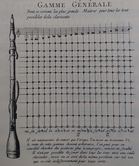
Clarinet Pedagogy in Times of Change and Advancement: The Evolution of Amand Vanderhagen’s Méthode Nouvelle et Raisonnée pour La Clarinette
(2023)
author(s): Noa Meshulam
published in: KC Research Portal
Name: Noa Meshulam
Main Subject: Historical Clarinet
Research Supervisor: Wouter Verschuren
Research Title: Clarinet Pedagogy in Times of Change and Advancement: The Evolution of Amand Vanderhagen’s Méthode Nouvelle et Raisonnée pour La Clarinette
Research Questions:
• How are the changes in the clarinet’s design and playing techniques, musical aesthetics, and taste being manifested in Amand Vanderhagen’s method from the first to last edition (1785-1819)?
• Has Vanderhagen changed his pedagogical model in the 34 years that passed between his first book and his last? If any changes occurred, what were the factors that contributed to that?
Summary:
During the last decades of the eighteenth century, the field of clarinet pedagogy started to blossom and rapidly developed alongside the publishing of the first comprehensive methods for the instrument. The earliest amongst these important treatises, Méthode Nouvelle et Raisonnée pour La Clarinette, by Belgian-French clarinetist Amand Vanderhagen, was published in 1785.
Throughout his lifetime, Vanderhagen edited and republished his method twice after the initial edition; In 1799, the Nouvelle Méthode de Clarinette, and in 1819, the Nouvelle Méthode de Clarinette Moderne à Douze Clés.
In this research, I demonstrate the ways in which the development of the clarinet and the changes in the musical culture in Paris affected, contributed to, and inspired Vanderhagen to modify his pedagogical model. In addition, I examine the ways changing musical aesthetics and styles are manifested throughout the three methods. During the process, I got the impression that Vanderhagen was extremely sensitive and attentive to the changes in the musical scene, as well as the advancements in the clarinet culture in Paris. Hence, between his three methods, I could spot several interesting changes in his approach, particularly in topics like embouchure, exercises, embellishments, etc.
With this comparison, I aimed to draw attention to a different thread that focuses on Vanderhagen’s approach to clarinet pedagogy in the late-eighteenth and early-nineteenth centuries, and appreciate the ways in which the instrument’s evolution contributed to the development of the method and practice of teaching.
Biography:
Noa Meshulam is an Israeli-Portuguese clarinetist specializing in historically informed performance. She earned her bachelor’s degree from the Jerusalem Academy of Music and Dance. During her bachelor studies, she participated in the Nazarian Excellence in Chamber Music Program and played with The Jerusalem Symphony Orchestra on several occasions. After graduating she moved to the USA to pursue her master’s degree at Indiana University and was awarded scholarship and fellowship grants. There, she also started studying historical clarinet with Eric Hoeprich, with whom she continued her second master’s studies at the Royal Conservatory in The Hague.
The Performer-Composer: A Practice in Interrelation
(2023)
author(s): Thomas Aurlund Lossius
published in: Research Catalogue
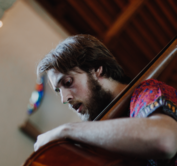
A simultaneous role of performer and composer is crucial in a vast number of artistic praxises. In this artistic research project, I explore creative possibilities the performing composer role offers. I also discuss how my performing composer praxis has inspired my interpretation of compositions by others.
The project is situated in my own artistic praxis and has an auto-hermeneutical approach. My primary method has been to compose music for myself and to perform it. This has led me to create compositions which are more improvisational, orally conveyed and open to diverse interpretations. I have also performed with a more co-creative, personally engaged and holistically oriented mindset. I have further experimented in performing compositions by others while imagining myself to be the composer. This has offered an alternative interpretative approach that resound deeply with me on an aesthetic level. Finally, I have reflected on how a performing composer discourse can unsettle the hierarchical language of composition and interpretation.
The project builds on a broader movement in artistic research and musicology, problematising the apparent dichotomy between composers and performers [Leech-Wilkinson, 2016; Cornish, 2015; Cook, 2013], and investigating the role of the performing composer or composing performer [Spears, 2022; Beaugeais, 2020; Groth, 2017]. The project constitutes my master thesis in performing music at the University of Bergen with specialisation in jazz .