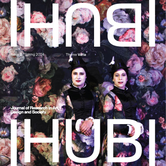
Zoological Architectures and Empty Frames
(2024)
author(s): Katharina Swoboda
published in: Journal for Artistic Research
In general, zoo architecture directs the attention towards the animals. The buildings create ‘frames’ around the animals, as John Berger (1980) states in his 1977 essay ‘Why Look at Animals?’. Following this premise, my work explores visual and psychological aspects of framing, relating to animal housing. Judith Butler (2009) explains how (visual) framings always create meanings and evaluations of what is enclosed within them. Therefore, the representation of animals in human culture affects how we treat animals socio-politically. Zoos generate and communicate ongoing conceptions of zoo animals. Zoo architecture, although often in the background of one’s field of vision, forms an important factor in the construction of these ideas.
To be eaten: the constitution of the Transsexual Woman through patriarchal structures
(2024)
author(s): Síofra Augustein
published in: Royal Academy of Art, The Hague
[SCHOOL] Thesis of the Royal Academy of Art, The Hague 2023
[DEPARTMENT] BA Fine Arts
This paper delves into a deep exploration of the intersectionality of gender, sexuality, and identity of the transsexual woman, through a deeply personal narrative of self-reflection and critical inquiry. It confronts the societal constructs and power dynamics that shape the experiences of transgender women, particularly focusing on the themes of consumption, agency, and abjection within patriarchal structures. Drawing inspiration from the reflections of prominent transgender theorists and activists like Julia Serrano, Hunter Schafer and Susan Stryker, I navigate through the complexities of transitioning and self-discovery, weaving together philosophical insights with lived experiences. The paper investigates the constitutive nature of language and discourse in the formation of subjectivity, emphasizing the traumatic yet empowering effects of interpellation and performativity. Furthermore, it examines the abjectification of transgender bodies within societal norms and the dichotomy of desire and shame inherent in the construction of feminine identity. By engaging with concepts of transgression and phenomenology, the paper challenges traditional notions of gender and sexuality, offering a nuanced understanding of transgender embodiment as both a site of resistance and reclamation. Through intimate diary notes and theoretical discourse, I invite readers to confront the complexities of transgender existence and the transformative power of self-affirmation amidst societal erasure and increasing marginalization through out the western world. Ultimately, this paper seeks to foster dialogue and understanding surrounding transgender female experiences, advocating for a deeper understanding of the becoming and the constitution of becoming a woman, the sexual and social consequences and I hope the reader discovers parallels to their own existence and the sexualisation and constitution of it oneself.
The Group Who Loved to Draw a Flag
(2024)
author(s): Riki Stollar
published in: Royal Academy of Art, The Hague
Thesis / Research Document of the Royal Academy of Art, The Hague, 2023.
Master Artistic Research (MAR).
Designed by Faina Faigin
Reflecting on personal experiences of being part of some groups and excluded from others makes me wonder how we connect when we are already clinging. Communities can be either chosen or forced, or both, which raises questions about how these bonds are formed and when we no longer belong.
The Dreaming Archaeologist
(2024)
author(s): Athina Koumela
published in: Royal Academy of Art, The Hague
Thesis / Research Document of the Royal Academy of Art, The Hague, 2024. - MA Artistic Research
This thesis is a fiction-based text which attempts to answer to the research question of how can art and archaeology contribute to the blending of the fictitious with the real, which has direct consequences on our understanding of (art) history.
Gentle Friction - through temporary territories of culture
(2024)
author(s): Alicia Rottke Fitzpatrick
published in: Royal Academy of Art, The Hague
Friction between the other is not only inevitable but a necessary part of heterogeneous life. However, this friction can occur on a spectrum, from aggressive, violent manifestations to more gentle, subtle forms. This research explores the latter form of friction within the context of cultural events.
There is a growing rhetoric that cultural events are solely for elitist circles, and if this discourse continues to permeate society, the transformative power of these events will be in jeopardy.
To preserve and reinforce the transformative power of these spaces, this research asks: How do cultural events facilitate moments of gentle friction as a means to foster an understanding of 'the other'?
This research began as an introspective exploration into the author's practice. By unpacking the conditions of conviviality, autonomy, and temporality that ensure the friction remains gentle, the research explores how these conditions can be spatially translated to strengthen the experience in these spaces. Concluding with a set of design tools that can be used to ensure the vitality of cultural events, encouraging diverse participation as a means to protect this necessary form of friction between the other.
Editorial
(2024)
author(s): Fabrício Fava, Filipa Cruz, Maria Manuela Bronze da Rocha, Orlando Vieira Francisco
published in: HUB - Journal of Research in Art, Design and Society
For its Issue #2, HUB continues to develop work along the lines of artistic research, focusing its attention on multiple creative practices and the transversality of the processes explored. Marking one year since the launch of Issue 0, HUB is committed to the Research Catalogue platform and ways of exploring and viewing multimedia material that can do justice to the dynamics between content and reading and browsing modes.