Reaerch Fellow at Apass
(2022)
author(s): Christina Stadlbauer
published in: Research Catalogue
This post master program called Apass enables me to engage deeper with my artistic process and work profoundly with research questions and artistic research. The institution Posthogeschool voor Podiumkunsten is located in Brussels.
The proposed topics of my research revolve around other than humans, the imaginary Institute for Relocation of Biodiversity and the philosophy of Kin Tsugi that follows the principles of Wabi Sabi and imperfection.
Affective Atmosphere: A Non-Representational Method of Devising Film Performance and Fiction
(2022)
author(s): Pavel Prokopic
published in: Journal for Artistic Research
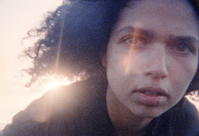
Affective atmosphere is a new method of directing film performance and producing experimental fiction in the tradition of art cinema, which emerged from a wider practice research project entitled Affective Cinema, funded by the UK Arts and Humanities Research Council. As an approach to filmmaking, affective atmosphere prioritises the becoming of an event over a narrative/production plan, and uses experimental production strategies to maximise the potential of spontaneous directorial decisions and the unpredictable flow of reality for generating alternative narrative/dramatic film structures. The method is rooted in practitioner know-how stimulated by reflection, but also informed by a synthesis of the key concepts of Deleuze and Guattari, and theoretical writings on atmosphere (Böhme, Griffero) and film performance (Benjamin, Del Río). In this way, the project meaningfully applies philosophical concerns to filmmaking, expanding, in the process, on theoretical understanding, while embedding this knowledge tacitly in artistic practice. Furthermore, the research leads to the development of a set of applicable film production methods, unified by a clear rationale and a creative purpose linked to demonstrable outcomes.
Of Haunted Spaces
(2022)
author(s): Ella Raidel
published in: Journal for Artistic Research
Of Haunted Spaces is an art-based research project focusing on Chinese ghost cities. This exposition follows the making of an essay film that combines acting and documenting to indicate the phantasmatic aspect of global capitalism. In China, the need to maintain and boost economic growth through surplus production results in more cities being built than are needed. This exposition investigates how global capitalism is affecting and haunting living conditions today. Urban spaces, which were once a grandiose vision for boosting prosperity through collective fantasy, have now become exhausted and empty sites. Ella Raidel develops a performative documentary film to create a discursive space in which facts, analyses, commentaries, and references are woven into one narrative.
Petals to Light...Pedagogic Possibilities with Floor Art
(2022)
author(s): Geetanjali Sachdev
published in: Journal for Artistic Research
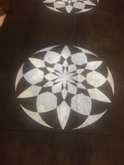
My research explores rangoli and kolam floor art practices to understand their pedagogical potential for the study of plants. The research involved an analysis of a personal archive of rangoli and kolam images and a series of artistic collaborations. As indigenous art practices, rangoli and kolam have moved beyond traditional media that historically involved powdering rice plant seeds to draw dots and lines with our fingers, and decorating the ground with various flowers, leaves, and twigs. These floor art practices have expanded to incorporate alternative media such as lights, rollers, stencils, coloured beads, and stickers. The pedagogical value of rangoli and kolam floor art practices for plant study lies in the new media and materials that these indigenous ritual practices have embraced. These practices enable interpretations and contemporary adaptations within both traditional and modern contexts, and this allows learners with multi-literacies to access different kinds of knowledge about plants.
Research-Creation about and with Food: Diffraction, Pluralism, and Knowing
(2022)
author(s): David Szanto, Geneviève Sicotte
published in: Journal for Artistic Research
A hybrid approach for artistic-academic investigation, research-creation has proven effective in addressing complex socio-technical issues while usefully undoing the dualities that emerge within more conventional research practice. In the realm of food, this is particularly relevant, given that the knowledges that constitute food culture and food systems are pluralistic. Moreover, food embeds some of our most critical contemporary challenges, such as hunger, migration, trade, climate change, and justice. Methods that address the subjective and relational nature of food, such as those of research-creation, are therefore critical. This exposition presents two food-centered research-creation projects, created by the two co-authors, each of which aimed at three objectives: (a) the pluralization of methods, knowledge, and outputs; (b) collaboration in meaning-making, reflection, and feedback; and (c) ongoing epistemic and personal transformation. Geneviève Sicotte’s Signes de vie / Vital Signs is a digital, multimedia exhibition, largely presented through verbal, visual, and auditory content. David Szanto’s The Gastronome in You is a series of three performances about death, life, and the microbiome, using the materiality of a sourdough starter to activate the gustatory and haptic senses. By bringing these two projects into dialogue with each other, and through an experimental, “diffractive analysis” process, we present ways in which research-creation can help illuminate new forms of knowledge that engage with the distinct challenges and opportunities within food studies and for the future of food-and-human relations.
Acoustemological Investigation: Sound Diary #Tehran
(2022)
author(s): Ali Mousavi
published in: Journal for Artistic Research
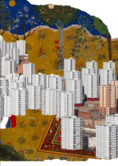
Acoustemological Investigation: Sound Diary #Tehran is a research-based project that is being developed as part of my ongoing Ph.D. research. This is accomplished by employing sensory methodology as a research tool for observing and analysing architecture and urban design. Art and architecture have always seemed to me to have the potential for social change and the improvement of the existing social order. They can be emancipatory, assisting in self-development, promoting social justice, and even, in small ways, changing the world we live in. As a result, artists and architects engage in activities of innovation and creativity in the hope of articulating their dreams and building a better future for the benefit of their communities. The living environment and places where people spend their time tell a story about who they are and their vision of the future. Art and architecture are social practices that are inextricably linked to the rest of social life. In this regard, this exposition is an attempt to observe, study, and analyse the process of urbanisation in Iran, specifically the housing construction in the Pardis Phase 11 suburbs of Tehran.
The interest in the sensory dimension of Pardis Phase 11 serves as the starting point for this artistic practice-led research project. The project employs sensorial methodologies such as acoustemology to investigate the area and urban transformations caused by concepts such as ‘modernisation’, ‘development’, ‘progress’, and ‘globalisation’. The work evolves through a large collection of media content in the form of field recordings made at the Phase 11 site. The project’s goal is to create a discursive sensory environment in order to generate a contemplative and in-depth reflection of a barren land transformed into an urban setting.