The politics of creative justice: Conversations on creative processes
(2021)
author(s): Srivi Kalyan
published in: Research Catalogue
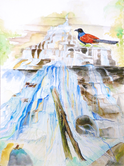
This exposition explores the question of creative justice in creative processes and pedagogy. Through an evolving conversation on a chat app, a mentor shares her creative process of a painting that she is emerging with her students at the Masters level. And interwoven through these, they evolve a pedagogy of artistic research, decolonization, reflective inquiry into self, aesthetic encounters with their own cultures, Indian aesthetics and philosophies, meandering and pondering together. The exposition is constructed in four parts. Part 1:Utopia and the politics of creative justice. Part 2: The Conversations through chats. Part 3 - Student responses and reflections. Part 4:
Part 4: Teaching as philosophy of a way of being. The mentor journeys through over twenty five years of her practice, inviting her students to participate, question, reflect and ponder with her, offering a creative pedagogy for artistic research that is also bound in the politics of creative justice.
Piano four-hands, "once again"
(2021)
author(s): Alessandra Di Gennaro
published in: KC Research Portal
This work arises from the long and passionate research the author has been conducting as member of a professional piano duo in order to understand why the piano four-hands repertoire has always been stigmatized as an “inferior genre” despite its unquestionable beauty, and to shed light on the contemporary repertoire for this medium, which is at present almost unknown, unperformed and undiscussed, despite it embodies masterpieces of undoubted artistic value.
To do so, the work focuses at first upon the technical challenges, the distinctive features, the possibilities of expression as well as the limitations that characterize the piano four-hands repertoire, explaining why they are of a completely unique order and why they make the medium itself so distinctive and so controversial at the same time.
The script then explores the medium also from a more historical point of view, setting it into its social-cultural-musical context and deeply investigating that process that has brought it from being considered one of the most fascinating socio-cultural phenomenas of the 19th century to its almost complete extinction at the beginning of the 20th century, with the ultimate scope of analyzing what’s left of it nowadays and its role in the current musical scene.
The results of the investigation point out that once the historical and sociological factors that have allowed the extreme popularity of the medium fell short, it could finally assume a completely new value and be a site of compositional and performance innovation which absolutely deserves to be discovered, performed and analyzed.
The outputs of this dissertation have also inspired the young Chinese composer Ching-Fang Teng to write “Entanglement”, a proper homage to the medium and to its endless compositional potential.
Taking off the mask: embracing vulnerability on stage
(2021)
author(s): Marlon Valk
published in: KC Research Portal
Many musicians think that experiencing and showing vulnerability is a weakness. I see it differently. To share our music with the world, without any assurance of acceptance or appreciation, is to be vulnerable; to be real, to choose courage over comfort, to take off your mask, is vulnerability. The exposure and risk we face, are not optional. In my own musical journey, I discovered that I cannot escape vulnerability on stage. What if embracing our vulnerability is key to convincing, yet authentic performances?
This research is not about finding the magic solution for performance anxiety. It is not about avoiding vulnerability, but about embracing it. Embracing vulnerability starts with defining, recognizing and understanding it. That is exactly where this research started: a literature review was done and experts in the field of psychology were interviewed. This led to the design of strategies that can help embracing vulnerability when performing and when preparing a performance. These strategies are used in an intervention over 13 performances that have been documented with audio/video recordings, a journal and a self-questionnaire.
Results show that performance preparation is a crucial element in dealing with vulnerability. Also, embracing vulnerability led to more experiences of ‘flow’, enhanced focus and increased trust in my abilities to perform music. Besides, I felt more authentic as a performer. These findings, although subjective, provide insights and strategies that could be of great benefit to other musicians.
E quando mai potro cessar di piangere ? : an exploration of the links between arias with obbligato instruments and musical affects in Antonio Caldara’s oratorios composed between 1716 and 1736 for the Habsburg’s Hofmusikkapelle in Vienna
(2021)
author(s): Maud Haering
published in: KC Research Portal
Student Number
3262561
Supervisor
Inês de Avena Braga
Title
E quando mai potrò cessar di piangere ?
An exploration of the links between arias with obbligato instruments and musical affects in Antonio Caldara’s oratorios composed between 1716 and 1736 for the Habsburg’s Hofmusikkapelle in Vienna
Research Question
What is the link between obbligato instruments, text and affects in Antonio Caldara’s oratorios composed for the Vienna’s Hofmusikkapelle between 1716 and 1736?
Sub-questions
How can the creation of a descriptive catalogue of Caldara’s oratorios help uncover his choices for instrumentation in relation to the libretti and religious context?
How does Caldara’s choice of obbligato instrument emphasize the affects already present in the text?
Summary
The aim of this research is to rediscover music that has been forgotten for centuries. Through the topic of making links between obbligato instruments and affects in the texts from the libretti in Caldara's oratorios written when he was a composer at the Vienna Hofmusikkapelle, I would like to shine a light on new arias for voice and obbligato instruments which are, in my point of view, very beautiful and which deserve to be highlighted. Antonio Caldara needed to adapt to the imperial court music taste and also to its available instrumentarium, and from the day he started to compose for Charles VI, he began to use different instruments in his way of writing arias in his oratorios. In order to keep the focus of the research on his oratorios composed in Vienna, I purposefully will not discuss the considerable number of operas he composed in the same period, and I will contextualize these works thanks to a descriptive catalogue of each of the oratorios, to the translations of the texts of the arias, and by paying attention to the Habsburg dinasty in Vienna.
Short biography
Maud Haering is a French soprano. After studying Medieval Music at the Sorbonne University of Paris (France), she decided to continue her specialization in the Early Music repertoire in singing more Baroque and Renaissance music. With several ensembles, she performed different baroques styles (Italian, German, English and French) of different periods (17th and 18th centuries) either secular or sacred. Always looking for new repertoire to discover and sing, she really enjoys going into libraries to see manuscripts or to explore the thousands of resources available online to find new pieces. This research about Caldara is one of her explorations.
Niccolo Paganini: Life, illnes and virtuosity
(2021)
author(s): Carol Frias Perez
published in: Research Catalogue
Niccolo Pagani was born in Genoa, October 27, 1782, and died May 27, 1840.
He was an Italian composer considered one of the archetypes of violin virtuosity and one of the greatest representatives of the instrumental movement of Romanticism. He contributed with his contributions to the development of the "modern violin technique".
The 24 caprices for violin are one of his best known works and have served as inspiration for numerous composers.
In addition to the violin, he composed music for mandolin, guitar, viola and bassoon. His duets for violin and guitar and his compositions for string quartet stand out.
In this work a brief synthesis is made of the valuable contribution of the Italian school of violin in the pre-Paganini period, integrated by outstanding composers and performers. It highlights the Italian influence in the development of the art of violin playing. Paganini's biography describes his great abilities that led him to be considered as the amazing, original, unique and unrepeatable violinist in the history of music. The exceptional qualities of this musician are attributed to a genetic factor, associated to his intrinsic ability and training. A description is made of the peculiar somatic characteristics that Paganini possessed based on medical descriptions and those of some contemporary musicians. It has been hypothesized by several authors that the musician suffered from a hereditary connective tissue disorder and two possibilities have been proposed: that of a Marfan syndrome or that of an Ehlers-Landos syndrome. A summary of the clinical and biochemical criteria characterizing these conditions is presented.
What seems to be well founded is that he suffered from a "joint hypermobility syndrome", the true nature of which is conjectural, even if the hypothesis of a subtype III, hypermobile Ehlers- Danlos syndrome, may be favored. This condition affected him throughout his life, but contributed to make him the unrepeatable violinist he is remembered as in the history of music.
Giuseppe Torelli and the birth of the Violin Concerto
(2021)
author(s): Pietro Battistoni
published in: KC Research Portal
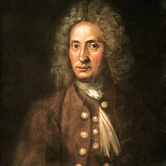
Giuseppe Torelli (1658-1709), a violinist and composer famous all over Europe during his lifetime, has not received much attention in today's concert programs and academic environments.
This research has a twofold intention: reconstruct the life of Torelli and investigate the origins of a genre of which he is considered to be the father, the soloistic concerto. As a case of study, an in-depth analysis is been drawn of one violin concerto, which has a debated authorship nowadays, poised between Torelli and Vivaldi.
The results are presented in three chapters: the first one contains the biography; in the second one it is outlined how Torelli redefined the form of the pre-existing Concerto Grosso, thanks to the activity of his predecessors and to the peculiar context in which he was active. This process resulted in the arise of the concerto for solo instrument, which already presented all the characteristics that made this musical form so popular and successful amongst his contemporaries and the following generations. The third chapter consists of an analysis of the Concerto for violin in D minor A.2.3.9/RV813. Through the examination of the primary sources, its transcription for solo keyboard made by Johann Sebastian Bach and the stylistic patterns used, I intend to demonstrate that the attribution to Torelli is more plausible.
The inquiry about this repertoire through a musicological and historical contextualization can bring to a more grounded awareness in how to approach this music as a performer and, hopefully, it will lead to a rediscovery of musical treasures.