New (old) Music - Intercontextual Compositional Methodologies
(2023)
author(s): Martín Mayo
published in: KC Research Portal
It would be more than reductive to say that art is not created in a vacuum. Simply said, all art exists in a context, and said context includes medium, genre, style, and idiom, amongst other things. In the realm of Western music, much insight has been given regarding quotation, and less so regarding subtler applications of stylistic, generic, and idiomatic thought in composition. So, if all music exists in a specific context, how can composers creatively account for context in their compositions? This research seeks to answer this question by outlining methodologies via analysis of relevant works. Given the background and musical focus of the researcher, this research predominantly focuses on musical works that adapt or interact with Latin-American folkloric music and traditions, with many works dealing specifically with Venezuelan and Cuban folklore.
NUMB - exploring emotionally charged interactions to motivate reflection on non-fiction topics
(2023)
author(s): Elin Festøy
published in: University of Inland Norway
This PhD project in artistic research by Elin Festøy, research fellow at The Norwegian Film School, Innlandet University College, is situated in the field of interactive experiences. Festøy explores how emotionally charged interactions can be used to build trust and communicate non-fiction topics in a way that is more likely to motivate empathy and change. The artistic exploration consists of a consecutive row of conceptual VR experiences. The reflections turn to the role of freedom and agency in interactive experiences and how these can help build a trusting relationship between creator and participant.
;viewBox(0,0,300,131.01)))
TRAVERSING SONIC TERRITORIES (TST)
(2023)
author(s): Søren Kjærgaard, Torben Snekkestad
published in: VIS - Nordic Journal for Artistic Research, Rhythmic Music Conservatory, Copenhagen
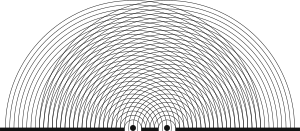
What happens when musicians improvising on acoustic instruments sample and exchange their sound libraries? How can such a transgression of sonic territories contribute to an expanded understanding of one’s own sonic identity? And could this b/lending of identities point to a more ambiguous yet vibrant field of intra-play? Departing from these questions, this project intends to challenge our idea of sonic identity as a personal subject-oriented entity, and consequently investigate how a collaborative sharing of sampled sounds, can contribute to an expanded understanding of the sounds we play and are played by. Individual idiomatic approaches to one’s own instrument are thus interfered as we transgress habitual boundaries for action possibilities and musical imagination. The practice circulates from the duo of Torben Snekkestad and Søren Kjærgaard toward external collaborators, where the sharing process involves different approaches to audio sampling and mapping, embedding and embodying, listening and playing with each other’s sonic material to a point where authorship, origin, instrument and sonic identity is diffracted.
Heterotopia of the Practice Room: Casting and Breaking the Illusion of Tristan Murail’s Tellur for Solo Guitar
(2023)
author(s): Maarten Stragier
published in: Journal for Artistic Research
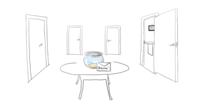
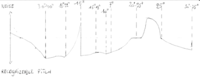
A combination of highly unusual extended playing techniques with open intabulated notation makes the solo guitar work Tellur altogether unique in Tristan Murail’s catalogue. When placed in the broader discursive context of Murail’s compositional philosophy, this unique configuration of elements causes a quandary. The composer aims to integrate “the totality of sonic phenomena” into his compositional language, and within this context he maintains a traditional view of musical authorship. However, how does a performer reconcile this perspective with a score of which the combination of unconventional techniques and open notation leaves so much of the sonic material to their individual discretion and know-how?
This exposition offers the first performance-led study of this conundrum in Murail’s music and writings. Using Lydia Goehr’s historical study of the work-concept as a point of orientation, I explore the functioning of Werktreue in Tellur. I show that the processual structures that should make up its “ideal” score are correlative with the composer’s abstraction of the guitar, which is in its turn correlative with the guitarist’s unconventioned heuristics. I argue that confronting traditional musical authorship with this system of correlation creates a discursive aporia, but not a practical impossibility. Rather the discursive aporia brings to light what I call the “heterotopia of the practice room.” In this heterotopia, I as a performer navigate a musical reality that simultaneously reflects and contests a tradition of classical music performance built around the regulative work-concept.
CRITICAL CONFABULATIONS – Corresponding Practices and Mappings
(2023)
author(s): Jim Harold, Alex Hale
published in: Journal for Artistic Research
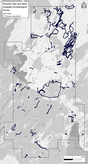
This exposition is based on an archaeological survey in the landscapes around Kilmartin Glen, Argyll and Bute, western Scotland, and references digital datasets – archaeological reference points –alongside the acts (enactments) of field walking, photography, drawing and poetry – experiences and representational discourses – to consider how land and landscapes may be read as dynamic palimpsestic and multi-dimensional fields of entanglement.
Digital datasets were used by the survey to garner fruitful material to aid identification and to analyse (subtle) surface archaeological remains in the inhospitable terrain on the hills bordering Kilmartin Glen. By analysing, categorising and archiving such information, through naming and cataloguing, archaeological methodology effectively orders and tames such wildernesses. We, by contrast, are seeking to draw art and archaeological practices into dialogue with one another in order to assert the importance of recording experiences and random acts as a part of field research and, thereby, to both re-vivify and re-wild our encounters with landscape.
Our exposition, and shared practices, intentionally encourage nuances of reading and interpretation that are found at the dialogic intersection between an artist/poet encountering archaeological landscape survey, and an archaeologist experiencing artistic, poetic and linguistic readings of land: reflecting in the process upon contemporary methodologies and underlying theoretical discourses. As such this research sits within the wider contemporary turn towards interdisciplinary practice, and seeks to establish a dialogue across disciplines; between humans and landscapes, practice and matter, that provides emerging approaches and hopes to remind us of the wild experience.
The Plane of Cicadas: On the Possibility of Making Kin through Musicking
(2023)
author(s): Mathew Klotz
published in: Journal for Artistic Research
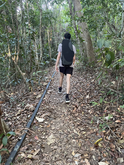
This autoethnographic exposition details a short series of musicking encounters aimed at making kin in a rainforest-covered mountain on unceded Djiru Country on the east coast of Australia. Each encounter consisted of a short hike and a discrete musical encounter with local subjectivities. The inquiry considers the place of the walking in the musicking, and my joint response-ability with my saxophone (or the ways in which we apprehend and respond to other subjectivities) in each encounter. I argue that the hiking and discrete sonic encounters became entangled processes, in which my epistemological capacity and music-making practice were challenged and the possibility of kinship resides.