Making museum repositories greener
(2023)
author(s): Tanja Kimmel
published in: University of Applied Arts Vienna
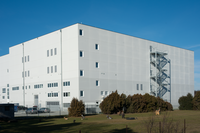
Tanja Kimmel (Institute of Conservation and PhD candidate Doctoral Programme in Philosophy) addresses the question of how art collections and conservation can become sustainable in her contribution "Making museum repositories greener". Sustainability poses a challenge for the art sector. While museums serve as role models for society and can thus contribute significantly to the discourse, they also have very high energy consumption and CO2 emissions due to their complex climatic technology. Kimmel mentions current initiatives and sustainability concepts of museums in Austria and abroad and discusses a case study featured in her dissertation that conducts a CO2 assessment of the central storage of the Kunsthistorisches Museum Wien in order to create the first profound data basis on climate-damaging emissions, which will then facilitate further action.
Await what the stars will bring or moulding the gap
(2023)
author(s): Verena Miedl-Faißt
published in: University of Applied Arts Vienna
Verena Miedl-Faißt (Center Research Focus, PhD candidate PhD in Art) invites us with "Await what the stars will bring" to walk through her artistic research trajectory. Her contribution poetically narrates on longings, and on beautiful and painful experiences in connection with her artistic practice and collaborative work with her nephew L. Based on Donna Haraway’s concept of kinship, Miedl-Faißt searches for possibilities of relating to each other and seeks ways to make inner processes accessible. The contribution provides insights into her work with children and colleagues and how she creates “materialized relations, co-creations objecting time, space, and loneliness.”
Stitches and Sutures. Textile Metaphors and Graphic Topologies as Methodological Artistic Tools
(2023)
author(s): Barbara Graf
published in: University of Applied Arts Vienna
Barbara Graf (Center Research Focus, PhD candidate PhD in Art) takes Jacques Lacan’s notions of the ‘upholstery button’ and the ‘suture’ as starting points to explore textile metaphors as methodological tools for her artistic practice, informed by her own bodily sensory experiences and experience of paresthesia as a person affected by MS. Graf’s contribution "Stitches and Sutures" searches for images of the invisible and explores how deeply subjective experiences can be made accessible and adequately expressed.
Rewritable Creatures. Correspondence between Daniel Aschwanden, Vera Sebert and Lucie Strecker on Mimesis and Hybridity in Choreography
(2023)
author(s): Lucie Strecker, Vera Sebert
published in: University of Applied Arts Vienna
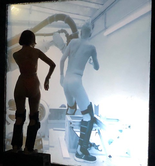
Lucie Strecker (Angewandte Performance Laboratory and Department of Art and Communication Practices) reveals the artistic working process preceding a production with the contribution "Rewritable Creatures", reflecting on mimesis and hybridity in choreography through an exchange of letters with the late performer Daniel Aschwanden (Angewandte Performance Laboratory and Department of Art and Communication Practices) and the author Vera Sebert. As the three letter-writers search, speculate and ask each other questions, the text becomes a written performance, revealing an immediate, polyphonic approach to the subject that allows readers to become part of the performance. In this way, processes of hybridisation become manifest in writing. The performance, however, cannot be completed; Aschwanden’s sudden death interrupts the text, turning the contribution, in a sense, into a memorial to an artist, friend, and colleague and the readers into witnesses.
Exercises in Existential Eccentricity. Conceptualising autoimmunity as a variation of the conditio humana
(2023)
author(s): Barbara Macek
published in: University of Applied Arts Vienna
Barb Macek (PhD candidate and fellow (DOC) of the Austrian Academy of Sciences at the Institute of Fine Arts & Media Arts) takes as her starting point self-reflections and her own experiences with the autoimmune disease SLE. She approaches the phenomenon of autoimmunity in relation to fundamental human ambiguity, following the philosophical anthropology of Helmuth Plessner. Macek’s contribution, "Exercises in Existential Eccentricity", explores the bio-philosophical dimension of the disease rather than its bio-medical dimension, showing how autoimmunity raises existential-phenomenological questions regarding bodily ownership, the self, and the notion of the body as “one’s own”. From an assumed embodied diversity, she designs an artistic technique, EEE - Exercises in Existential Eccentricity, drawing on the technique of auto-interviewing, autoethnography and poetics to facilitate a dialogue between different inner voices.
[Re] Mapping of Being – Landscape/Cavescape/Humanscape
(2023)
author(s): Nina Tsy, Nataliia Korotkova (IIAKO)
published in: VIS - Nordic Journal for Artistic Research
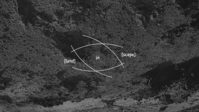
This exposition opens up the memory space of a landscape that carries a collective knowledge of the events of the Second World War in Sørøya, an isolated region far in northern Norway. Inside its landscape voids, the island conceals places that once became a refuge for half of the region’s inhabitants. In this research project, artists ask themselves what collective memory is and how the landscape opens up an alternative public space in its own depths. How do the caves of the island of Sørøya carefully hide and preserve the memory of the events of the Second World War, and how do these events fade into the shadows of Norway’s inhabitants’ social memory?
This exposition shows one chapter of our ongoing research project Dunke-Dunk, where the landscape is becoming the cavescape and the cavescape is becoming the humanscape through the artists’ long field trips to the region, their bodily immersion in caves, and an endless evagation searching for what preserves the memory of the touch of the Second World War through the [re]reading of archives, all the while collecting stories from the inhabitants and the terrain from an architectural and artistic perspective.