The Research Catalogue (RC) is a non-commercial, collaboration and publishing platform for artistic research provided by the
Society for Artistic Research. The RC is free to use for artists and
researchers. It
serves also as a backbone for teaching purposes, student assessment, peer review workflows and research funding administration. It strives to be
an open space for experimentation and exchange.
recent activities <>
Staging the Invisible Elephant that Remains Overlooked
(2026)
Verena Miedl-Faißt
In the scope of my PhD-in-Art project “Staging the Invisible Elephant that Remains Overlooked”, I investigate collaborative and co-creative work with children as equal partners – from my perspectives as an artist, workshop leader, teacher, aunt, recent mother, and adult friend. The intersections, tensions, and synergies between artistic research and pedagogical practice form the core of my research.
Spanning 2017–2025 the work unfolds as an open, reflective process grounded in project-based artistic practice, dialogical encounters, and reflective writing. Additionally, reading experiences in different literary and scientific fields serve as resonant spaces in which insights take shape and intensify. Recurring themes include the interplay of structure and freedom; the negotiation of shared authorship, responsibility, representation and ethics in co-creative work with children across different contexts; and the possibilities and limitations of conducting artistic research “at eye level” within school environments. I also examine the potentials that artistic approaches offer in addressing contemporary pedagogical challenges related to digital technologies, social media, and artificial intelligence.
In accordance with the principles of artistic research, I understand ambiguity, contradiction, and subjectivity as methodological strengths. I foreground transparency, vulnerability, and the transformative potential of misunderstanding, and I propose ways in which we might relate to one another differently in a complex world and strengthen democracies at risk.
Letting Nothingness…
(2026)
Elisabeth Laasonen Belgrano, Cheung Ching-yuen
a lesson in the shadows of death
entangled moment of frozen fragments
embodying sacred movements through
air, body, mind, mattering, voicing
as if NOTHING
PERFORMATIVE THEOLOGY
(2026)
Network for Performative Theology
The purpose of this exposition is to collect data of what Performative Theology can be and become primarily within an academic research but also beyond. The expo will be a timespace nurtured by members the Network for Performative Theology, established 6 October 2022 in Oslo.
recent publications <>
Demolish Monsters on the Rocks: Prompting Through an Ensemble
(2026)
bruce gilchrist
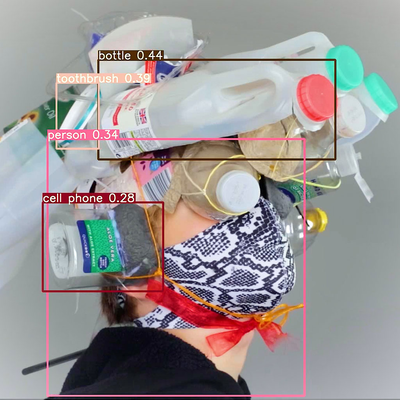
As interaction with corporate artificial intelligence increasingly becomes a precondition for contemporary life, artists need to see beyond Generative AI (GenAI) technology as a discrete tool that makes generic products. Instead, they can imagine combinatorial approaches and conceptual frameworks for AI-enabled artworks. Through my practice-based research, the act of prompting multimodal GenAI models has been informed by comprehending an assemblage as a “framework of instruction” held together through poetic alliances, within which the output from one component feeds the process of another. Practical experiments explored an interrelation of body, text, and predictive technology, where an algorithmic prediction of human action conjured “biometric poetry” that was used to stimulate a language model. Working with archival film footage and digital puppets animated with motion-capture files gave rise to the idea of a camera’s field of view – with its bounded contents acting like a key – eliciting value from a language model in a novel form of story making. Potential erroneous inferences were perceived as a new form of chance operation and a characteristic of algorithmic remix as defined by Steve F. Anderson. This method has been further developed in a project that combines performance, waste material, object recognition, and a language model to explore how the manipulation of garbage can be rationalised by a machine to produce poetic texts as a commentary to action portrayed on a screen.
In Sync With A Machine
(2026)
Ilja Mirsky, Leonid Berov, Gunter Loesel
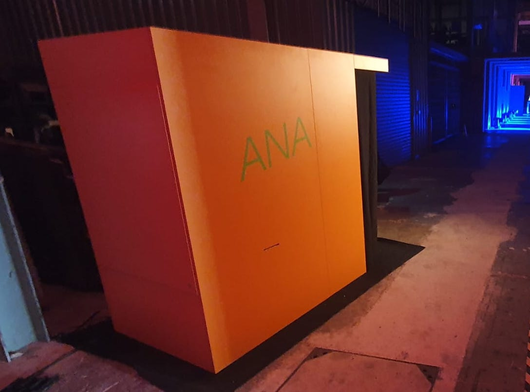
This paper delves into the dynamics and dramaturgical specifications of ANA, a theatrical installation engineered for co-creating narratives in a dialogic process with individual users. ANA embodies a collaborative storytelling environment that is used to communicate narrative and emotional information through multiple modalities, thereby bringing into focus an unexpectedly human essence in a human-machine interaction. Integrating GPT-4, emotion-recognition algorithms and a simulation of its own affective state, ANA engages users in a 10-minute interaction, fostering an immersive narrative exchange where the affective dimension of collaborative storytelling takes precedence. This paper explores the specific challenges of prompt design in this setting, focusing on the concept of emotional attuning, the feeling of being “in sync” with a machine throughout the interaction. Through an analytical lens encompassing cognitive science, philosophy of mind, and prompting techniques, the authors describe and reflect practices of employing multimodal sensorial data such as emotion recognition, and dramatic considerations, into the process of designing prompts. They also describe and reflect on their attempts to establish a form of meta-communication with the machine about the emotional aspects of the experience. By focusing on dramaturgical and improvisational strategies, this paper underscores the pivotal significance of emotional attunement and multimodal communication in fostering intimate technological engagement.
AI gave me an assignment, and I did it. Now what?
(2026)
Brett Ascarelli
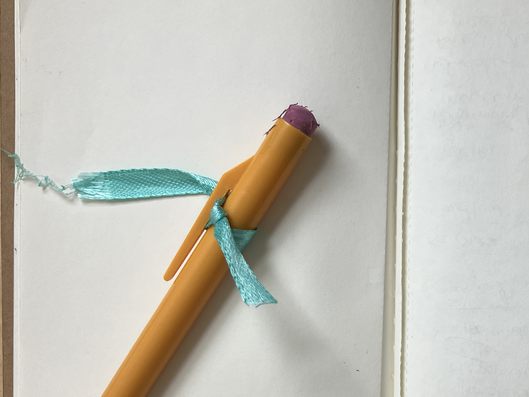
How useful can AI be at this present moment to generate assignments or instructions to teach and train people to live more playful, creative and ethical lives? In this artistic research, I try to put aside fears of a dystopian future in which runaway AI assumes control over humanity, and suspend them long enough to play with the idea of reversing the usual dynamic: what if AI were to instruct us, instead of us instructing AI? What kind of positive outcomes could emerge? I borrow from traditions of instruction art and avant-garde art, and I employ discursive practices that alternate between techno-enthusiastic and techno-skeptical. The AI tool ChatGPT and I hold conversations in which we explore the research question together, and in which I prompt ChatGPT to issue me instructions, then I describe the process and result of executing the instructions.
sar announcements <
Subscribe to SARA
[open call] — enuntiatio.praefatio.formulae — residency program for artistic research in music [2025/2026]
(2025)
Research Catalogue
Research Catalogue