my Mothers
(2025)
author(s): Timour Bonin
published in: Royal Academy of Art, The Hague
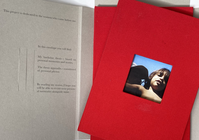
This thesis explores the interwoven relationships between women, the textile arts, and its heritage, through a personal familial lens. Beginning with the question of the importance textile-making has held in our lives, I investigate whether engaging in crafting practices can reconnect us with tradition and allow us to re-root ourselves in the lives of our ancestors.
Drawing from both historical context and intimate family stories, I trace the lineage of textile practices among the women in my family - my Mothers. These include my mother, grandmothers, and great-grandmothers, whose experiences with sewing, knitting, crocheting, and weaving shaped their identities and daily lives.
For many of them, textile-making was an act born of necessity, a survival skill often dismissed as “women’s work” within a patriarchal framework. For me, it is a conscious act and a choice - an exploration, a reclamation, and a form of personal and cultural healing.
Through self-taught practice and reflection, I came to realise how textile traditions carry knowledge, strength, and connection across generations. My research, grounded in both historical analysis and storytelling, shows how making can become a language of remembrance and resistance, a way to bridge fragmented identity and reclaim belonging.
In honouring the textile legacies of the women who came before me, I have tied myself into their story, not by romanticising their struggles, but to acknowledge their creativity and resilience. With each thread, I reconnect to a maternal lineage that continues to live through my hands.
A glimpse of the past (my Mothers' appendix)
(2025)
author(s): Timour Bonin
published in: Royal Academy of Art, The Hague
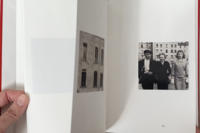
This appendix is comprised of a small collection of photos that can be examined alongside the thesis 'my Mothers'.
Drawing as continously guided Practice: A Phenomenological Foundation of the Sketch&Draw Method
(2025)
author(s): Tanja K. Hess
published in: Research Catalogue
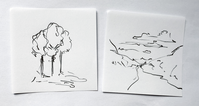
This essay examines drawing as a consciously guided practice for fostering creative problem‐solving and idea generation. At its center lies the Sketch&Draw method, with its core principle of the “fluttering line.” Drawing on Stephen R. Covey’s (1989) concept of the space between stimulus and response, Mihály Csikszentmihályi’s (1990) flow theory, and Maurice Merleau‐Ponty’s (1945) notion of embodiment, it develops—via the Sketch&Draw method—the central principle of the “fluttering line.” Through workshop analyses and practice sketches from sketchanddraw.com, it is evident how the visual noise of the fluttering line opens a mental space in which spontaneous impulses and effortless presence both set the creative process in motion and give it structure. Participant reports illustrate how these uncontrolled networks of strokes are later experienced as “whispered impulses” that support the flow state. Finally, the essay discusses potentials, fields of application, and methodological limits in artistic, technical, and academic contexts, and outlines proposals for further empirical and interdisciplinary research.
The influence of Bel Canto on the 19th-century guitar repertoire.
(2025)
author(s): Nacho Cuadrado
published in: KC Research Portal
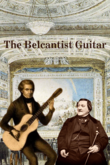
This research explores the influence of bel canto, a distinguished Italian vocal style, on 19th-century guitar compositions, with a particular focus on the works of Luigi Legnani. Through detailed analysis, the study identifies key bel canto characteristics, such as expressive phrasing, melodic ornamentation, and dynamic contrasts, as integral elements in Legnani's guitar music. These findings highlight Legnani's skill in adapting the vocal nuances of bel canto to instrumental performance, creating a bridge between vocal and instrumental traditions.
The research enhances the understanding of cross-genre influences in 19th-century music and showcases the artistic versatility of composers like Legnani. To present these findings, the format will include recorded video demonstrations, where specific characteristics of bel canto will be illustrated through selected musical excerpts. These videos will provide a visual and auditory exploration of Legnani’s compositions, allowing audiences to observe the practical application of the research insights.
The combination of spoken analysis and video demonstrations offers an engaging and comprehensive understanding of the influence of bel canto on Legnani's works, enriching the overall appreciation of this unique musical intersection.
Eiras kiosk: Skattejakt-edition. ARW 2024
(2025)
author(s): Eira Bjørnstad Foss
published in: Norwegian University of Science and Technology
(English below)
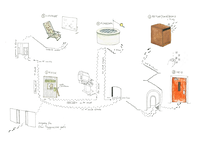
Eiras kiosk er ein serie med mindre konsertar, lydinstallasjonar og hendingar som blir annonsert kort tid i forvegen og dukkar opp på stadig ulike stader. Kioskserien er utvikla av Eira Bjørnstad Foss og utgjør ein viktig del av det pågåande kunstnarlege forskingsprosjektet "Performer-Curator" ved NTNU, Institutt for musikk.
Eiras kiosk: Skattejakt-edition blei spesiallaga til NTNU Artistic Research Week 2024. Saman med publikum utforska kiosken ulike krinkelkrokar i kulturhuset Olavshallen. Skattejakta tok utgangspunkt i, og er nesten ei realisering av, verket "Ear Piece" av den amerikanske komponisten og utøvaren Pauline Oliveros.
Eira’s Kiosk is a series of small concerts, sound installations, and events that are announced shortly before they happen, and pop up in various locations. The kiosk series is developed by Eira Bjørnstad Foss, and forms an important part of the ongoing artistic research project, "Performer-Curator," at NTNU, Department of Music. Eira’s Kiosk: Treasure Hunt Edition was specially created for NTNU Artistic Research Week 2024.
Together with the audience, the kiosk explored possibilities for experiences in various nooks and crannies of the cultural venue Olavshallen. The Treasure Hunt was based on, and is almost a realization of, the piece "Ear Piece" by the American composer and performer Pauline Oliveros.
Sculpting Music Performances: About Choreomania and the Process of Shaping a Performance
(2025)
author(s): Silvia De Teresa Navarro
published in: KC Research Portal
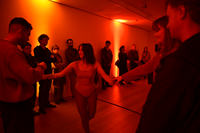
This research explores how choreomania - the historical phenomenon of uncontrollable, communal dance “plagues” that emerged in the Middle Ages - can inform and shape my artistic practice. Central to this inquiry is the question: how does choreomania influence my creative process and the way I shape my performance practice as a classically trained pianist? The study unfolds three main blocks. First, an essay examines the conceptual formation of choreomania, its contemporary relevance, and its impact on my artistic work. Simultaneously, I observe and document the creative processes of artists-in-residence during my internship at the residency programme "Choreomania - Bodily Excess, Collective Unrest". The thrid block involves an experimental playground consisting of several performance try-outs, each rigorously documented, analysed, and reflected upon. Adopting a rhizomatic approach, I explore performance-making as a fluid, irregular process. The resulting performances weave together classical piano, improvisation, movement, voice, collaboration, live-electronics, audience engagement, and the submerged elements of choreomania. The research culminates in a synthesis and reflection of the entire process, offering new insights into performance-making.