Governmental Regulations on Volatile Organic Compounds in Paint
(2023)
author(s): Hajra Rahim
published in: Research Catalogue
Previous researchers have found that the use of VOCs (Volatile Organic Compounds), carcinogens, and PFAS (per- and polyfluoroalkyl substances) in paints have led to a wide range of health issues. This led to the primary goal within my research in which I examined the extent to which the quality level of paint is affected by chemical levels and pricing through the use of interviews with manufacturers from different paint companies, as well as the extent to which regulations from the EPA (Environmental Protection Agency) and OSHA (Occupational Safety and Health Administration) have limited the amounts of chemicals in paints. From this, I found that most companies are only restricted in levels of VOC and carcinogenic use, rather than PFAS since they are a necessary component of most paints, including within the linseed oil of oil paints, the pigments of watercolors and the pigments and solution of acrylic paints. Additionally, I found that these chemicals can affect one if they touch the surface of the skin or are inhaled, meaning that even dry paintings or painted walls could be toxic. The outcome emphasizes the necessity of wearing a mask while using these products, using warning signs on consumer products, as well as educating artists and those who are exposed to paints consistently to stay cautious.
(NOT) ENTERING EVERY ROOM - Exploring autosociobiographies via liminal crossing points of social class and the emotion shame
(2023)
author(s): Barbara Wolfram, Christina Wintersteiger
published in: Research Catalogue
(Not) Entering Every Room, conducted 2020/21 at Film Academy Vienna/ mdw - University for Music and Performing Arts Vienna, set out to use the emotion shame as a focus to reveal and explore unconscious liminal crossing points in our biographies and perceptions of social class, building on our previous research on cinematic (auto)sociobiographies (2020).
We are shaped, guided and scarred by our socialization and the society surrounding us. Each individual history brings with it a different knowledge repertoire about what belonging or not-belonging, „normal“ or „abnormal“ means. Spoerhase (Politik der Form 2017) describes the exploration and disclosure of one’s own biography in relation to social context & class, to one’s body, time & place of birth as “auto-sociobiographical”. He refers to the literary works of Annie Ernaux or Didier Eribon where individual life stories evoke a collective memory of a certain time and place, revealing liminal experiences of social class. One emotion that was mentioned more often than any other in these literary works, was shame.
To explore our own histories of experiences and the attached knowledge repertoire, we used the methodology of collective (auto)sociobiographical exploration via a multi-layered artistic approach. Body work (Chechov, Shdanoff), writing improvisations and group explorations via zoom were used to probe the methodology of (auto)sociobiographical exploration in the light of shame and social class.
Research on cinematic (auto)sociobiographies is still very new. We aim at contributing a method of exploration to the field of cinematic form and content production informed by artistic research methods.
Editorial
(2023)
author(s): Fadia Dakka, Kirsten Forkert, Ed McKeon, Jill Robinson and Ian Sergeant
published in: Journal of Sonic Studies
Editorial
Fadia Dakka, Kirsten Forkert, Ed McKeon, Jill Robinson and Ian Sergeant
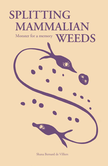
Splitting Mammalian Weeds: Monster for a Memory
(2023)
author(s): Shana De Villiers
published in: Research Catalogue
This is not a thesis of trying to mine a singular understanding, but a collecti(ion)(ve) body of research composed into a gesture. Other than my memories, I have only grazed the surface of the topics I will discuss (even then, memories are at the fragile grace of synaptic connections) There are holes here, tears that will take a lifetime to mend. As I will mention later, I am not interested in a singular whole. Holes, however, are curious places with a warm spot for happenings, so I am okay with the holes.
All patchworks are several and my obsession with their cobbled nature does not mean there are no moments of stillness and clarity. This work is an archive of the muddiness of being and I invite you to draw parallels with your own logic as you stumble through this patchy, leaky, weed forest.
Novel
(2023)
author(s): Zoe Panagiota (aka Betty) Nigianni
published in: Research Catalogue
Single channel digital video, with photography and text, 5' 41'', 2007
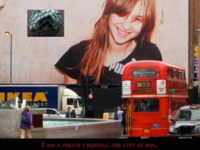
'Novel' is a half-photography, half-fiction digital video, which was inspired by my temporary dwelling in different cities during the period of a year. For my contribution to this catalogue, I briefly discuss the artistic process and thinking behind the project. In parallel, I reflect upon the possible theoretical links between visuality, narratives, architecture, and urbanism. I suggest that personal associations are definitive and significant in the ways we tend to occupy and subjectively interpret contemporary urban spaces.
After a lengthy process of collecting photographs and digital film footage, as well as selecting written material, some of it in the form of quotes, from my journal, I completed the video in 2007. My method was:
- I made preparatory sketches that I included in the video (film still 1).
- I used a montage technique I saw in one of Peter Greenaway's films: the separate 'window' on the top or bottom sides of the video (film stills 2, 4, 5) that denotes parallel action.
- I overlaid photographs (film still 3), a technique that allowed me to create the animating effect of the moving image, without using film footage.
In painting, the artist can make layers out of collaged material that might be unconnected or purposefully juxtaposed to the painting's subject. Using the above method, I asked the viewer to watch the video more like a moving series of paintings, rather than as a film.
The video, like my other video art work, was exhibited and archived under my artist's pseudonym, Betty Nigianni.
Written in 2012, the essay is a separate piece to accompany this exposition.
Note: Please disregard comment I posted about a notification that doesn't appear anymore.
Sample Reel - Fejos 2023
(2023)
author(s): Laura Ogden
published in: Research Catalogue
Sample Reel including mock-up of iDoc 'The Visit' for Fejos Fellowship 2023 application.